Emmett Till Antilynching Act This bill makes lynching a federal hate crime offense. Specifically, the bill imposes criminal penalties—a fine, a prison term of up to 30 years, or both—on an individual who conspires to commit a hate crime offense that results in death or serious bodily injury or that includes kidnapping or an attempt to kidnap, aggravated sexual abuse or an attempt to commit aggravated sexual abuse, or an attempt to kill.
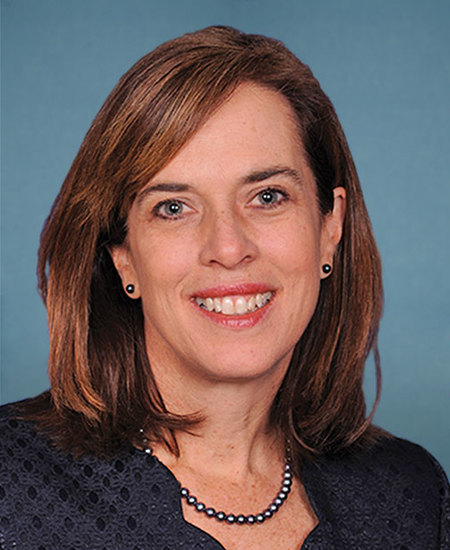
Rep. Katherine M. Clark
Sponsored bills
This resolution supports the designation of National Sikh Day to honor and celebrate the important role played by the Sikh community in strengthening and inspiring the people of the United States.
Creating a Respectful and Open World for Natural Hair Act of 2022 or the CROWN Act of 2022 This bill prohibits discrimination based on a person's hair texture or hairstyle if that style or texture is commonly associated with a particular race or national origin. Specifically, the bill prohibits this type of discrimination against those participating in federally assisted programs, housing programs, public accommodations, and employment. Persons shall not be deprived of equal rights under the law and shall not be subjected to prohibited practices based on their hair texture or style. The bill provides for enforcement procedures under the applicable laws.
Forced Arbitration Injustice Repeal Act of 2022 or the FAIR Act of 2022 This bill prohibits a predispute arbitration agreement from being valid or enforceable if it requires arbitration of an employment, consumer, antitrust, or civil rights dispute.
This resolution expresses that the House of Representatives declares its gratitude on behalf of the people of the United States to the journalists and news staff who continue to put themselves in harm's way to report on the humanitarian crisis and ongoing war on the ground in Ukraine following Russian President Vladimir Putin's invasion of Ukraine; and honors the contributions of journalists and news staff reporting from the war in Ukraine as essential in the ongoing struggle for the rights of a free press and free speech internationally, pivotal in pushing back against false propaganda by tyrants, and crucial to informing Americans and the world of the horrors being wrought against the Ukrainian people.
Into the Light for Maternal Mental Health and Substance Use Disorders Act of 2022 or the Into the Light for MMH and SUD Act of 2022 This bill reauthorizes through FY2028 a program that addresses maternal depression and, among other changes, expands its scope to include mental health and substance use disorders. It also requires the Department of Health and Human Services to maintain a national hotline to provide mental health and substance use disorder resources to pregnant and postpartum women and their families.
Honoring Harriet Tubman Act This bill requires the Joint Committee on the Library to obtain a statue of Harriet Tubman and place the statue in a suitable permanent location in National Statuary Hall.
This concurrent resolution condemns violence and threats of violence against historically Black colleges and universities (HBCUs) and reaffirms the federal government's commitment to combating violence against HBCU students, faculty, and staff.
Green Postal Service Fleet Act of 2022 This bill prohibits the U.S. Postal Service from carrying out the contract with Oshkosh Defense for the procurement of postal delivery vehicles unless each purchase is at least 75% electric or zero-emission vehicles.
Women's Health Protection Act of 2021 This bill prohibits governmental restrictions on the provision of, and access to, abortion services. Specifically, governments may not limit a provider's ability to prescribe certain drugs, offer abortion services via telemedicine, or immediately provide abortion services when the provider determines a delay risks the patient's health. Furthermore, governments may not require a provider to perform unnecessary medical procedures, provide medically inaccurate information, comply with credentialing or other conditions that do not apply to providers whose services are medically comparable to abortions, or carry out all services connected to an abortion. In addition, governments may not (1) require patients to make medically unnecessary in-person visits before receiving abortion services or disclose their reasons for obtaining such services, or (2) prohibit abortion services before fetal viability or after fetal viability when a provider determines the pregnancy risks the patient's life or health. The bill also prohibits other governmental measures that are similar to the bill's specified restrictions or that otherwise single out and impede access to abortion services, unless a government demonstrates that the measure significantly advances the safety of abortion services or health of patients and cannot be achieved through less restrictive means. The Department of Justice, individuals, or providers may bring a lawsuit to enforce this bill, and states are not immune from suits for violations. The bill applies to restrictions imposed both prior and subsequent to the bill's enactment.