

Maddy summaryThe Protect America's Workforce Act cancels an executive order issued on March 27, 2025, that excluded certain groups from federal labor-management relations programs, making it legally unenforceable. It also ensures that all collective bargaining agreements between federal agencies and labor unions, which were active as of March 26, 2025, remain fully effective until their agreed terms expire. This directly affects federal agencies, labor unions, and the employees covered by these agreements. The bill prevents federal funds from being used to implement the canceled executive order while preserving existing labor agreements.
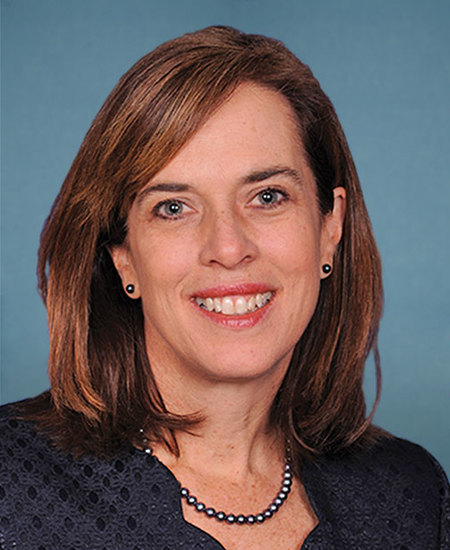
Rep. Katherine M. Clark
Sponsored bills
Maddy summaryHRES 746 is a non-binding resolution passed by the U.S. House of Representatives condemning all political violence - including attacks on elected officials, candidates, and public figures - and rejecting rhetoric that dehumanizes opponents. It specifically urges law enforcement to investigate and prosecute such violence, calls on public officials and media to avoid inflammatory language, and references recent incidents like the 2025 assassination of activist Charlie Kirk and targeted shootings of Minnesota legislators. The resolution does not create new laws but formally expresses the House’s commitment to protecting public servants and promoting peaceful political discourse. It directly affects the House’s public stance and serves as a call to action for officials, media, and communities to foster civil engagement.
Child Care Access Means Parents In Schools Reauthorization Act or the CCAMPIS Reauthorization Act This bill reauthorizes through FY2031 and revises the Child Care Access Means Parents in School Program. The program awards grants to support the participation of eligible low-income parents in postsecondary education through the provision of campus-based child care services. Among other revisions to the program, the bill increases the minimum and maximum grant amounts, allows grant funds to be used for additional purposes (e.g., child care subsidies and support services), and specifies additional grant application requirements.
Maddy summaryHR 5309, the Congressional Tribute to Constance Baker Motley Act of 2025, authorizes a posthumous Congressional gold medal for Constance Baker Motley, a pioneering civil rights attorney and judge. The bill directs the Treasury Secretary to strike the medal with her image and name, to be presented to her son, Joel W. Motley III, and her niece, Constance Royster. It also permits the sale of bronze duplicates at cost to cover expenses, with proceeds going to the U.S. Mint fund. This is a commemorative measure with no substantive policy changes, honoring Motley’s legacy as the first African-American woman appointed to a federal judgeship.
Maddy summaryThe Child Care for Working Families Act creates a federal program to provide affordable, high-quality child care for working families with children under age 6. It would provide direct child care assistance through certificates or grants to parents, with no copayment required for families at or below 85% of state median income. The program requires states to implement quality standards for child care providers, including a tiered quality system and minimum wage requirements for staff (at least a living wage equivalent to elementary educators). The bill appropriates $20 billion for the program over five years, with additional funding for quality improvement initiatives and universal preschool services.
Maddy summaryThe Women's Health Protection Act of 2025 would protect access to abortion services across the United States by prohibiting states from imposing restrictions that are more burdensome than those on comparable medical procedures. The bill directly affects people seeking abortion care and health care providers by banning restrictions such as mandatory in-person visits, requirements for specific tests, limitations on telemedicine, and rules based on a patient's reason for seeking abortion. It prohibits state laws that single out abortion for unnecessary restrictions while allowing post-viability abortions when necessary to protect a patient's life or health. The bill preempts conflicting state laws and provides enforcement mechanisms through private lawsuits and actions by the Attorney General.
Maddy summaryThis bill requires private firearm transfers between individuals to go through a licensed dealer who must conduct a background check. It applies to most private sales but includes exceptions for transfers between family members (like parents and children), law enforcement, emergencies preventing harm, and temporary loans at shooting ranges or for hunting. Dealers must provide background check notices in both English and Spanish. The law aims to prevent prohibited individuals from obtaining firearms through private transactions while maintaining existing state authority on firearm laws.
Maddy summaryHRES 473 is a non-binding House resolution calling on the U.S. government to urgently use diplomatic efforts to ensure food and medical supplies reach civilians in Gaza. It directly addresses the needs of approximately 2.2 million Palestinians facing acute hunger, including 10,000 children identified with acute malnutrition, following a border blockade that blocked aid from March to May 2025. The resolution specifically urges the White House and State Department to secure "immediate and secure delivery and disbursement" of aid and a lasting end to the conflict, citing collapsed bakeries, exhausted food rations, and a near-total health system collapse.
Maddy summaryHR 3273, the Child Care Workforce Development Act, provides financial support to early childhood educators and students. It establishes a loan repayment program where educators serving 5 years with qualified childcare providers (like centers receiving Child Care Block Grant funds) can have up to $6,000 annually of their student loans repaid. Additionally, it creates grants of up to $4,000 per academic year for students enrolled in early childhood education programs, requiring them to work in licensed childcare settings for at least one year after graduation (with renewal options). The bill authorizes $25 million annually for loan repayment (2026-2031) and $10 million annually for grants (2026-2030), targeting workforce development in childcare.
Maddy summaryThe Child Care Infrastructure Act (HR 3274) allocates $10 billion to improve safety and infrastructure at child care facilities, primarily benefiting providers serving low-income families, infants/toddlers, rural communities, and nontraditional-hour programs. It requires states to conduct needs assessments (including pandemic impacts on capacity and costs) and use grants for facility renovations, construction, or safety upgrades, with a 10% state match requirement. Intermediary organizations, such as community development groups, can also receive grants to provide technical assistance and financing for child care facilities. The bill mandates prevailing wage standards for construction work and requires annual reports on how improvements affect access, quality, and pandemic-related challenges, with final outcomes due by 2030.