

Maddy summaryHR 82, the Social Security Fairness Act of 2023, repeals two provisions that reduce Social Security benefits for certain government workers. It eliminates the Government Pension Offset (GPO), which cuts spousal or survivor benefits for people with pensions from jobs not covered by Social Security (like federal or state government roles), and the Windfall Elimination Provision (WEP), which lowers retirement benefits for those with similar pensions. The law takes effect for benefits paid after December 2023, requiring the Social Security Administration to adjust benefit calculations to remove these reductions. This change directly affects public-sector employees who previously had their Social Security benefits reduced due to their government pensions.
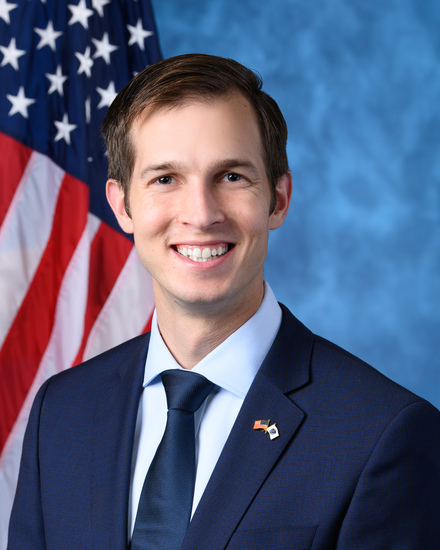
Rep. Jake Auchincloss
Sponsored bills
Washington, D.C. Admission Act This bill provides for the establishment of the State of Washington, Douglass Commonwealth, and its admission into the United States. The state is composed of most of the territory of the District of Columbia (DC), excluding a specified area that encompasses the U.S. Capitol, the White House, the U.S. Supreme Court building, federal monuments, and federal office buildings adjacent to the National Mall and the U.S. Capitol. The excluded territory shall be known as the Capital and serve as the seat of the government of the United States, as provided for in Article I of the Constitution. The state may not impose taxes on federal property except as Congress permits. The bill provides for the DC Mayor to issue a proclamation for the first elections to Congress of two Senators and one Representative of the state. The bill eliminates the office of Delegate to the House of Representatives. The bill applies current DC laws to the state. DC judicial proceedings and contractual obligations shall continue under the state’s authority. The bill also provides for specified federal obligations to transfer to the state upon its certification that it has funds and laws in place to assume the obligations. These include maintaining a retirement fund for judges and operating public defender services. The bill establishes a commission that is generally comprised of members who are appointed by DC and federal government officials to advise on an orderly transition to statehood.
Maddy summaryThis bill creates a 4-year transitional coverage period for Medicare to automatically cover "breakthrough medical devices" - new FDA-prioritized devices approved after March 2021 - as "reasonable and necessary" for treatment. During this period, these devices qualify for additional payments under Medicare's hospital and outpatient payment systems without requiring separate approval. After the 4-year period, Medicare must develop regular coverage based on additional data, with automatic coverage for all approved uses if no action is taken within two years. The bill requires Medicare to assign unique codes for these devices within three months of FDA approval and to update payment systems regularly. It also includes special provisions for "specified breakthrough devices" that lack existing Medicare benefit categories, requiring reports on their impact and cost to Congress.
Maddy summaryThis bill, HR 1097 (Everett Alvarez, Jr. Congressional Gold Medal Act of 2023), authorizes the award of a Congressional Gold Medal to Everett Alvarez, Jr., in recognition of his service as a U.S. Navy pilot and Vietnam War prisoner of war. It directly honors Alvarez, who was the first U.S. pilot shot down in the Vietnam War, spent over 8.5 years in captivity, and later served in the Peace Corps and Veterans Administration. The bill’s key mechanism is directing the U.S. Mint to strike a gold medal bearing his name and image, with bronze duplicates available for sale to cover costs. It does not create new policies or affect any group beyond the honoree.
Maddy summaryThis bill allows Medicaid programs to enter into value-based purchasing (VBP) arrangements with drug manufacturers for innovative treatments like gene therapies. It codifies these arrangements by requiring states to report pricing structures based on patient outcomes and best prices for drugs sold under these agreements. The bill enables payments to be tied to treatment effectiveness, potentially reducing long-term healthcare costs by decreasing hospitalizations and other medical expenses. It also creates a requirement for a GAO study to evaluate how these arrangements impact patient access, outcomes, and healthcare system costs. The bill will sunset after 5 years, though existing VBP arrangements will continue beyond that date.
Maddy summaryThis bill codifies and expands existing U.S. sanctions targeting Chinese entities involved in fentanyl-related activities. It authorizes the President to impose financial sanctions on foreign persons - including Chinese government entities, ports, ships, manufacturers, and online marketplaces - that facilitate the international flow of illicit synthetic narcotics or their precursors. Key provisions include blocking U.S. financial transactions with targeted entities, requiring congressional reporting on enforcement, and excluding intelligence/law enforcement activities from sanctions. The bill directly affects Chinese entities operating in Hong Kong, Macau, or mainland China that contribute to fentanyl proliferation, with sanctions applying to property or transactions within U.S. jurisdiction.
Maddy summaryHR 10459 establishes a federal Joint Task Force to Counter Illicit Synthetic Narcotics (JTF-ISN) to coordinate agency efforts against synthetic opioid trafficking. The task force, led by a presidentially appointed Director reporting to the Attorney General, includes members from Justice (DEA, FBI), Treasury (FinCEN, IRS), Homeland Security (CBP, ICE), State, Commerce, Defense, and intelligence agencies. It requires regular congressional reports on operations, funding needs, and efforts to disrupt trafficking networks - particularly those linked to foreign entities like China - while explicitly limiting the task force to targeting large-scale trafficking, not personal use or low-level dealing. The bill does not create new agency powers but mandates better interagency coordination to address the opioid crisis through strategic operations and information sharing.
Maddy summaryThis bill requires Chinese shipping companies to properly declare fentanyl precursors and related chemicals on all shipments to the U.S., with strict customs reporting rules. It imposes civil penalties of up to $250,000 or 0.025% of a vessel’s cargo value for non-compliance, doubling for falsified records and escalating for repeated violations. The penalties collected fund U.S. drug enforcement efforts targeting fentanyl trafficking. It directly affects Chinese entities (including those with significant Chinese ownership) involved in shipping these chemicals to the U.S. or cooperating jurisdictions.
Maddy summaryThis bill establishes a process for Medicare to set payment rates for certain pediatric medical devices used in children's care. Manufacturers of qualifying pediatric technologies (devices approved by the FDA, covered under Medicare, and designed specifically for children or used predominantly in pediatric procedures) can request the Secretary to create national payment rates under the physician fee schedule. The Secretary must then set these rates using available data like claims or pricing information, with specific deadlines for processing requests (by May 1 for same-year implementation). This affects Medicare payments for these devices but does not change coverage requirements or guarantee payment for new technologies.
Maddy summaryThe Pharmacists Fight Back Act (HR 9096) sets new rules for Pharmacy Benefits Managers (PBMs) working with federal health care programs like Medicare Part D and Medicaid. It requires PBMs to reimburse in-network pharmacies at a rate covering the drug's actual cost plus a small fee (capped at $25), and to reduce patient cost-sharing by at least 80% of rebates received from drug manufacturers. The bill bans PBMs from steering patients to specific pharmacies, charging patients more than pharmacies are paid, or using rebates to lower pharmacy payments after claims are processed. It also mandates public reporting of drug pricing data to improve transparency, ensuring patients and pharmacies receive fairer treatment under federal health programs.