Transatlantic Legislators' Dialogue Act This bill establishes a delegation of up to 24 Members of Congress to periodically meet with European Parliament representatives to discuss issues of interest to the United States and the European Union.
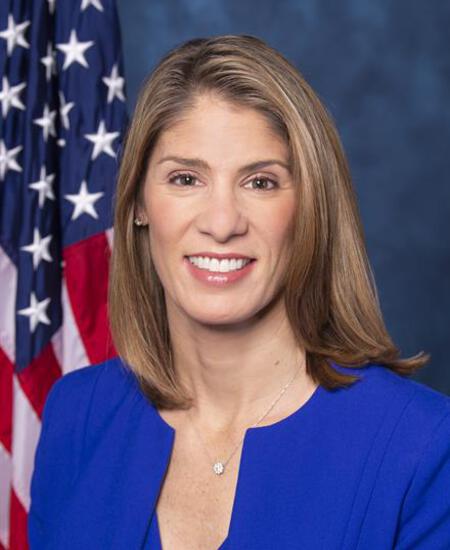
Rep. Lori Trahan
Sponsored bills
Keeping School Meals Flexible Act This bill extends authority through June 30, 2023, for the Department of Agriculture (USDA) to waive certain requirements for the school meal programs to address COVID-19. The bill extends the authority for USDA to issue a single waiver of child nutrition program requirements to all states under the National School Lunch Program for purposes of providing meals and snacks with appropriate safety measures with respect to COVID-19; grant waivers of requirements to allow non-congregate feeding in the Child and Adult Care Food Program for purposes of providing meals and snacks with appropriate safety measures with respect to COVID-19; and grant waivers related to the nutritional content of meals served in child nutrition programs if it determines the waiver is necessary to provide meals and snacks, and there is a food supply chain disruption due to COVID-19.
Stop the Wait Act of 2022 This bill allows individuals with disabilities to begin receiving Social Security Disability Insurance (SSDI) benefits in the month they become eligible for the benefits. It also allows these individuals to immediately enroll in Medicare if they cannot afford minimum essential coverage. (Under current law, an individual must generally wait 5 months after the onset of disability to begin receiving SSDI benefits and an additional 24 months to become eligible for Medicare.)
Algorithmic Accountability Act of 2022 This bill requires certain businesses that use automated decision systems to make critical decisions to study and report about the impact of those systems on consumers. Critical decisions include those that have a significant effect on a consumer's life such as the cost or availability of health care, housing, educational opportunities, or financial services. The Federal Trade Commission (FTC), in consultation with relevant stakeholders, must issue regulations to implement the bill. The bill provides for enforcement by the FTC and specified state officials. Further, the bill establishes a Bureau of Technology to advise the FTC about the technological aspects of its functions.
Safeguarding Elderly Needs for Infrastructure and Occupational Resources Act of 2022 or the SENIOR Act of 2022 This bill requires the Department of Health and Human Services (HHS) to award grants to assisted living facilities for health care expenses and lost revenue attributable to COVID-19 and other purposes. It also addresses matters related to the senior caregiver workforce. To receive a grant, an assisted living facility must demonstrate that it had uncompensated losses due to COVID-19 and consistently maintained operations from March 13, 2020, to December 31, 2020. A facility must also certify that the grant is necessary for its ongoing operations. HHS must also award grants to assisted living facilities for broadband connectivity and telehealth support and other operation and maintenance costs. The Government Accountability Office must report on the efficacy of these grants. With respect to the senior caregiver workforce, the bill authorizes grants for assisted living facilities to establish or expand workforce training and recruitment programs. The National Health Care Workforce Commission must also designate the workforce needs of assisted living and other senior care populations as a high priority area and report on those needs.
Medical and Health Stockpile Accountability Act of 2022 This bill requires the Department of Health and Human Services (HHS) to develop an automated application to track the amount of supplies in the Strategic National Stockpile and in similar inventories maintained by states, tribes, territories, and private entities (e.g., hospitals). Additionally, HHS must (1) provide for an annual exercise to test the effectiveness of the application, and (2) establish a program to assist health care entities in obtaining automated vendor management systems.
Leading Infrastructure For Tomorrow’s America Act or the LIFT America Act This bill establishes several programs and incentives to modernize the nation's communications, drinking water, energy, transportation, health care, and other related infrastructure. For example, the bill provides incentives to make broadband internet more accessible and affordable. It also establishes grants to implement next generation 9-1-1 services. In addition, it supports drinking water programs, including the drinking water state revolving fund program. Further, it provides grants to treat perfluoroalkyl or polyfluoroalkyl substances (commonly referred to as PFAS) in drinking water and to replace lead service lines. The bill establishes a variety of programs to support clean energy infrastructure and address climate change, including efforts to (1) modernize the electric grid and make it more resilient, efficient, and secure; (2) increase energy efficiency in buildings; and (3) support renewable energy infrastructure. Further, it provides incentives for vehicle infrastructure, such as incentives to develop infrastructure for electric vehicles and grants to reduce air pollution at ports by electrifying port infrastructure. Additionally, the bill establishes grants and programs for health care infrastructure, including by providing support for the Centers for Disease Control and Prevention, laboratories, and state, local, tribal, and territorial health departments. Finally, the bill reauthorizes grant programs to remediate brownfield sites (i.e., sites contaminated with hazardous substances) through FY2026.

Terms-of-service Labeling, Design, and Readability Act or the TLDR Act This bill requires commercial websites (excluding small businesses) to display certain information, such as a short-form terms of service summary statement. The bill provides for enforcement by the Federal Trade Commission and state attorneys general.
Masks for All Act of 2022 This bill directs the Federal Emergency Management Agency (FEMA) to manufacture and distribute N-95 respirator masks to every individual in the United States and to provide N-95 masks to all individuals working in health care settings in the United States that are experiencing a shortage of such masks. FEMA must provide the masks at no cost to individuals and deliver them, to the greatest extent possible, using the U.S. Postal Service. Additionally, FEMA shall designate mask pickup sites in each community and shall provide masks to each site, allocated according to population; consider new designs for masks to improve comfort, fit, and size options; and submit to Congress a strategic plan that includes monthly, measurable targets to eliminate shortages and increase domestic production of N-95 masks and to fulfill all other requirements of this bill. The President shall make use of any and all available authorities (including emergency authorities) at the disposal of the federal government to procure and domestically manufacture N-95 masks and support the domestic manufacturing of N-95 masks.
Maddy summaryHR 6278 amends the Servicemembers Civil Relief Act to upgrade penalties for violating protections against improper storage liens on military members' property. Currently a misdemeanor, such violations would become a felony, with first offenses punishable by up to one year in prison or fines, and repeat offenses carrying up to three years in prison. This directly affects storage facilities and lienholders who enforce liens against servicemembers during active duty. The key change elevates the legal consequences from civil penalties to criminal felony charges. The bill does not alter the Act's core protections for military members but increases penalties for those who break them.