Enhance Access To SNAP Act of 2021 or the EATS Act of 20 21 This bill expands eligibility for the Supplemental Nutrition Assistance Program to students attending institutions of higher education.
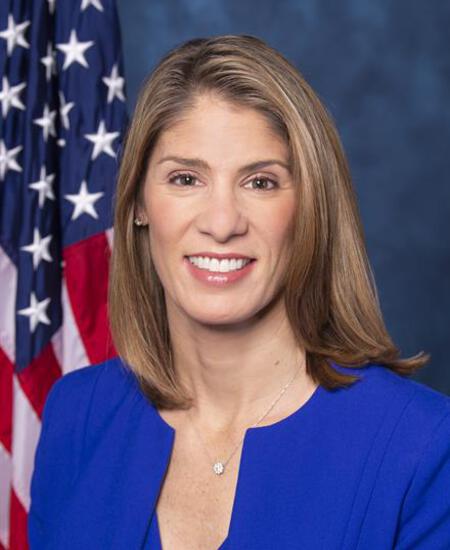
Rep. Lori Trahan
Sponsored bills
Improving Access to Nutrition Act of 20 21 This bill repeals certain work requirements for the Supplemental Nutrition Assistance Program (SNAP, formerly known as the food stamp program). The requirements apply to able-bodied adults who are ages 18-49 and have no dependent children. Individuals who do not meet certain work requirements are generally prohibited from receiving more than 3 months of SNAP benefits over a 36-month period. Under current law, some of the work requirements under SNAP are temporarily suspended due to COVID-19 (i.e., coronavirus disease 2019).
Accelerating Kids' Access to Care Act This bill requires state Medicaid programs to establish a process through which qualifying out-of-state providers may enroll as participating providers without undergoing additional screening requirements. Among other things, a qualifying provider must (1) serve minors, or adults whose condition began as a minor; and (2) have previously been screened for Medicare participation or for participation in the Medicaid program of the state in which the provider is located.
Equity in Neuroscience and Alzheimer's Clinical Trials Act of 2021 or the ENACT Act of 2021 This bill sets out activities and requirements to increase the participation of underrepresented populations in research and clinical trials for Alzheimer's disease and related dementias. Specifically, the National Institute on Aging (NIA) must establish and provide technical assistance to Alzheimer's research centers located in areas with higher concentrations of minority groups. These centers must establish diagnostic and treatment clinics designed to serve minority, rural, and other underserved populations; operate clinical trials; and carry out public outreach to encourage members of minority populations to participate in clinical trials and research. Additionally, the NIA must disseminate information to members of minority populations about participating in clinical trials and take other actions to enhance diversity with respect to the Alzheimer's research that it conducts or supports. The bill also directs the NIA to increase diversity among Alzheimer's researchers by encouraging the participation of individuals who are from groups that are underrepresented in clinical, behavioral, and social sciences.
Northern Rockies Ecosystem Protection Act This bill designates specified National Forest System lands, National Park System lands, and public lands in Idaho, Montana, Oregon, Washington, and Wyoming as wilderness and as components or additions to existing components of the National Wilderness Preservation System. The Department of the Interior and the Department of Agriculture (USDA) must accept donations of leases or permits authorizing grazing on specified public or National Forest System lands. The bill also designates (1) specified federal lands as biological connecting corridors and as special corridor management areas; (2) segments of specified rivers and creeks in Idaho, Montana, and Wyoming as components of the National Wild and Scenic Rivers System; and (3) specified areas as wildland recovery areas. USDA shall develop a wildland recovery plan for each recovery area. A panel of independent scientists shall study roadless lands greater than 1,000 acres that are within the National Forest System in the Wild Rockies bioregion in Idaho, Montana, Oregon, Washington, or Wyoming and that are not designated as components of the National Wilderness Preservation System for their role in maintaining biological diversity in the Northern Rockies and as part of the overall forest reserve system. Any new road construction or reconstruction or timber harvest is prohibited in those lands after the evaluation without an act of Congress. Oil or gas leasing, mining, or other development which impairs the natural and roadless qualities of the land is also prohibited.
Community Broadband Act of 2021 This bill prohibits states from blocking the provision of broadband by public providers, public-private partnership providers, or cooperatively organized providers. Further, public providers and state or local entities participating in a partnership must administer applicable ordinances and rules without discrimination against competing private providers.
Crash Avoidance System Evaluation Act This bill requires the Department of Transportation to evaluate the performance of crash avoidance systems at detecting and classifying pedestrians, bicyclists, and other vulnerable road users, including those with different skin tones that represent different racial and ethnic groups. Crash avoidance system is defined as a system in a motor vehicle used to prevent or mitigate a crash, including a system using cameras, lidar, or radar.
Virtual Peer Support Act of 2021 This bill appropriates funding for grants to transition behavioral health peer support services that are provided at no cost to participants from in-person to virtual platforms or to otherwise expand these kinds of virtual services. Specifically, the Substance Abuse and Mental Health Services Administration must award competitive grants to certain consumer-controlled or consumer-run organizations and tribal communities. Among other eligibility requirements for these grants, entities must have offered certain behavioral health services at no cost to participants before the declaration of the COVID-19 (i.e., coronavirus disease 2019) public health emergency.
Transform, Heal, and Renew by Investing in a Vibrant Economy Act or the THRIVE Act This bill establishes a program to address the economy, racial justice, and climate change. The President must establish a board to advise the President and the heads of federal departments and agencies regarding the implementation of this bill. The President, in consultation with the board, must establish a 10-year plan to create a society that enables and supports greater racial, Indigenous, gender, environmental, and economic justice; work opportunities; healthy communities; a stable climate; and healthy ecosystems. In addition, the President, in consultation with the board, must implement a program that provides support to public or private entities that carry out qualified programs. The programs must meet certain labor, equity, and environmental conditions and support infrastructure, including to expand access to pollution-free, renewable, and affordable energy; care workers and social infrastructure (e.g., health care infrastructure); expanded access to housing; efforts to protect and restore biodiversity or natural habitats and efforts to remediate pollution in communities harmed by environmental, economic, or socioeconomic injustice; agriculture, including agricultural workers; or the development and transformation of the U.S. industrial base, including by expanding manufacturing of clean technologies.

Retirement Parity for Student Loans Act of 2021 This bill allows certain employer-sponsored retirement plans to make matching contributions for an employee's student loan payments as if the loan payments were salary reduction contributions to the retirement plan.