

National Heritage Area Act of 2021 This bill establishes a National Heritage Areas System to recognize certain areas of the United States that tell nationally significant stories and to conserve, enhance, and interpret the areas' natural, historic, scenic, and cultural resources that illustrate significant aspects of U.S. heritage, and authorizes appropriations through FY2034 for each National Heritage Area. Through such system, the Department of the Interior may provide technical and financial assistance to local coordinating entities to support the establishment, development, and continuity of such areas. The bill extends the authority for the Erie Canalway National Heritage Corridor Commission and the Gullah/Geechee Cultural Heritage Corridor Commission until September 30, 2034. The local coordinating entity of a National Heritage Area, not later than three years after the area is included in the National Heritage Area System, shall submit to Interior a management plan for approval. Interior, not later than one year before the authorization for federal funding expires for a National Heritage Area, shall (1) conduct an evaluation of the accomplishments of that area, and (2) submit a report detailing the evaluation to specified congressional committees. Based upon the evaluation, Interior shall prepare a report with recommendations for the National Park Service's continued role, if any, with respect to the area. Interior may carry out or certify a study to assess the suitability and feasibility of designating a specific geographic area as a National Heritage Area to be included in the National Heritage Area System.
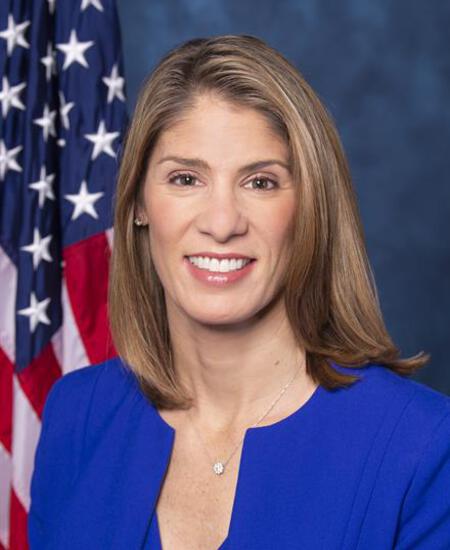
Rep. Lori Trahan
Sponsored bills
Pink Tax Repeal Act This bill prohibits product manufacturers or service providers from selling substantially similar products at different prices based on the gender of the intended purchaser. If, for example, the only difference between two products is the color, they are substantially similar. The bill provides authority for the Federal Trade Commission and state attorneys general to enforce these requirements.
This bill places restrictions on recurring political contributions or donations. Specifically, the bill prohibits any person from soliciting a recurring contribution or donation for a political committee, an independent expenditure, or an electioneering communication by any method that does not require the affirmative consent of the contributor or donor. In addition, the bill prohibits a political committee, a person funding an independent expenditure, or a person funding an electioneering communication from accepting a recurring contribution or donation unless the contributor or donor gave affirmative consent. This affirmative consent cannot be a passive action by the contributor or donor, such as failing to uncheck a prechecked box. Further, any person who accepts a recurring contribution or donation must (1) provide a receipt for the initial contribution or donation and for each recurrence that clearly and conspicuously discloses all material terms, (2) provide all information needed to cancel the recurring contribution or donation in each communication with the contributor or donor, and (3) immediately cancel recurring contributions or donations upon request of the contributor or donor.
Pipeline and LNG Facility Cybersecurity Preparedness Act This bill requires the Department of Energy to implement a program to ensure the security, resiliency, and survivability of natural gas pipelines, hazardous liquid pipelines, and liquefied natural gas facilities.
Promising Pathway Act This bill establishes a provisional approval pathway for medicines intended for serious or life-threatening diseases, including illnesses posing a threat of epidemic or pandemic. The period of the provisional approval is for two years and is potentially renewable. The Food and Drug Administration (FDA) must establish a priority review system to evaluate completed provisional approval applications within 90 days of receipt. A provisional approval application may be approved if the FDA determines that (1) there is substantial evidence of safety for the drug; and (2) there is relevant early evidence of efficacy, based on adequate and well-controlled investigations. During the COVID-19 (i.e., coronavirus disease 2019) pandemic, or another epidemic or pandemic, the FDA must accept and review various portions of a provisional approval application on a rolling basis. The manufacturer of a provisionally approved drug must require patients to participate in an observational registry. A manufacturer that fails to comply with registry requirements is subject to civil penalties. A provisionally approved drug must be labeled as such. If a drug that receives provisional approval status is not brought to market within 180 days of the approval, the approval must be rescinded. The bill also limits the liability of a manufacturer of a provisionally approved drug with respect to any claim under state law alleging that the drug is unsafe or ineffective. Private health insurers and federal health care programs shall not deny coverage of a provisionally approved drug on the basis of it being experimental.
Paycheck Fairness Act This bill addresses wage discrimination on the basis of sex, which is defined to include pregnancy, sexual orientation, gender identity, and sex characteristics. Specifically, it limits an employer's defense that a pay differential is based on a factor other than sex to only bona fide job-related factors in wage discrimination claims, enhances nonretaliation prohibitions, and makes it unlawful to require an employee to sign a contract or waiver prohibiting the employee from disclosing information about the employee's wages. The bill also increases civil penalties for violations of equal pay provisions. Additionally, the Equal Employment Opportunity Commission (EEOC) and the Office of Federal Contract Compliance Programs must train EEOC employees and other affected parties on wage discrimination. The bill directs the Department of Labor to (1) establish and carry out a grant program to provide training in negotiation skills related to compensation and equitable working conditions, (2) conduct studies to eliminate pay disparities between men and women, and (3) make available information on wage discrimination to assist the public in understanding and addressing such discrimination. The bill establishes the National Award for Pay Equity in the Workplace for an employer who has made a substantial effort to eliminate pay disparities between men and women. It also establishes the National Equal Pay Enforcement Task Force to address compliance, public education, and enforcement of equal pay laws. Finally, the bill requires the EEOC to issue regulations for collecting from employers compensation and other employment data according to the sex, race, and national origin of employees for use in enforcing laws prohibiting pay discrimination.
This resolution expresses support for the designation of Portuguese National Heritage Month. The bill also esteems the integral role of the Portuguese-American community and the manifold heritage of Portugal in the economy, culture, and identity of the United States.
Doctors of Community Act or the DOC Act This bill reauthorizes and provides mandatory funding for graduate medical education programs operated by teaching health centers. The bill sets out funding levels through FY2033. Funding for FY2034 and beyond equals the preceding fiscal year's amount adjusted for medical inflation.
Social Media Disclosure And Transparency of Advertisements Act of 2021 or the Social Media DATA Act This bill requires consumer-facing websites and mobile applications with a large number of users to maintain advertisement libraries and make them available to academic researchers and the Federal Trade Commission (FTC). Each library must include, among other things, a digital copy of the advertisement content, a description of the target audience, and the number of views generated from the advertisement. The FTC and state attorneys general are authorized to enforce these requirements, and the FTC must use information from the advertisement libraries to enforce other laws within its jurisdiction. Additionally, the bill establishes a working group to address social media research access and make policy recommendations with respect to the information an interactive computer service (e.g., a social media company) should make available to academic researchers.
United States Army Rangers Veterans of World War II Congressional Gold Medal Act This bill provides for the award of a single Congressional Gold Medal to the U.S. Army Rangers Veterans of World War II in recognition of their dedicated service during World War II.