This concurrent resolution expresses the sense of Congress that title IX of the Education Amendments of 1972 applies to the National Collegiate Athletics Association (NCAA) and that the NCAA should work to prevent sex-based discrimination in its programs and activities.
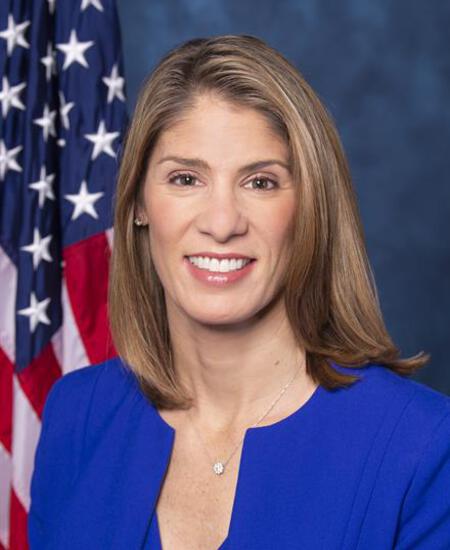
Rep. Lori Trahan
Sponsored bills
Essential Caregivers Act of 2021 This bill requires skilled nursing facilities, nursing facilities, intermediate care facilities for the intellectually disabled, and nearby inpatient rehabilitation facilities to establish an essential caregivers program during a public health emergency. Under the program, facilities must allow each resident to select up to two essential caregivers to provide daily living assistance, emotional support, or companionship during the emergency. Facilities must afford such caregivers 12 hours of access to residents each day (or unlimited access for end-of-life care), and caregivers must agree to follow facility protocols for staff safety. Facilities may deny access to caregivers who violate protocols, subject to certain notification requirements; the Centers for Medicare & Medicaid Services must establish an appeals process relating to such decisions and may take specified enforcement actions against facilities that violate the bill's requirements.
Better Care Better Jobs Act This bill establishes programs and provides funds for state Medicaid programs to improve home- and community-based services (HCBS), such as home health care, personal care, case management, and rehabilitative services. Specifically, the bill provides funds for the Centers for Medicare & Medicaid Services to award planning grants, develop quality measures, and provide technical assistance to states regarding specified HCBS improvements, particularly with respect to access, utilization, and the associated workforce. The bill also increases the Federal Medical Assistance Percentage (i.e., federal matching rate) for HCBS in states that develop plans and meet specified benchmarks for improvements. The bill also makes permanent (1) the Money Follows the Person Rebalancing Demonstration Program (a grant program to help states increase the use of HCBS for long-term care and decrease the use of institutional care), and (2) certain provisions regarding Medicaid eligibility that protect against spousal impoverishment for recipients of HCBS.
Expanding Health Care Options for Early Retirees Act This bill establishes a Medicare buy-in option for certain qualifying first responders. Specifically, the bill allows first responders aged 50 to 64 to enroll in Medicare if they are retired or otherwise separated from service due to a disability. The Centers for Medicare & Medicaid Services (CMS) must determine enrollment periods and set premiums for the buy-in option established under the bill, in accordance with specified requirements. The CMS must also award grants to states and nonprofit organizations for outreach and enrollment activities relating to the buy-in option.
Therapeutic Fraud Prevention Act of 20 21 This bill prohibits commercial conversion therapy, which is a practice or treatment designed to change a person's sexual orientation or gender identity or otherwise change behaviors, thoughts, or expressions related to gender or sexual attraction. This prohibition does not apply to treatment that assists an individual undergoing a gender transition or facilitates identity exploration and development.
Reducing Hereditary Cancer Act of 2021 This bill provides for Medicare coverage of germline mutation testing for individuals with a personal or family history of a hereditary cancer gene mutation or suspected history of hereditary cancer, as well as for associated coverage of risk-reducing surgeries and screenings.
Platform Competition and Opportunity Act of 2021 This bill generally prohibits operators of covered platforms from acquiring the stock or other share capital or the assets of another person engaged in commerce or in any activity affecting commerce. Covered platforms are online platforms that (1) have at least 50 million U.S.-based monthly active users or at least 100,000 U.S.-based monthly active business users, (2) are owned or controlled by a person with net annual sales or a market capitalization greater than $600 billion, and (3) are critical trading partners for the sale or provision of any product or service offered on or directly related to the platform. The Federal Trade Commission or the Department of Justice must designate whether an entity is a covered platform, and both must carry out enforcement activities. The bill provides for any person (other than a foreign state and any instrumentality thereof) who is injured by an activity forbidden under the bill to recover triple damages. (A foreign state may only recover actual damages.) Further, the bill specifies the U.S. Court of Appeals for the District of Columbia Circuit as the judicial venue for a covered platform's appeals related to (1) the designation as a covered platform, (2) other administrative and enforcement proceedings, or (3) a final order issued in any district court.
Augmenting Compatibility and Competition by Enabling Service Switching Act of 2021 or the ACCESS Act of 2021 This bill requires large online platforms (e.g., YouTube, Salesforce) to facilitate consumers and businesses switching from one platform to another. Specifically, the platforms must maintain interfaces that (1) securely transfer user data to other platforms (i.e., portability), and (2) allow other platforms to connect and communicate with their systems (i.e., interoperability). The bill provides the Federal Trade Commission (FTC) and the Department of Justice with the authority to designate specific platforms to which these requirements apply. After a platform is designated, the FTC must issue standards of interoperability specific to the platform. A platform may not change its interoperability interface without petitioning the FTC, and the platform must provide to competing businesses documentation for accessing the interface. Further, the FTC must establish a technical committee to assist with the implementation of these requirements. The bill provides the FTC with authority to enforce these requirements including through recovery of civil penalties and injunctive relief.
Protecting Older Workers Against Discrimination Act of 2021 This bill revises the evidentiary standard for age discrimination by establishing an unlawful employment practice when the complaining party demonstrates that age or participation in an investigation, proceeding, or litigation related to an age discrimination claim was a motivating factor for an adverse practice, even though other factors also motivated the practice (thereby allowing what are commonly known as mixed motive claims). The bill (1) permits the complaining party to rely on any type or form of admissible evidence, which need only be sufficient for a reasonable trier of fact to find that an unlawful practice occurred; and (2) declares that the complaining party shall not be required to demonstrate that age or retaliation was the sole cause of the employment practice (thereby rejecting the Supreme Court's decision in Gross v. FBL Financial Services, Inc. , which requires the complainant to prove that age was the but-for cause for the employer's decision). The bill applies this evidentiary standard to other employment discrimination and retaliation claims, including claims under the Civil Rights Act of 1964, the Americans With Disabilities Act of 1990, and the Rehabilitation Act of 1973. In a claim in which age discrimination is shown, but where the employer demonstrates that it would have taken the same action absent the motivating factor of age, the bill authorizes courts to grant declaratory and injunctive relief, but prohibits the court from awarding damages or issuing an order requiring any admission, reinstatement, hiring, promotion, or payment. This limitation also applies to claims of discrimination based on disability. The bill also includes reporting requirements for the Equal Employment Opportunity Commission and the Department of Labor.

Cultivating Opportunity and Recovery from the Pandemic through Service Act or the CORPS Act This bill makes several changes to AmeriCorps programs during the COVID-19 health emergency. Specifically, the bill: increases living allowance payments to program participants; increases educational awards for program participants; relaxes program requirements, including reducing the age requirement for AmeriCorps Seniors to 45 and older; creates a pilot program to allow state commissions to directly place individuals in approved AmeriCorps programs; and allows for targeted AmeriCorps grants to fund recovery projects in communities disproportionately affected by COVID-19. The bill also excludes AmeriCorps living allowance payments and educational awards from taxable income for program participants.