

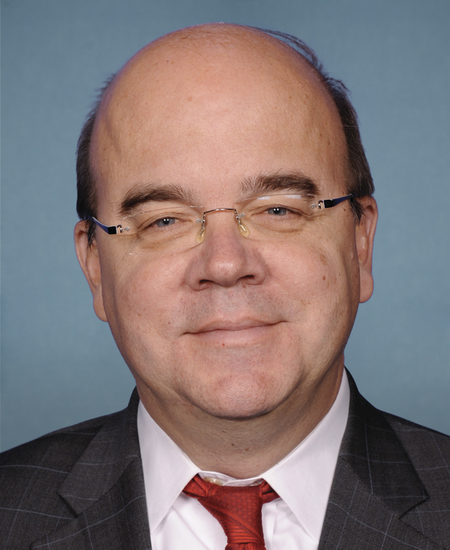
Photo of James P. McGovern
D United States House · District 2 · Massachusetts On the 2026 ballot

Rep. James P. McGovern

Compare
Total votes
2,837
all sessions
Attendance
99%
33 missed
Near the chamber average
With party
97%
of cast votes
Near the chamber average
Bipartisan score
2%
crosses aisle rarely
Near the chamber average
Sponsored
2,377
bills & resolutions
Higher than 89% of chamber peers
Committees
4
assignments
2,377 bills and resolutions

Sponsored bills

Total
2,377
Primary
122
Co-sponsor
2,255
This page
2,377
matching current filters
Co-sponsor HR 7041
In committee · United States House · Co-sponsor
Tax Excessive CEO Pay Act of 2024

Maddy summaryHR 7041, the Tax Excessive CEO Pay Act of 2024, imposes a corporate tax penalty on large companies where the CEO's pay exceeds 50 times the average worker's pay. The penalty adds 0.5% to 5% to the corporate tax rate, depending on how much higher the CEO's pay is relative to workers (e.g., 50-100:1 ratio adds 0.5%, over 500:1 adds 5%). It applies only to corporations with over $100 million in average annual revenue, exempting smaller businesses. The law aims to address extreme pay disparities by increasing taxes on companies with the highest CEO-to-worker pay ratios, effective for tax years after 2024.

In committee Jan 18, 2024 1 co-sponsor
Co-sponsor HR 7039
In committee · United States House · Co-sponsor
Stronger Communities through Better Transit Act

Maddy summaryThe Stronger Communities through Better Transit Act establishes a new federal grant program to improve public transportation service. It provides funding to urban areas, states, and Indian tribes to cover up to 50% of public transit operating costs (up to 80% in persistent poverty areas and 100% for Indian tribes), with requirements to report on service frequency, access to jobs, and conduct community surveys. The program mandates that a majority of funds must benefit underserved communities and areas of persistent poverty, defined as census tracts with high poverty rates or minority populations. Recipients must maintain their transit funding levels and report on improvements in access to essential services. The bill authorizes $20 billion annually for fiscal years 2024-2027.

In committee Jan 18, 2024 1 co-sponsor
Co-sponsor HR 6053
In committee · United States House · Co-sponsor
Break Free From Plastic Pollution Act of 2023

Maddy summary# Summary of "Protecting Communities from Plastics Act" (Title II) This comprehensive legislation addresses the environmental, health, and environmental justice impacts of plastics production and use. Key provisions include: ## Environmental Justice Protections - Requires environmental justice assessments for permits of "covered facilities" (plastics manufacturing facilities) - Mandates consultation with "fenceline communities" (communities near facilities) including: * Prompt notification in multiple languages * Public hearings with translation services * Community benefit agreements - Establishes a 45-day waiting period before approving permits after public hearings ## Regulatory Requirements - Amends Clean Air Act to establish new source performance standards for plastics facilities - Requires continuous monitoring of air emissions (benzene, nitrogen oxides, etc.) - Amends Clean Water Act to prohibit discharge of plastic pellets in wastewater - Requires financial assurance for facility closure and emergency response - Prohibits new facility permits within 5 miles of community buildings (schools, hospitals, etc.) ## Research and Monitoring - Requires study of microplastics in food (including fish, meat, fruits, vegetables) - Mandates research on microplastics in human bodies (urine, breastmilk, stool) - Establishes a pilot program to test technologies for microplastic removal - Requires inventory of plastics manufacturing and distribution ## Additional Provisions - Temporary permitting moratorium on new plastics facilities (during "temporary pause period") - Requires listing of discarded polyvinyl chloride as hazardous waste - Limits National Recycling Strategy to exclude chemical recycling technologies - Creates grants to reduce single-use plastics in agricultural packaging - Requires biodegradable alternatives to plastic weed barriers The legislation aims to address the disproportionate environmental and health impacts of plastics production on vulnerable communities while establishing comprehensive regulatory frameworks for plastics manufacturing and disposal.

In committee Jan 18, 2024 1 co-sponsor
Co-sponsor HR 5915
In committee · United States House · Co-sponsor
Supporting Urban and Innovative Farming Act of 2023

Maddy summaryThe Supporting Urban and Innovative Farming Act of 2023 establishes a new USDA office to provide technical assistance for urban and innovative agricultural operations, including rooftop farms, hydroponics, and community gardens. It authorizes competitive grants with mandatory annual funding starting at $15 million in 2024 (rising to $50 million by 2028) to support projects improving fresh food access in underserved areas, prioritizing microgrants for individual urban farmers and initiatives serving disadvantaged communities. The bill requires the USDA to collect and report data on urban farming locations, demographics, and production methods like vertical farming and aquaponics. These provisions directly affect urban farmers, community organizations, and local governments working to expand food production in cities.

In committee Jan 18, 2024 1 co-sponsor
Co-sponsor HR 7028
In committee · United States House · Co-sponsor
Keeping Our Promise Act

Maddy summaryThis bill restores visa eligibility for immigrants who had diversity visas allocated for fiscal years 2017-2022 but were denied entry due to specific travel restrictions (like Executive Orders 13769/13780 or related proclamations) or pandemic-related delays. The State Department must notify affected individuals within 90 days of the bill’s enactment, giving them one year to confirm they wish to proceed with their visa applications. Unused visas from those years can be reallocated without counting against current annual limits, and applicants who fail to respond or are denied for standard reasons (like education requirements) lose eligibility. The policy directly affects individuals impacted by these specific past barriers to immigration.

In committee Jan 17, 2024 1 co-sponsor
Co-sponsor HR 3650
In committee · United States House · Co-sponsor
Opportunities in Organic Act of 2023

Maddy summaryHR 3650, the Opportunities in Organic Act of 2023, amends the Farm Security and Rural Investment Act of 2002 to create a new "Opportunities in Organic" program. It provides federal reimbursement for organic certification costs (up to $1,500 per producer, with higher amounts possible for socially disadvantaged farmers or in high-cost regions) and establishes new funding for nonprofits to support farmers transitioning to organic practices. The bill directly affects socially disadvantaged farmers, small/mid-sized farms, and eligible nonprofit organizations by covering transition costs like soil testing, equipment, land access barriers, and technical assistance. Key provisions include $50 million annually for fiscal years 2024-2025, increasing to $100 million by 2027, with specific requirements for reporting on program outcomes and participant demographics.

In committee Jan 17, 2024 1 co-sponsor
Co-sponsor HRES 960
In committee · United States House · Co-sponsor
RESPECT Resolution

Maddy summaryHRES 960, the RESPECT Resolution, is a non-binding congressional resolution urging states and localities to adopt equity-focused cannabis policies. It outlines 15 specific best practices, including eliminating criminal penalties for cannabis possession, reforming licensing fees to be cost-based, prioritizing licenses for communities disproportionately impacted by cannabis enforcement (such as formerly incarcerated individuals and low-income residents), and creating automatic expungement for cannabis offenses. The resolution also calls for reinvesting cannabis tax revenue into communities harmed by prohibition and urges the U.S. to advocate for global descheduling of cannabis at the United Nations. It directly addresses racial disparities in enforcement and market access, particularly for people of color who face barriers to entering the legal cannabis industry.

In committee Jan 12, 2024 1 co-sponsor
Co-sponsor HR 6928
In committee · United States House · Co-sponsor
CONNECT Act of 2024

CONtinuity in Necessary Evaluative Crisis Treatment Act of 2024 or the CONNECT Act of 2024 This bill requires the Substance Abuse and Mental Health Services Administration to award grants to certain crisis centers for providing follow-up care to individuals who receive suicide prevention and crisis intervention services.

In committee Jan 12, 2024 1 co-sponsor
Co-sponsor HR 5701
In committee · United States House · Co-sponsor
No Photo for Food Act of 2023

Maddy summaryThis bill amends the Food and Nutrition Act of 2008 to remove a requirement that state agencies include photographs on electronic benefit transfer (EBT) cards used for the Supplemental Nutrition Assistance Program (SNAP). Specifically, it eliminates the provision allowing states to mandate photo identification on SNAP EBT cards, stating that "a State agency may not require that an electronic benefit card contain a photograph." The change directly affects SNAP recipients who previously might have been required to provide a photo for their benefits card. The amendment takes effect 180 days after enactment, with existing certification periods unaffected.

In committee Jan 11, 2024 1 co-sponsor
Co-sponsor HR 5643
In committee · United States House · Co-sponsor
SNP Act of 2023

Maddy summaryThis bill amends the Food and Nutrition Act of 2008 to update how Supplemental Nutrition Assistance Program (SNAP) applications are processed. It adds "video" to telephonic interview options and allows applicants with hearing impairments to use "gesture over a video phone" instead of standard methods. The bill also expands record-keeping flexibility by adding "audio or in writing" to application documentation requirements. These changes apply to all SNAP applications submitted after January 1, 2024, directly affecting applicants who rely on accessible communication methods during the application process.

In committee Jan 11, 2024 1 co-sponsor
Showing 881 to 890 of 2,377 bills
Previous 1 … 88 89 90 … 238 Next