

Maddy summaryThis resolution supports the United Nations' second International Decade for People of African Descent (2025-2034) and urges the U.S. Department of State to advance global efforts to combat racial discrimination. It specifically calls for U.S. backing of the UN Declaration on human rights for people of African descent, funding for the UN Expert Mechanism on racial justice, and collaboration with civil society to address systemic racism in areas like education, health, and justice. The resolution emphasizes a gender-focused approach, including support for Afro-descendant women, LGBTQIA+ individuals, and other marginalized groups. As a non-binding resolution, it directs U.S. foreign policy priorities without creating new legal obligations.
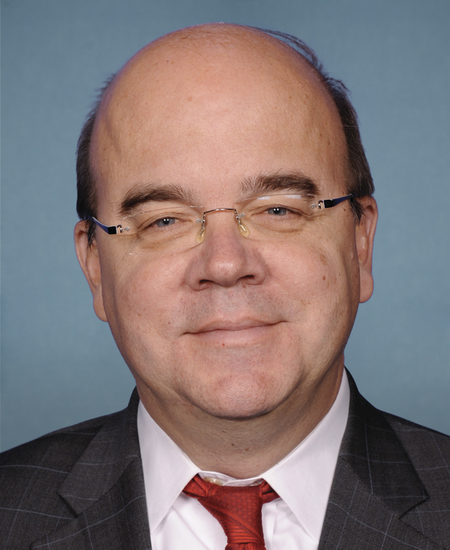
Rep. James P. McGovern
Sponsored bills
Maddy summaryHR 10165, the Security Clearance Review Act, requires the FBI Director to approve security clearances and access to classified information for political appointees working in the Executive Office of the President. It prohibits such appointees from holding clearances or accessing classified information without the FBI Director’s explicit authorization. If the FBI denies clearance, the Director must immediately notify the President and Congress. If the President overrides this denial, they must provide a written explanation to Congress within 30 days. The bill directly affects political appointees in the White House and establishes new oversight steps for security clearance decisions.
Maddy summaryHR 9981, the "Ban Atrazine Toxicants Act," would immediately cancel all U.S. registrations for atrazine, the second-most widely used herbicide (80 million pounds annually), banning its use on crops and prohibiting sales of existing stock. The bill requires the EPA to revoke all food safety limits for atrazine within six months and prohibits future registrations or emergency uses of the chemical. It directly affects farmers, agricultural producers, and food suppliers who currently use or handle atrazine, while aiming to address documented environmental persistence and health risks linked to atrazine, including reproductive harm and impacts on endangered species. The bill cites USDA data indicating a minimal 1.19% potential decrease in corn yields from the ban, referencing Germany and Italy’s experience with no significant yield drops after similar bans.
Maddy summaryThis resolution (HRES 1558) is a symbolic House of Representatives measure supporting October as "National Domestic Violence Awareness Month." It does not create new laws or allocate funding but formally expresses the House's support for raising awareness about domestic violence and its impacts, and urges continued backing for existing programs that address domestic violence. The resolution cites statistics on domestic violence prevalence (e.g., 24 people per minute affected by intimate partner violence) to underscore the importance of the observance. It directly affects public awareness efforts but does not change policies or directly impact individuals.
Maddy summaryHRES 1553 is a resolution expressing the House of Representatives' sense that action is needed to address a federal tax exemption under Puerto Rico's Act 22. This provision allows wealthy Americans who do not reside in Puerto Rico to receive 100% exemptions from income and capital gains taxes in Puerto Rico while legally avoiding U.S. federal taxes. The resolution focuses on the tax loophole enabling this arrangement, which the bill claims contributes to housing displacement and price spikes on the island. It does not change tax law but urges the House to act on this issue. (Note: As a resolution, it is procedural and not a binding legislative measure.)
Maddy summaryThis bill establishes the Advisory Council on African Diaspora Engagement within the U.S. Department of State. The council, composed of up to 12 members representing diverse African American and African immigrant communities, advises the Secretary of State on strengthening U.S. government connections with the African diaspora in the United States. Key functions include recommending strategies to advance equity, support UN initiatives, expand cultural and economic programs (like the Young African Leaders Initiative), and foster diaspora engagement in trade and development. The council meets quarterly, reports to relevant congressional committees, and operates using existing Department of State funding.
Maddy summaryThis bill expands Medicaid coverage for low-income individuals diagnosed with breast or cervical cancer. It requires Medicaid programs to cover breast reconstruction surgery after a medically necessary mastectomy, adding this as a mandatory benefit under existing Medicaid rules. The bill also modifies eligibility criteria to ensure coverage for these specific cancer patients, aligning with prior Medicaid provisions. These changes apply to all states administering Medicaid, directly affecting eligible patients seeking cancer treatment and recovery services.
Maddy summaryThe VA Employee Fairness Act of 2024 modifies collective bargaining rules for employees of the Veterans Health Administration (VHA). It removes existing subsections (b), (c), and (d) from the law governing VHA employee bargaining and renumbers the remaining provision. This change streamlines the collective bargaining framework but does not alter the Secretary of Veterans Affairs' existing authorities over incentive pay and expedited hiring. The bill directly affects VHA employees by changing how their collective bargaining rights are structured under federal law. The law remains neutral, focusing solely on procedural adjustments to the existing bargaining framework.
Maddy summaryHRES 1462 is a symbolic resolution supporting the designation of September 16-20, 2024, as "Malnutrition Awareness Week." It does not create new laws or funding but recognizes the significance of malnutrition as a public health issue affecting vulnerable groups, including older adults, children, and communities of color. The resolution highlights existing programs like the Older Americans Act and Federal child nutrition initiatives, while encouraging awareness and access to nutrition services. It serves as a non-binding acknowledgment of malnutrition's impact and ongoing efforts to address it.
Maddy summaryThe National Food as Medicine Program Act of 2024 creates a federal grant program to help states implement or expand initiatives that provide medically prescribed, nutrient-rich food (like fresh produce or tailored meals) to address chronic health conditions and food insecurity. States must partner with healthcare providers and community organizations to offer these interventions, using locally-sourced, sustainably produced food grown through regenerative or organic methods. The program requires states to evaluate outcomes like reduced hospital visits and improved health metrics, with reports submitted to the federal government after three years. It directly affects state Medicaid programs and healthcare providers participating in these initiatives.