

Maddy summaryHR 549, the Metastatic Breast Cancer Access to Care Act, removes waiting periods for disability and Medicare coverage for people diagnosed with metastatic breast cancer. Specifically, it amends Social Security Act sections to allow immediate eligibility for disability insurance benefits (eliminating the standard waiting period) and immediate Medicare coverage (waiving the 24-month waiting period) for these patients. The bill directly affects individuals with metastatic breast cancer who would otherwise face delays in accessing critical benefits. These changes apply to applications filed or benefits beginning after the bill's enactment date. The law makes no other policy changes beyond these specific eligibility adjustments.
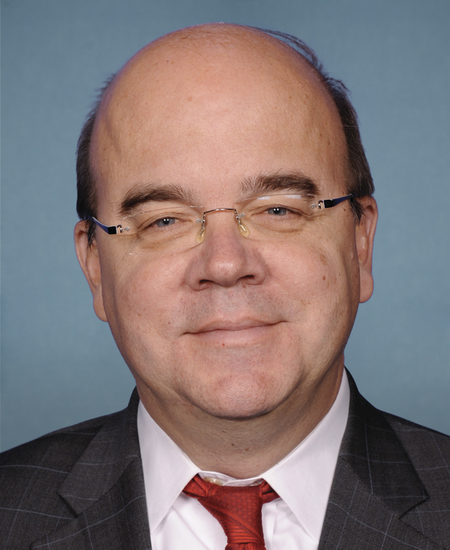
Rep. James P. McGovern
Sponsored bills
Maddy summaryThe EACH Act of 2023 would require federal health programs - including Medicaid, Medicare, the Indian Health Service, and TRICARE - to cover abortion services without restrictions. It repeals a provision in the Affordable Care Act that allowed states to limit abortion coverage in health insurance plans sold through state marketplaces. The bill also prohibits the federal government from restricting abortion coverage in private health insurance plans. This would directly affect millions of people, particularly low-income individuals and people of color, who are disproportionately enrolled in Medicaid and currently face barriers to abortion care due to coverage restrictions.
Maddy summaryHR 415, the "End the Threat of Default Act," repeals the statutory debt ceiling (section 3101 of Title 31, U.S. Code), which currently limits how much the federal government can borrow. This would eliminate the need for Congress to approve increases to the borrowing cap, removing the risk of a government default on its debts. The bill directly affects the Treasury Department’s ability to manage federal borrowing, as it would no longer require congressional action to authorize new debt issuance. The technical amendments update references to the debt ceiling in other laws to reflect this change.
Maddy summaryThe Assuring Medicare’s Promise Act of 2023 directs that taxes collected under the net investment income tax (a tax on investment income for high earners) be added to the Medicare Hospital Insurance Trust Fund, which helps finance Medicare Part A benefits. It modifies the tax code to include certain business income of high-income individuals (with modified adjusted gross income over $400,000 for single filers or $500,000 for joint filers) in the tax base, but includes a phase-in mechanism to limit immediate tax increases. This bill primarily affects high-income taxpayers and aims to strengthen Medicare’s financial stability by increasing trust fund revenue.
Maddy summaryHR 33 would expand Medicare to cover dental, vision, and hearing services for beneficiaries, which are currently not covered under Medicare. The bill provides 100% coverage for preventive dental services in 2024, with basic dental services gradually increasing to 80% coverage by 2027. Vision coverage would include routine eye exams and corrective lenses at 80% coverage, while hearing services would cover hearing exams and hearing aids at 80% coverage. The bill includes specific limitations, such as two dental cleanings per year and one pair of glasses every 24 months, with the Secretary of Health and Human Services having authority to apply additional limitations or modify coverage based on medical recommendations. The changes would take effect on January 1, 2024.
Maddy summaryThe SNAP Benefits Fairness Act of 2023 amends a specific provision in the Food and Nutrition Act of 2008 to remove a rule that previously limited eligibility for Supplemental Nutrition Assistance Program (SNAP) benefits. It directly affects individuals applying for or receiving SNAP benefits by eliminating a barrier related to certain income or asset calculations. The key change involves striking a subsection (formerly (B)) and renumbering subsequent sections in the eligibility rules. This amendment will take effect on January 1 following the bill's enactment.
Maddy summaryHRES 152 is a non-binding House resolution supporting existing state "move over" laws, which require drivers to move over a lane or slow down near emergency responders on roadways. It directly affects all drivers by promoting awareness of these safety laws, which aim to protect emergency workers, tow operators, and stranded motorists. The resolution urges federal, state, and nonprofit groups to increase public education about these laws, citing that 50 traffic responders were killed in roadside collisions in 2022. It emphasizes that raising public awareness - identified as the top challenge by state officials - is critical to improving road safety.
Maddy summaryThis bill clarifies and authorizes U.S. government assistance programs focused on humanitarian demining and conventional weapons destruction. It directly affects U.S. agencies (State, Defense, USAID) and partner countries receiving aid, with over 120 nations benefiting since 1993. Key mechanisms include funding for clearing landmines and explosive remnants to return land to agriculture and development, securing weapons stockpiles to prevent diversion to terrorists, and providing community risk education. The bill specifies that these programs aim to save lives, reduce instability, support food security, and build security partnerships - using concrete examples like clearing 60,200 acres of land in 2022. It does not create new funding but formally defines the purposes of existing assistance under the Department of State Authorities Act.
Maddy summaryHR 7438 directs the U.S. Treasury to mint commemorative coins for the 2026 FIFA World Cup, including 100,000 $5 gold coins, 500,000 $1 silver coins, and 750,000 half-dollar coins. The coins will be sold to the public at face value plus surcharges ($35, $10, and $5 per coin, respectively), with all surcharge revenue paid to FWC2026 US, Inc. for U.S. soccer programs. These funds must support soccer initiatives, particularly in underserved communities and youth development, as specified in the bill. The coins are legal tender but will only be issued during 2026, with no net cost to the U.S. government.
Maddy summaryHRES 1613 is a non-binding resolution recognizing the U.S. House of Representatives' support for continued U.S. leadership in ending pediatric HIV/AIDS globally. It highlights that 57% of children with HIV were on treatment in 2023 (compared to 77% of adults) and calls for scaling up prevention of mother-to-child transmission and expanding pediatric HIV treatment access. The resolution specifically encourages the PEPFAR program to develop a dedicated pediatric HIV strategy aligned with global goals. As a formal expression of congressional support, it does not create new law but reaffirms the U.S. commitment to reducing new pediatric HIV infections.