

Maddy summaryThis bill establishes minimum nurse-to-patient ratios for hospital units across the country, requiring hospitals to maintain specific staffing levels (such as 1:1 in trauma units, 2:1 in critical care units, and 3:1 in emergency rooms) to improve patient safety and quality of care. Hospitals must develop transparent staffing plans that account for patient acuity, involve direct care nurses in planning, and document actual staffing levels for each shift. The bill includes strong whistleblower protections for nurses who object to unsafe staffing levels and prohibits hospitals from retaliating against nurses who report violations. It requires hospitals to comply with these standards as a condition for receiving Medicare and Medicaid payments, with enforcement through audits and civil penalties of up to $50,000 for repeated violations. The bill also includes provisions to support nurse recruitment and retention through workforce initiatives and training programs.
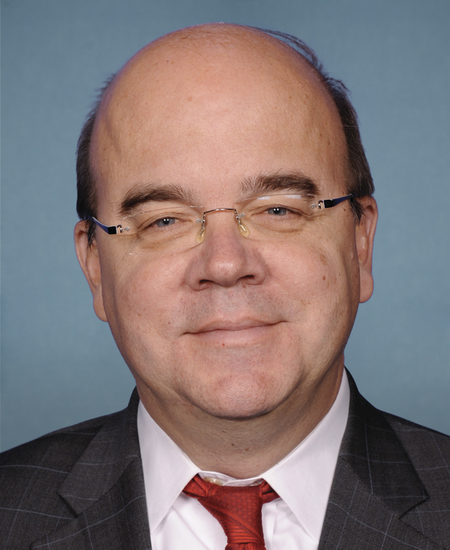
Rep. James P. McGovern
Sponsored bills
Maddy summaryHR 3368, the "Born in the USA Act of 2025," prohibits federal funding for Executive Order 14160 (which aimed to restrict birthright citizenship for children born in the U.S.). The bill directly affects federal agencies that might implement the executive order by blocking their use of funds for that purpose. Its key provision is a funding ban targeting the executive order and any similar future policies, without changing citizenship law. The bill does not alter birthright citizenship rights but prevents federal resources from being used to enforce the controversial executive order. It is a procedural measure focused on funding, not a substantive policy change to citizenship rules.
Maddy summaryThis bill prohibits businesses from charging different prices for substantially similar consumer products or services based on the gender they're marketed to, such as charging more for women's razors or grooming services compared to identical men's versions. It defines "substantially similar" as having no meaningful differences in materials, use, or design (excluding minor color variations), and makes violations enforceable by the Federal Trade Commission (FTC) under existing laws. State attorneys general can also sue businesses for violations to stop the pricing difference or recover damages for affected residents. The law directly affects consumers who face gender-based price discrimination and businesses selling comparable products or services.
Maddy summaryThis bill amends the Fair Labor Standards Act to prohibit children under 18 from having direct contact with tobacco plants or dried tobacco leaves on farms. It directly affects minors who might work on tobacco farms and tobacco farm employers who currently allow such employment. The key change adds tobacco farming to the list of occupations where children under 18 cannot work, closing a loophole that previously permitted this activity. This update explicitly excludes tobacco-related agriculture from exceptions allowing minors in certain farm jobs under federal law.
Maddy summaryHR 3277, the Ensuring Lasting Smiles Act, requires group health plans and health insurance issuers to cover medically necessary outpatient and inpatient treatments for congenital anomalies or birth defects primarily affecting the eyes, ears, teeth, mouth, or jaw. This includes reconstructive procedures, dental/orthodontic support during treatment, and follow-up care, but excludes purely cosmetic surgery not tied to a medical diagnosis. Cost-sharing (like copays) for these services must not be stricter than for other medical benefits. The law takes effect for plan years beginning January 1, 2026, and mandates insurers to provide notice about this coverage to beneficiaries.
Maddy summaryHR 3306, the Truth in Tariffs Act, requires retailers selling goods to U.S. consumers to clearly display the portion of a product's price caused by applicable tariffs (called a "tariff surcharge"). This applies to most retailers but exempts small businesses as defined by the Small Business Act. The Federal Trade Commission (FTC) will enforce this rule, treating violations as unfair or deceptive practices under existing law, with penalties similar to those for other FTC violations. The law takes effect 30 days after enactment, covering tariffs imposed by the President after January 20, 2025.
Maddy summaryHR 3243, the Therapeutic Fraud Prevention Act of 2025, bans the provision of paid conversion therapy aimed at changing a person's sexual orientation or gender identity, and prohibits advertising such therapy as effective, safe, or without risk. It directly affects LGBTQ+ individuals and their families who might be targeted by these practices, as professionals have determined conversion therapy is ineffective and harmful. The law treats violations as deceptive acts under consumer protection laws, empowering the Federal Trade Commission and state attorneys general to enforce it through civil actions. It explicitly excludes legitimate gender transition support and non-discriminatory counseling from the ban.
Maddy summaryHRES 386 is a non-binding House resolution condemning President Donald J. Trump's specific actions targeting press freedom, including accusing media outlets without evidence, excluding the Associated Press from White House access, suing CBS News, and seeking to defund public broadcasters like NPR and PBS. It reaffirms the critical role of a free press in democracy and urges the executive branch to respect journalists' rights, while calling for the release of 11 U.S. Agency for Global Media (USAGM) journalists imprisoned abroad. The resolution directly affects journalists, media organizations, and the executive branch by formally criticizing actions that threaten press independence. It does not create new laws but serves as a formal congressional statement of support for press freedom.
Maddy summaryHRES 278 is a procedural resolution that establishes rules for the House to immediately consider H.R. 185, a bill aiming to temporarily prevent cuts to Medicaid and SNAP benefits. It waives objections to H.R. 185 and specifies that an amendment adding this prohibition (which would expire January 20, 2029) is to be treated as adopted. The resolution also sets a one-week timeline for the House to pass the bill and transmit it to the Senate. This resolution itself does not change policy but enables the consideration of H.R. 185 through specific procedural steps.
Maddy summaryHR 3184, the PFAS Alternatives Act, funds research to develop turnout gear (firefighter safety clothing) without harmful PFAS chemicals, directly affecting firefighters who wear this gear. It authorizes $25 million annually (2025-2029) for grants to eligible organizations to research and test PFAS-free gear, requiring partnerships with firefighting groups to translate findings into practice. The bill also allocates $2 million yearly (2027-2031) for training programs on safe gear use and decontamination. Its goal is to reduce firefighters' exposure to chemicals linked to occupational illnesses during operations.