

Safe Line Speeds in COVID-19 Act This bill directs the Food Safety and Inspection Service of the Department of Agriculture (USDA), for the duration of the COVID-19 (i.e., coronavirus disease 2019) emergency period, to suspend any waivers and not issue new waivers related to line speeds in meat and poultry establishments and inspection staffing requirements for such establishments. Additionally, the implementation of, and conversion to, the New Swine Slaughter Inspection System must be suspended. No funds made available to USDA during the COVID-19 emergency period shall be used to develop, propose, finalize, issue, amend, or implement any policy, regulation, directive, constituent update, or any other agency program that would increase line speeds at meat and poultry establishments. Upon termination of the COVID-19 emergency period, the Government Accountability Office shall conduct a review of actions taken by specific federal agencies, including USDA, in response to the COVID-19 pandemic to determine the effectiveness of such actions in protecting animal, food, and worker safety.
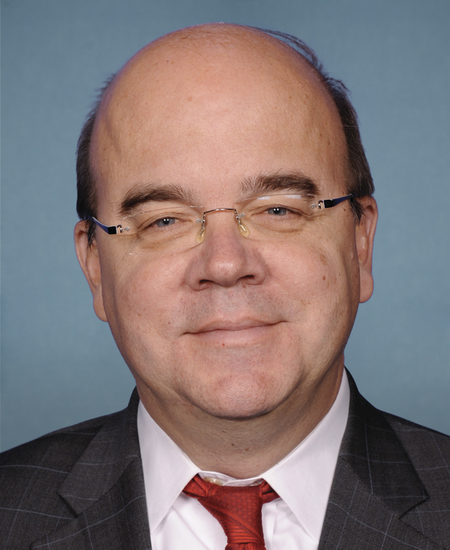
Rep. James P. McGovern
Sponsored bills
Improving Access to Nutrition Act of 20 21 This bill repeals certain work requirements for the Supplemental Nutrition Assistance Program (SNAP, formerly known as the food stamp program). The requirements apply to able-bodied adults who are ages 18-49 and have no dependent children. Individuals who do not meet certain work requirements are generally prohibited from receiving more than 3 months of SNAP benefits over a 36-month period. Under current law, some of the work requirements under SNAP are temporarily suspended due to COVID-19 (i.e., coronavirus disease 2019).
Mental Health Services for Students Act of 2021 This bill provides specific statutory authority for the Project AWARE (Advancing Wellness and Resiliency in Education) State Educational Agency Grant Program that is administered by the Substance Abuse and Mental Health Services Administration. The program supports school-based mental health services, including screening, treatment, and outreach programs.
Wartime Contracting Commission Reauthorization Act of 2021 This bill reestablishes the Commission on Wartime Contracting. The commission was established in 2008 to study U.S. wartime contracting in Iraq and Afghanistan. The bill replaces the commission's general duties to direct it to study (1) contracting funded by overseas contingency operations funds, and (2) contracting for the logistical support of coalition forces operating under the authority of the 2001 or 2002 Authorization for the Use of Military Force or for the performance of security functions in countries where coalition forces operate under that authority.
Accelerating Kids' Access to Care Act This bill requires state Medicaid programs to establish a process through which qualifying out-of-state providers may enroll as participating providers without undergoing additional screening requirements. Among other things, a qualifying provider must (1) serve minors, or adults whose condition began as a minor; and (2) have previously been screened for Medicare participation or for participation in the Medicaid program of the state in which the provider is located.
Breast Cancer Patient Equity Act This bill provides for Medicare coverage of custom fabricated breast prostheses following the surgical removal of the breast (i.e., a mastectomy), including replacements of such prostheses. Currently, Medicare covers surgically implanted breast prostheses, as well as some external breast prostheses (e.g., post-surgical bras).
Equity in Neuroscience and Alzheimer's Clinical Trials Act of 2021 or the ENACT Act of 2021 This bill sets out activities and requirements to increase the participation of underrepresented populations in research and clinical trials for Alzheimer's disease and related dementias. Specifically, the National Institute on Aging (NIA) must establish and provide technical assistance to Alzheimer's research centers located in areas with higher concentrations of minority groups. These centers must establish diagnostic and treatment clinics designed to serve minority, rural, and other underserved populations; operate clinical trials; and carry out public outreach to encourage members of minority populations to participate in clinical trials and research. Additionally, the NIA must disseminate information to members of minority populations about participating in clinical trials and take other actions to enhance diversity with respect to the Alzheimer's research that it conducts or supports. The bill also directs the NIA to increase diversity among Alzheimer's researchers by encouraging the participation of individuals who are from groups that are underrepresented in clinical, behavioral, and social sciences.
Military Child Care Expansion Act of 2021 This bill modifies and implements policies to update child care facilities and administration at the Department of Defense (DOD). Specifically, the bill removes certain requirements for members of the Armed Forces to receive funding for an in-home child care provider under the DOD pilot program that provides financial assistance to such members who pay for in-home child care. The bill also allows DOD to expand the pilot program to additional locations (currently it is authorized for five). DOD must establish a 10-year pilot program to expand access to child care for members of the Armed Forces by entering into agreements with public or private child care facilities or development centers. Under the bill, DOD must determine the (1) root causes contributing to poor or failing facility conditions at its child development centers, and (2) total cost to improve the conditions of such centers. The Government Accountability Office must review the determinations and make recommendations on how to improve DOD child development center conditions. Lastly, DOD must utilize its existing authority to carry out minor military construction projects to construct child development centers.
Servicemember Parental Leave Equity Act This bill modifies Department of Defense parental leave provisions for members of the Armed Forces. Specifically, the bill increases parental leave for primary caregivers to 18 weeks (currently 12) following the birth of a child and to 12 weeks (currently 6) following the adoption of a child. The bill increases parental leave for a secondary caregiver from 21 days to 12 weeks in connection with the birth or adoption of a child. Primary or secondary caregivers of a long-term foster child are authorized to take up to 12 weeks of leave in connection with such placement. Parental leave for a primary or secondary caregiver for a birth, adoption, or foster child placement may be taken in more than one increment. For primary caregivers, the leave must be utilized within one year of the event. The bill authorizes up to 12 weeks of leave to certain service members who would have been secondary caregivers but for a miscarriage, stillbirth, or infant death. The following activities required of an active-duty member within a 12-month postpartum period must have the approval of a health care provider and be at the election of the member or in the interest of national security: (1) an order of temporary duty overnight travel or to participate in physically demanding field training exercises, (2) meeting of body composition standards, or (3) passing a physical fitness test. The bill also reduces the service commitment required for participation in the Career Intermission Program.
Community Broadband Act of 2021 This bill prohibits states from blocking the provision of broadband by public providers, public-private partnership providers, or cooperatively organized providers. Further, public providers and state or local entities participating in a partnership must administer applicable ordinances and rules without discrimination against competing private providers.