

American Renewable Energy Act of 2021 This bill establishes an annual renewable energy standard for retail electricity suppliers through 2030. Under the standard, the suppliers must (1) increase their renewable energy generation each year by specified amounts, and (2) generate at least 70% renewable electricity by 2030.
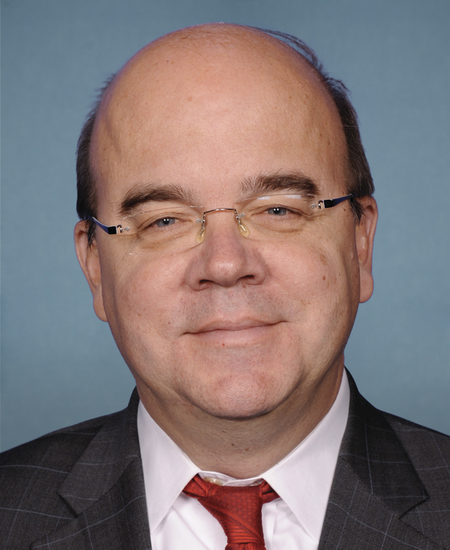
Rep. James P. McGovern
Sponsored bills
Unsubscribe Act of 20 21 This bill requires that certain consumer protections are included in negative option agreements (i.e., an agreement under which a consumer's failure to take an affirmative action is considered approval to be charged for goods or services). These agreements are prohibited unless the terms provide the consumer with a way to cancel the agreement, in the same manner by which the agreement was entered, before incurring further or increased charges. Further, under free-to-pay conversion contracts, where a consumer is charged a nominal introductory rate and an increased rate after the introductory period ends, the provider of the good or service must require the consumer to perform an additional action, like clicking a confirmation button, before the increased rate takes effect. The bill also requires that certain notifications are provided to consumers in the context of other forms of negative option agreements online, such as notice between two and seven days before an automatic renewal. The bill provides for enforcement of these requirements by the Federal Trade Commission and state attorneys general.
This bill repeals the Authorization for Use of Military Force Against Iraq Resolution of 2002.
This resolution recognizes the historical significance to the nation of Juneteenth Independence Day (commemorating the end of slavery in the United States).
Local Journalism Sustainability Act This bill allows individual and business taxpayers tax credits for the support of local newspapers and media. Specifically, individual taxpayers may claim an income tax credit up to $250 for a local newspaper subscription. The bill also allows local newspaper employers a payroll tax credit for wages paid to an employee for service as a local news journalist and certain small businesses a tax credit for local newspaper and media advertising expenses.
Support UNFPA Funding Act This bill authorizes annual contributions to support the core functions and programs of the United Nations Population Fund for the five fiscal years following the bill's enactment.
Shark Fin Sales Elimination Act of 20 21 This bill addresses the sale of shark fins and the inclusion of rays and skates in the Seafood Traceability Program. The Seafood Traceability Program has data reporting and recordkeeping requirements at the time of entry for imported fish or fish products entered into U.S. commerce. The bill makes it illegal to possess, buy, or sell shark fins or any product containing shark fins, except for certain dogfish fins. A person may possess a shark fin that was lawfully taken consistent with a license or permit under certain circumstances. Penalties are imposed for violations under the Magnuson-Stevens Fishery Conservation and Management Act. The Department of Commerce must revise its regulations to include rays and skates as species that are subject to the Seafood Traceability Program.
Puerto Rico Self-Determination Act of 2021 This bill establishes a process for the people of Puerto Rico to vote on the political status (e.g., statehood) of the territory. Congress may ratify the decision through a joint resolution. The bill declares that the legislature of Puerto Rico has the authority to call a status convention regarding the political status of the territory. The bill provides for public financing of delegate elections to the status convention and establishes a Congressional Bilateral Negotiating Commission to provide advice and consultation to delegates of the status convention. The status convention must provide self-determination options for a referendum of the people of Puerto Rico. Ranked-choice voting is a permitted format for the referendum. Delegates shall carry out an educational campaign through traditional paid media related to the referendum. The bill provides for congressional consideration of a joint resolution to ratify the self-determination option selected through the referendum.
Every Vote Counts Act This bill requires states to take certain actions to facilitate absentee voting for federal elections. First, the bill requires each state to establish an absentee ballot tracking program to track and confirm receipt of absentee ballots for federal elections. The Election Assistance Commission must make payments to states for establishing these programs. Next, the bill requires each state to provide in each county secured drop boxes at which individuals may drop off their completed absentee ballots for federal elections. These drop boxes must be (1) available beginning 45 days before the election; (2) accessible to individuals with disabilities and individuals with limited proficiency in the English language; (3) accessible by public transit; (4) available during all hours of the day; and (5) located in all communities within the county, including rural communities and on tribal lands. States must also post the requirements for absentee ballots to be counted and tabulated in the election. Further, the bill outlines additional requirements that a state must meet in determining the number and location of drop boxes. The bill also requires the National Institute of Standards and Technology to develop alternatives to signature matching for verifying the identity of an individual who is voting by absentee ballot.
Flexible Financing for Rural America Act This bill allows rural utility service providers to submit to the Department of Agriculture (USDA) a request to adjust the interest rate or modify the terms of certain loans. The request shall include a report summarizing how the adjustment or modification will assist the borrower in providing critical utility services to a rural community. Specifically, on receipt of a request, USDA or the Department of the Treasury (in the case of a loan owned by the Federal Financing Bank) must adjust the interest rate on the loan to match certain interest rates for obligations of comparable maturity to the term remaining on the loan (or a higher rate requested by the borrower), and make modifications to the loan terms as necessary to address changes in the financial position of the borrower due to the COVID-19 public health emergency and to promote the financial sustainability of the borrower. In carrying out the adjustments or modifications, USDA or Treasury shall not impose or collect any fee from, or impose any penalty on, a borrower. The bill also provides funding to implement the adjustments and modifications and for the liquidation of residual intragovernmental amounts owed by the Federal Financing Bank in connection with certain loans.