

Federal Retirement Fairness Act This bill modifies the federal civilian service that is creditable service under the Federal Employees Retirement System (FERS). Specifically, it expands the nondeduction service that may be creditable under FERS. Nondeduction service is federal service where an employee's pay is not subject to retirement deductions (e.g., service under a temporary appointment). Currently, nondeduction service performed before January 1, 1989, is creditable under FERS so long as a deposit is made into the retirement fund to cover the period of nondeduction service. This bill allows nondeduction service performed on or after January 1, 1989, to be creditable under FERS so long as a deposit is made into the retirement fund.
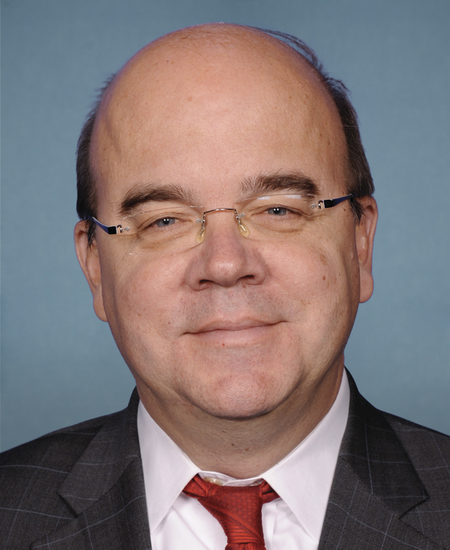
Rep. James P. McGovern
Sponsored bills
Investing in Commonsense Ballistic Missiles Act of 2021 or the ICBM Act This bill addresses the transfer and use of funds intended for defense programs. Specifically, the bill prohibits defense funds in FY2022-FY2031 from being obligated or expended for the ground-based strategic deterrent program or the W87-1 warhead modification program. The Department of Defense (DOD) must transfer the unobligated balances intended for its ground-based strategic deterrent program to the Department of the Air Force. DOD must carry out a life extension program of Minuteman III intercontinental ballistic missiles to extend the life of such missiles to 2040. DOD must ensure the program incorporates new and necessary technologies that could also be incorporated in the future ground-based strategic deterrent program. Additionally, the program must use nondestructive testing methods and technologies similar to those used by the Navy for Trident II D5 submarine launched ballistic missiles to reduce destructive testing.
Audit the Pentagon Act of 2021 This bill requires defense spending reductions during any fiscal year after FY2022 where the Comptroller of the Department of Defense (DOD) fails to certify that a department, agency, or other element of DOD has achieved an unqualified opinion on its full financial statements. The amount of any reductions must be deposited in the General Fund of the Department of the Treasury and must be available for deficit reduction. The bill excludes from any reductions accounts related to military personnel, reserve personnel, National Guard personnel, and the Defense Health Program. The President may waive a reduction if the President certifies that a reduction would negatively affect (1) national security or members of the Armed Forces who are deployed in combat zones, or (2) the Defense Health Program account.
This concurrent resolution expresses the sense of Congress that title IX of the Education Amendments of 1972 applies to the National Collegiate Athletics Association (NCAA) and that the NCAA should work to prevent sex-based discrimination in its programs and activities.
Tenant Empowerment Act of 2021 This bill generally expands the rights of tenants in federally assisted housing. Specifically, the bill allows tenants to place rent in an escrow account in the event that a housing project is found to be in violation of certain housing standards; seek judicial enforcement of specified housing agreements; and access information related to a housing project, including the ownership, specified reports, and contracts. The bill also provides for continuing rental assistance payments for tenants if the property is in foreclosure.
Respect for Peace Corps Volunteers Act This bill allows the official seal or emblem of the Peace Corps and the name Peace Corps to be used on any death announcement, plaque, grave stone, or other grave marker of a former volunteer, officer, or employee of the Peace Corps.
Tax-Free Pell Grant Act This bill excludes from gross income, for income tax purposes, any amount received as a federal Pell Grant. It also expands the definition of qualified tuition and related expenses under the American Opportunity and Lifetime Learning tax credit to include computer or peripheral equipment (up to a maximum of $1,000), child and dependent care expenses, and course materials.
Better Care Better Jobs Act This bill establishes programs and provides funds for state Medicaid programs to improve home- and community-based services (HCBS), such as home health care, personal care, case management, and rehabilitative services. Specifically, the bill provides funds for the Centers for Medicare & Medicaid Services to award planning grants, develop quality measures, and provide technical assistance to states regarding specified HCBS improvements, particularly with respect to access, utilization, and the associated workforce. The bill also increases the Federal Medical Assistance Percentage (i.e., federal matching rate) for HCBS in states that develop plans and meet specified benchmarks for improvements. The bill also makes permanent (1) the Money Follows the Person Rebalancing Demonstration Program (a grant program to help states increase the use of HCBS for long-term care and decrease the use of institutional care), and (2) certain provisions regarding Medicaid eligibility that protect against spousal impoverishment for recipients of HCBS.
Therapeutic Fraud Prevention Act of 20 21 This bill prohibits commercial conversion therapy, which is a practice or treatment designed to change a person's sexual orientation or gender identity or otherwise change behaviors, thoughts, or expressions related to gender or sexual attraction. This prohibition does not apply to treatment that assists an individual undergoing a gender transition or facilitates identity exploration and development.
Minor League Baseball Relief Act This bill establishes a program for the relief of certain minor league baseball clubs and independent professional baseball clubs that experienced large business losses. The bill provides funding for the Small Business Administration to make grants to such clubs that experienced decreases in gross revenue in 2020 of at least 75%, as measured against revenues in 2019 (or, if revenues were negatively affected by a natural disaster or weather disruption in 2019, by the average of revenues over the prior three-year period). The source of funding for the grants shall be funds appropriated under enacted COVID-19 relief legislation that have not been obligated and are no longer being used to carry out activities authorized under those laws. Grant amounts provided to any club may not exceed $10 million.