

Two-State Solution Act This bill addresses U.S. policy and related activities to preserve conditions for a two-state solution to resolve territorial disputes between Israel and Palestine. The bill prohibits the United States from providing support for projects in geographic regions that came under Israeli control after June 5, 1967. It also prohibits the use of any U.S. security assistance, defense articles, or defense services provided to Israel for efforts to annex or exercise permanent control over any part of the West Bank or Gaza. Current law designates the Palestine Liberation Organization (PLO) as a terrorist organization and restricts its activities (e.g., prohibiting it from maintaining an office in the United States). The President may waive for up to six months some of these restrictions to serve U.S. national security or diplomatic interests. If the President certifies that the PLO has ceased supporting terrorist actions and met other conditions, the bill automatically terminates the terrorist organization designation. Goods produced in the West Bank or Gaza that are imported into the United States must indicate those areas as the country of origin on their labels. The bill expands the scope of certain foreign and development assistance to foster initiatives, including shared educational opportunities and youth activities, that connect Israelis and Palestinians. Additionally, the Department of State and the U.S. Agency for International Development may jointly award grants to private, nonprofit organizations to promote human rights and democracy, strengthen civil society, and otherwise address the needs of the Palestinian people.
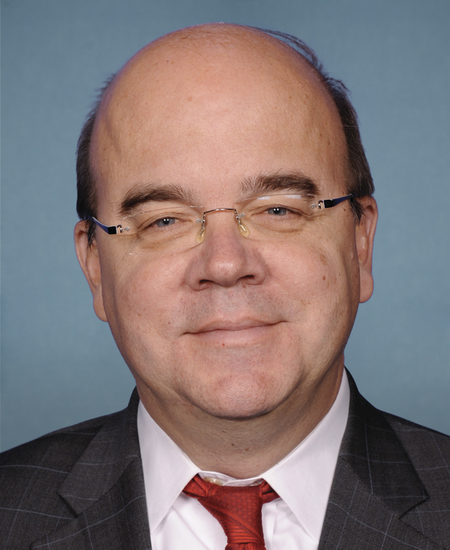
Rep. James P. McGovern
Sponsored bills
Keeping Renters Safe Act of 2021 This bill expressly authorizes the Department of Health and Human Services (HHS) to place a moratorium on residential evictions to prevent the spread of communicable diseases. The bill also requires HHS to implement a moratorium nationwide to reduce the spread of COVID-19. This moratorium must remain in effect for at least 60 days following the termination of the COVID-19 public health emergency. Current law authorizes HHS to take measures to prevent the spread of communicable diseases. As part of the COVID-19 response, HHS delegated this authority to the Centers for Disease Control and Prevention (CDC), which then issued (and extended) several orders banning residential evictions. Whether these orders exceed the CDC's statutory and constitutional authority has been the subject of multiple legal challenges; the Supreme Court blocked enforcement of the most recent order on August 26, 2021.
Securing the Rights our Veterans Earned Act or the SERVE Act This bill provides eligibility for specified Department of Veterans Affairs benefits to former members of the Armed Forces who were separated or discharged (honorably or otherwise) by reason of sexual orientation or gender identity.
This resolution recognizes the harm caused to members of the Armed Forces by the Don't Ask, Don't Tell, Don't Pursue policy and commemorates the repeal of the policy as a day in which service members were free to serve openly and be honored for such service without caveat. The resolution also reaffirms the commitment to honor the service of all members and former members of the military, regardless of gender identity or sexual orientation.
This resolution supports the goals and ideals of National HIV/AIDS and Aging Awareness Day.
This resolution expresses that the House of Representatives supports the goals of researching new interventions to prevent and treat malaria and encourages continued leadership by the United States to ensure that service member health is not jeopardized by vector-borne disease. The resolution also supports sustained or enhanced efforts to ensure that once malaria is eliminated in a country it does not return.
Extend Unemployment Assistance Act of 2021 This bill extends pandemic unemployment compensation provisions set to expire on September 6, 2021, until February 1, 2022. Extended provisions include benefits to covered individuals who are not eligible for regular unemployment compensation or traditional extended benefits, the $300 weekly benefit increase, waiting week benefits, and federal reimbursement of short-time compensation. The bill also increases the maximum duration of compensation from 79 weeks to 100 weeks.
Expediting Assistance to Renters and Landlords Act of 2021 This bill modifies the Department of the Treasury's Emergency Rental Assistance program by extending time limits on payments, allowing landlords to seek rents and arrears from the program without renter consent, and allowing renters to prove eligibility through attestation. The program provides grants to state and local governments to assist eligible households in paying rent and utility costs and other expenses related to housing incurred due to the COVID-19 pandemic. The bill extends the availability of program assistance from 18 to 24 months for eligible households. The bill also relaxes requirements for proof of eligibility by requiring only that households attest that they meet eligibility requirements instead of requiring proof of eligibility. It also allows for direct payment of funds to eligible households where the landlord refuses direct payment. Additionally, the bill allows a landlord to apply for program funds without the consent of a renter if the landlord agrees to certain terms, including a 120-day bar on evicting the renter for nonpayment. This bill also expands the stable housing services available under the program to additional low-income households. Further, the bill requires Treasury and state and local governments to increase outreach to renters and landlords and allows for coordination with public entities to provide application assistance services.
Fossil Free Finance Act This bill requires large bank holding companies to develop and implement emission reduction plans. Such a plan must include strategies for a company to equitably reduce and eventually eliminate financed greenhouse gas emissions by January 1, 2050, and to discontinue specified fossil fuel projects and financing. The bill also prohibits the use of carbon offsets in such a plan, sets forth technological requirements for reductions, and requires the prioritization of specified social impacts. Plans must be submitted to the Board of Governors of the Federal Reserve System for approval every two years.
Streamlining Nutrition Assistance Paperwork Act of 2021 or the SNAP Act of 2021 This bill provides statutory authority for a Department of Agriculture (USDA) waiver that allows states to use a written record to document telephonic signatures for Supplemental Nutrition Assistance Program (SNAP) applications. Under current law, states may allow individuals to sign their SNAP applications over the telephone, but states must preserve audio recordings of those telephonic signatures. During the COVID-19 emergency, USDA waived the requirement to preserve the audio recording and allowed states to document the telephonic signatures through written records.