Military Spouse Entrepreneurs Act of 2021 This bill requires the Small Business Administration to conduct a pilot program to award federal contracts to small businesses owned and controlled by military spouses. It also generally authorizes federal contracting officers to limit contract awards to only small businesses owned and controlled by military spouses under certain circumstances.
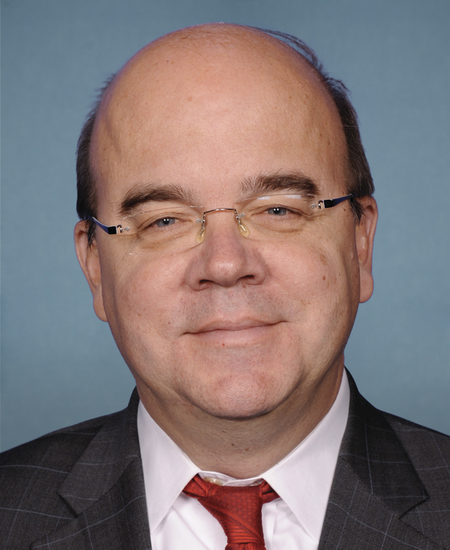
Rep. James P. McGovern
Sponsored bills
This bill imposes importation limits on goods produced using forced labor in China, especially the Xinjiang Uyghur Autonomous Region, and imposes sanctions related to such forced labor. The Forced Labor Enforcement Task Force shall report to Congress a strategy for preventing the importation of goods produced in China using forced labor. The strategy must contain certain information, including a list of entities (1) producing goods in Xinjiang using forced labor; or (2) working with the government in Xinjiang to move forced labor or Uyghurs, Kazakhs, Kyrgyz, or members of other persecuted groups out of Xinjiang. The U.S. Customs and Border Protection shall generally presume that goods produced by these entities and certain other entities, including those sourcing material from Xinjiang or involved with Chinese government forced labor programs, are barred from importation into the United States. An importer may rebut this presumption by establishing, with clear and convincing evidence, that the good in question was not produced wholly or in part using forced labor. The bill also expands existing asset- and visa-blocking sanctions related to Xinjiang to cover foreign individuals and entities responsible for serious human rights abuses in connection with forced labor. The Department of State shall report to Congress a strategy to enhance international awareness of forced labor in Xinjiang and to address such forced labor.
Accelerating Access to Critical Therapies for ALS Act This bill establishes grant programs to address neurodegenerative diseases, such as amyotrophic lateral sclerosis (also known as ALS or Lou Gehrig's disease), and contains other related provisions. The Department of Health and Human Services (HHS) shall award grants to eligible entities for scientific research utilizing data from expanded access to investigational ALS treatments for individuals who are not otherwise eligible for clinical trials. The Food and Drug Administration (FDA) shall award grants to public and private entities to cover the costs of research and development of drugs that diagnose or treat ALS and other rare neurodegenerative diseases. HHS shall also establish the Public-Private Partnership for Neurodegenerative Diseases between the National Institutes of Health, the FDA, and at least one eligible entity (generally, an institution of higher education or a nonprofit organization). The partnership shall support the development and regulatory review of drugs that address ALS and other rare neurodegenerative diseases. The FDA shall publish on its website a five-year action plan for fostering the development of drugs that improve or extend the lives of people living with rare neurodegenerative diseases. The Government Accountability Office must report to Congress about the grants provided under this bill, including an analysis of the impact of such grants on research and development of treatments for ALS.
This resolution recognizes the anniversaries of the International Day of Peace, Human Solidarity Day, the International Day of Living Together in Peace, and other specified international days. The resolution also expresses that Congress commits to (1) encouraging the people of the United States to continue commemorating international days of peace, coexistence, and cooperation; and (2) supporting activities on such days that promote thoughtful, deliberative, and cooperative actions to achieve peace.
This bill posthumously provides for the award of a Congressional Gold Medal in commemoration of the 13 service members who died on August 26, 2021, while stationed at Hamid Karzai International Airport in Afghanistan.
Combating International Islamophobia Act This bill establishes within the Department of State the Office to Monitor and Combat Islamophobia and addresses related issues. The office shall monitor and combat acts of Islamophobia and Islamophobic incitement in foreign countries. The bill establishes the position of Special Envoy for Monitoring and Combating Islamophobia, who shall head the office. The bill also requires certain existing annual reports to Congress about human rights and religious freedom in foreign countries to include information about Islamophobia, such as information about (1) acts of physical violence or harassment of Muslim people, (2) instances of propaganda in government and nongovernment media that attempt to justify or promote hatred or incite violence against Muslim people, and (3) actions taken by a country's government to respond to such acts. The office shall coordinate and assist in preparing these portions of the reports. No funds made available pursuant to the bill may be used to promote or endorse a boycott, divestment, and sanctions movement ideology (i.e., economic measures against Israel or Israel-related individuals or organizations) or used to promote or endorse a Muslim ban.

Maddy summaryHRES 849 is a procedural resolution enabling the House to consider H.R. 5665, which proposes creating a State Department office to monitor Islamophobia. It waives procedural objections to the bill’s consideration, sets one hour of debate (equally divided between committee leaders), and modifies the amendment process for the bill. This resolution itself does not establish the office or change policy - it only streamlines the legislative process for the underlying bill.
Get Foreign Money Out of U.S. Elections Act This bill imposes prohibitions and requirements related to campaign contributions and expenditures from foreign sources. For example, the bill bans campaign contributions and expenditures by domestic business entities that are controlled, influenced, or owned by foreign nationals.
African American History Act This bill authorizes the National Museum of African American History and Culture to carry out educational programs and related activities. Such activities include developing and making available accurate, relevant, and accessible resources to promote the understanding of African American history; and expanding the collection acquisition and collection access processes, including conservation and digitization. The museum may also develop and maintain on its website content designated for educators, students, and families to improve their awareness and understanding of African American history.
This resolution recognizes the 73rd anniversary of the Universal Declaration of Human Rights, supports the designation of Human Rights Day, and encourages the observation of Human Rights Day and a continued commitment to upholding human rights around the globe.