

Keeping School Meals Flexible Act This bill extends authority through June 30, 2023, for the Department of Agriculture (USDA) to waive certain requirements for the school meal programs to address COVID-19. The bill extends the authority for USDA to issue a single waiver of child nutrition program requirements to all states under the National School Lunch Program for purposes of providing meals and snacks with appropriate safety measures with respect to COVID-19; grant waivers of requirements to allow non-congregate feeding in the Child and Adult Care Food Program for purposes of providing meals and snacks with appropriate safety measures with respect to COVID-19; and grant waivers related to the nutritional content of meals served in child nutrition programs if it determines the waiver is necessary to provide meals and snacks, and there is a food supply chain disruption due to COVID-19.
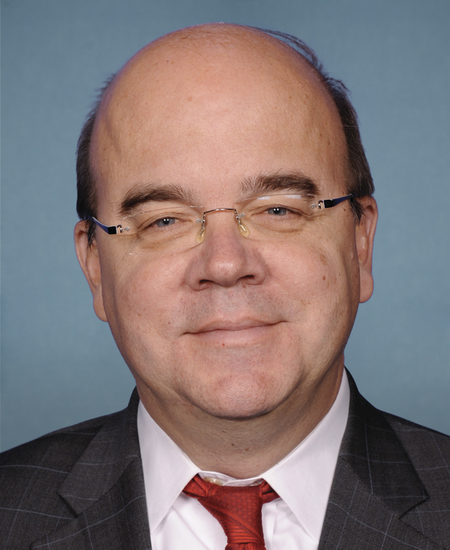
Rep. James P. McGovern
Sponsored bills
Algorithmic Accountability Act of 2022 This bill requires certain businesses that use automated decision systems to make critical decisions to study and report about the impact of those systems on consumers. Critical decisions include those that have a significant effect on a consumer's life such as the cost or availability of health care, housing, educational opportunities, or financial services. The Federal Trade Commission (FTC), in consultation with relevant stakeholders, must issue regulations to implement the bill. The bill provides for enforcement by the FTC and specified state officials. Further, the bill establishes a Bureau of Technology to advise the FTC about the technological aspects of its functions.
Jumpstart on College Act This bill directs the Department of Education (ED) to award grants to support early-college high schools and dual- or concurrent-enrollment programs. Specifically, ED must award grants to (1) institutions of higher education in partnership with one or more local educational agencies to assist them in establishing or supporting early-college high schools or dual- or concurrent-enrollment programs, and (2) states to assist them in supporting or establishing these schools or programs.
Office of Technology Assessment Improvement and Enhancement Act This bill renames and revises the functions and duties of the Office of Technology Assessment which, composed of a Technology Assessment Board and a director, provides Congress with assessments of probable technology application impacts. Specifically, the bill renames the office the Congressional Office of Technology, and it requires the office to undertake additional duties, such as providing to Members of Congress (1) certain information without the need for board review, (2) certain technical assistance on legislation related to science and technology without the need for board review, and (3) objective policy options on how Members may achieve goals with respect to science and technology policy. The bill authorizes individual Members of Congress to submit to the board a request that the office undertake an assessment activity. Additionally, the bill requires the Congressional Research Service and the Government Accountability Office to coordinate technology assessment activities with the office to avoid duplication or overlapping of research activities. The bill also (1) allows the office to temporarily appoint specified technical and professional personnel to work for the office, (2) requires the office to make the findings of completed analyses publicly available, (3) revises the appointment of board members, (4) requires the board to hold an annual meeting at which Members of Congress may appear and present information regarding technology assessment activities, and (5) requires the board to report annually on the activities of the office.
Striking Workers Healthcare Protection Act This bill prohibits an employer from terminating or significantly altering the employer-provided health insurance coverage of an employee engaged in a lawful strike. An employer that violates this prohibition is subject to a maximum civil penalty of $50,000 for each violation.
Eliminating Abusive and Rampant Neglect of Interactive Technologies Act of 2022 or the EARN IT Act of 2022 This bill revises the federal framework governing the prevention of online sexual exploitation of children. The bill establishes the National Commission on Online Child Sexual Exploitation Prevention. The commission must develop best practices for interactive computer services providers (e.g., Facebook and Twitter) to prevent, reduce, and respond to the online sexual exploitation of children. Additionally, the bill limits the liability protections of interactive computer service providers with respect to claims alleging violations of child sexual exploitation laws. The bill replaces various statutory references to child pornography and material that contains child pornography with child sexual abuse material . Finally, the bill makes changes to the reporting requirements for electronic communication service providers and remote computing service providers (providers) who report apparent instances of crimes involving the sexual exploitation of children to the National Center for Missing and Exploited Children. Among the changes, the bill requires providers to report facts and circumstances sufficient to identify and locate each minor and each involved individual. The bill also increases the amount of time that providers must preserve the contents of a report.
This resolution recognizes the cultural and historical significance of the Lunar New Year. The resolution expresses, in observance of this Lunar New Year, the Year of the Tiger, the deepest respect of the House of Representatives for Asian Americans and all individuals throughout the world who celebrate this significant occasion. The resolution wishes Asian Americans and all individuals who observe this holiday a happy and prosperous new year.
Maddy summaryHR 6525, the Lunar New Year Day Act, would designate the Lunar New Year as an official federal holiday. The bill amends Section 6103(a) of Title 5 of the U.S. Code to add "Lunar New Year Day" to the list of holidays observed by federal employees. This holiday would be observed on the actual date of the Lunar New Year, which varies annually based on the lunar calendar. As a result, federal employees would receive a paid day off, and federal agencies would adjust operations to accommodate the new holiday.
Stopping Corrupt Actors from Making Political Action Committees Act or the SCAM PAC Act This bill generally prohibits a political committee from disbursing funds to an entity that is owned or controlled by an individual, or the immediate family member of an individual, who has authority to carry out specified activities for the committee (e.g., soliciting funds) or is employed by the committee to provide it with professional services. This prohibition does not apply to (1) a political committee that certifies that a majority of the funds disbursed by the committee were for expenses other than administrative costs, fundraising costs, and employee salaries; or (2) an authorized committee of a candidate, a committee of a political party, or a separate segregated fund of a corporation or labor organization. Further, the bill prohibits a political committee from employing these individuals or allowing them to volunteer on its behalf if the related entity accepted funds from a political committee.
SNAP Second Chance Act of 2022 This bill limits the authority of the Department of Agriculture to exclude retailers from participating in the Supplemental Nutrition Assistance Program (SNAP) based on an owner's past criminal conviction.