

Maddy summaryHRES 1204 is a procedural resolution that sets rules for the House of Representatives to consider three specific Senate amendments to other bills. It establishes debate time limits and voting procedures for: (1) renaming a Tallahassee, Florida courthouse after Judge Joseph Woodrow Hatchett, (2) extending child nutrition waivers under the Families First Coronavirus Response Act, and (3) approving legislative branch appropriations for fiscal year 2022. The resolution does not change policy itself but streamlines the House's process for voting on these amendments. It directly affects House members who will follow these procedural rules during debate.
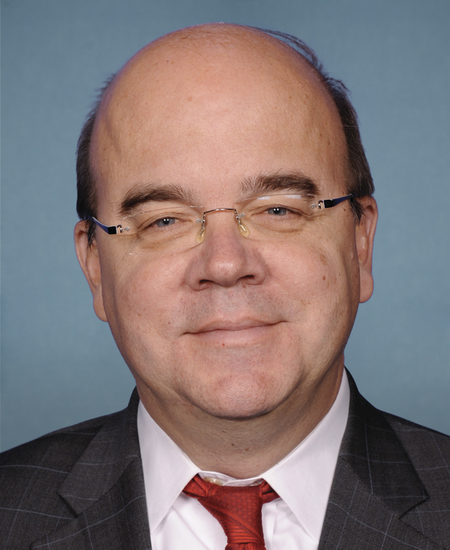
Rep. James P. McGovern
Sponsored bills
This resolution calls on the Russian government to immediately release Brittney Griner. The resolution urges the United States, in all interactions with the Russian government, to raise the case of Brittney Griner and to press for her release. The resolution further urges the Russian government to provide consular access to Brittney Griner while she remains in detention and to respect her human rights. Finally, the resolution expresses support to the family of Brittney Griner and a commitment to bringing her home.
Veterans Equal Access Act This bill directs the Department of Veterans Affairs (VA) to authorize VA health care providers to (1) provide veterans with recommendations and opinions regarding participation in their state's marijuana programs, and (2) complete forms reflecting such recommendations and opinions.
Stop Anti-Abortion Disinformation Act or the SAD Act This bill prohibits advertisements that use deceptive or misleading statements related to the provision of abortion services. Abortion services include (1) surgical and non-surgical procedures to terminate a pregnancy, or (2) providing referrals for such procedures. The Federal Trade Commission must promulgate rules to implement the prohibition, and the bill provides for enforcement by the commission.
My Body, My Data Act of 2022 This bill establishes protections, subject to certain limits, for personal reproductive or sexual health information. This includes information relating to past, present, or future surgeries or procedures, such as the termination of a pregnancy. Specifically, commercial entities, including individuals, nonprofits, and common carriers, may not collect, retain, use, or disclose personal reproductive or sexual health information except (1) with the express written consent of the individual to whom such information relates, or (2) as is strictly necessary to provide a requested product or service. Commercial entities also must provide individuals with access to, and a reasonable mechanism to delete, any of their reproductive or sexual health information upon request. Further, commercial entities must maintain and publish a privacy policy describing their practices with respect to such information. The bill's provisions do not apply to entities that are subject to certain existing health-related privacy regulations, such as the privacy regulations issued under the Health Insurance Portability and Accountability Act of 1996. Additionally, the provisions do not apply to the disclosure of personal reproductive or sexual health information for the publication of newsworthy information of legitimate public concern. The bill provides for enforcement by the Federal Trade Commission and by private civil actions.
Advanced Research Project s Agency-Health Act or the ARPA-H Act This bill establishes within the Department of Health and Human Services (HHS) the Advanced Research Projects Agency-Health to accelerate health and medical innovation by investing in high-risk, high-reward research. The bill also establishes a committee to advise on agency activities. HHS must transfer all authorities, functions, funds, and personnel from a similar entity within the National Institutes of Health to a new, independent agency. Additionally, the President must appoint a director to lead the agency. The director may submit testimony and recommendations concerning the agency to Congress without review or approval by other federal officers or agencies. The director must appoint personnel to administer the agency's research programs, including by selecting projects to support and making recommendations about terminating or continuing projects. The agency may use grants, prize competitions, and a variety of other mechanisms to support the research projects. The agency's budget is separate from that of HHS. The agency must coordinate with the Food and Drug Administration and the Centers for Medicare & Medicaid Services to expedite development and coverage of high-need cures. Additionally, the agency may partner with other public and private entities (e.g., institutions of higher education and patient advocacy organizations). The bill also requires the agency to develop and periodically update a strategic plan and annually report on its activities. Furthermore, (1) the National Academies of Sciences, Engineering, and Medicine must evaluate the agency's performance; and (2) the Government Accountability Office must review the research portfolio of HHS and its components, including the new agency.
Save America’s Forgotten Equines Act of 2021 or the SAFE Act of 2021 This bill prohibits the transporting, receiving, possessing, purchasing, selling, or donation by a person of an equine (e.g., horse) that the person has reason to believe will be slaughtered for human consumption.
National Scenic Trails Parity Act This bill requires the North Country, Ice Age, and New England national scenic trails to be administered as units of the National Park System.
Generating Resilient and Energy Efficient Network Communications Act or the GREEN Communications Act This bill establishes a program and sets out other requirements for federal agencies concerning the efficiency and resiliency of communications infrastructure. Specifically, the National Telecommunications and Information Administration (NTIA) must competitively award grants and revolving loans to public or private providers, operators, or owners of communications networks or communications infrastructure for efficiency and resiliency projects. The NTIA must also (1) develop best practices concerning energy-efficient and carbon-neutral communications infrastructure, and (2) annually report on the energy efficiency and greenhouse gas emissions of communications infrastructure and certain network outages. Additionally, the Federal Communications Commission (FCC) must establish a framework to promote resilient communications networks and communications infrastructure. The FCC must consult with specified federal entities on the framework. The FCC must also report on the feasibility of maintaining a map of projected risks to communications infrastructure arising from severe weather, natural disasters, and climate change; provide technical assistance to a provider, owner, or operator of communications infrastructure concerning risks and vulnerabilities related to severe weather, natural disasters, and climate change; and require broadband network outages to be reported to the Network Outage Reporting System. The bill also requires the Department of Energy to report on the projected growth of electrical consumption of, and recommendations for energy efficiency standards for, data centers in the United States.
Screening for Communities to Receive Early and Equitable Needed Services for Cancer Act or the SCREENS for Cancer Act of 2022 This bill reauthorizes through FY2027 and makes changes to the National Breast and Cervical Cancer Early Detection Program. This program provides funding to states for breast and cervical cancer screening, diagnostic, and treatment services for individuals who have low incomes, are uninsured, or otherwise lack access to such services.