

Maddy summaryHR 9447 grants Terence George permanent resident status eligibility under U.S. immigration law. It waives all grounds for removal or denial of admission against him, rescinds any existing removal orders, and allows him to apply for permanent residency within two years of the bill's enactment. This bill directly affects only Terence George, providing him specific relief from immigration barriers without changing general immigration policy or affecting others.
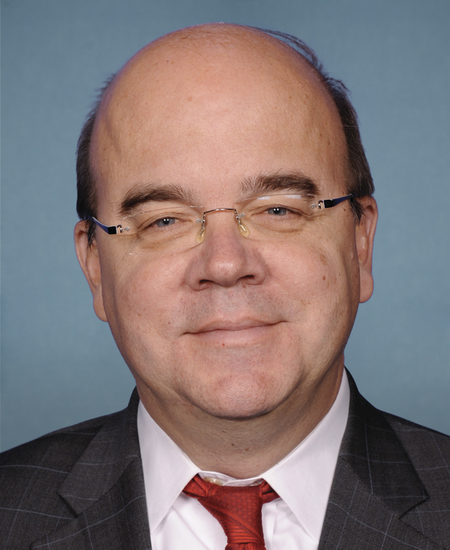
Rep. James P. McGovern
Sponsored bills
The Jackie Walorski Maternal and Child Home Visiting Reauthorization Act of 2022 This bill reauthorizes through FY2027, increases funding for, and modifies the Maternal, Infant, and Early Childhood Home Visiting Program. This program supports home visits for expectant and new parents who live in communities that are at-risk for poor maternal and child health outcomes. Changes to the program include setting out requirements for allocating program funds; increasing the percentage of funds reserved for tribal entities; establishing a publicly available dashboard that reports program outcomes; requiring activities to reduce unnecessary data collection, reporting, and other administrative requirements of the program; and allowing for virtual home visits (provided certain conditions are met). The bill also reduces funding for the Medicare Improvement Fund.
Homeland Procurement Reform Act or the HOPR Act This bill directs the Department of Homeland Security (DHS) to ensure that procurement of certain items, such as body armor and other protective gear, meets specified requirements, including that a fraction of procurement funds be used for items manufactured by U.S. small businesses. The bill sets forth requirements for waivers based on a national emergency. DHS shall (1) ensure that covered items are purchased at a fair and reasonable price, and (2) study the adequacy of uniform allowances provided to employees of frontline operational components (i.e., Customs and Border Protection and other listed agencies and entities). DHS must report to Congress with recommendations on how it could procure additional items from domestic sources and bolster the domestic supply chain for specified national security-related items, including personal protective equipment and other items necessary to respond to a pandemic such as that caused by COVID-19.
This resolution encourages people around the world to work to achieve the goal of zero new HIV transmissions, zero discrimination, and zero AIDS-related deaths, in order to end the HIV epidemic in the United States and around the world by 2030. The resolution supports continued funding for prevention, care and treatment services, and research programs for communities impacted by HIV and people living with HIV in the United States and globally. The resolution supports continued leadership by the United States in domestic, bilateral, multilateral, and private sector efforts to fight HIV. Finally, the resolution urges other members of the international community to sustain and scale up their support for and financial contributions to efforts around the world to combat HIV.
This resolution condemns the use of starvation of civilians as a weapon of warfare. It also calls on the U.S. government to prioritize diplomatic efforts to call out and address instances where hunger and intentional deprivation of food is being utilized as a weapon of war, including efforts to ensure that security operations do not undermine livelihoods of local populations to minimize civilian harm.
This resolution condemns Iran's state-sponsored persecution of its Baha'i minority and its continued violation of the international covenants on human rights. Further, it calls on Iran to immediately release all imprisoned or detained Baha'is, and it urges the President and the Department of State to impose sanctions on Iranian officials and others who are responsible for serious human rights abuses, including abuses against Iran's Baha'i community.
Maddy summaryHRES 1499 is a procedural resolution that establishes rules for the House of Representatives to consider four specific bills. It allows consideration of H.R. 3372 (which would fund community-based nonprofits operating reentry centers for formerly incarcerated people), H.R. 6878 (addressing healthcare needs for incarcerated pregnant women), H.R. 8878 (reauthorizing maternal and early childhood home visiting programs), and H.J. Res. 100 (resolving railroad labor disputes). The resolution waives points of order against these bills and sets specific debate rules for their consideration. This resolution itself does not make policy changes but enables the legislative process for these four bills.
This bill expands protections of animals provided under the Animal Welfare Act, including by prohibiting any (1) broadcasts from international, interstate, or intrastate sources of animal fighting ventures in the United States or U.S. territories; and (2) shipments or transport of certain mature roosters.
This concurrent resolution expresses the sense of Congress that public health professionals are to be commended and thanked on Public Health Thank You Day for their important contributions to the nation.
Lymphedema Treatment Act This bill provides for Medicare coverage of lymphedema compression treatment items. Specifically, the bill provides for coverage of standard and custom fitted gradient compression garments and other approved items that are prescribed by a physician or other specified health care professional to treat lymphedema.