

Maddy summaryHR 694, the Job Protection Act, expands access to family and medical leave under the FMLA by reducing eligibility requirements. It lowers the required employment period from 12 months to 90 days for most workers and removes the 50-employee threshold, requiring all employers (including small businesses with one or more employees) to provide leave. Federal, presidential, and congressional employees also see their eligibility thresholds reduced to 90 days. The bill directly affects millions of private-sector workers and small businesses nationwide by making existing leave protections more widely available. It makes no changes to leave duration or pay, only to who qualifies and which employers must comply.
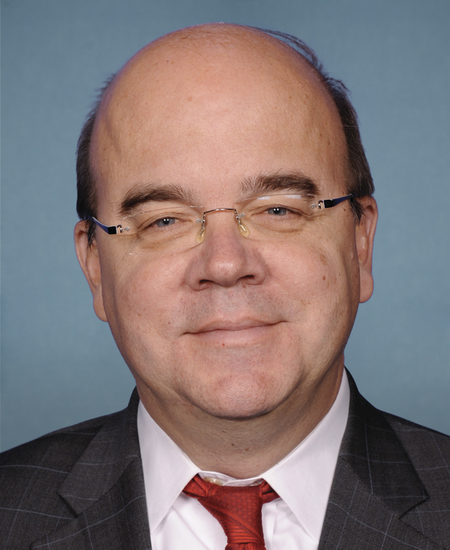
Rep. James P. McGovern
Sponsored bills
Maddy summaryHR 709, the Muhammad Ali Congressional Gold Medal Act, authorizes Congress to award Muhammad Ali a gold medal in recognition of his life and achievements. The bill directs the Secretary of the Treasury to strike a gold medal for presentation by congressional leaders, which will then be given to Ali's widow, Lonnie Ali. Duplicate bronze medals may be sold to cover production costs, with proceeds deposited into the U.S. Mint fund. This is a commemorative measure, not a policy change affecting laws or programs.
Maddy summaryHRES 77 is a non-binding House resolution expressing support for the Treaty on the Prohibition of Nuclear Weapons. It calls on the President to make nuclear disarmament central to U.S. national security policy and urges specific actions: pursuing new arms control talks with Russia and China, renouncing first-use of nuclear weapons, ending the president’s sole authority to launch nukes, removing weapons from hair-trigger alert, and canceling plans to modernize the U.S. nuclear arsenal. The resolution directly addresses the President, Secretary of State, Secretary of Defense, and other federal leaders, urging them to lead global efforts to reduce nuclear risks. It does not create new laws or policies but formally endorses the treaty’s goals and outlines concrete steps for U.S. nuclear policy reform.
Maddy summaryHR 660, "Ethan's Law," requires gun owners in homes where minors (under 18) or individuals prohibited from owning firearms under federal/state law reside to store firearms securely. It makes unsecured storage unlawful if a minor or prohibited person could access the firearm, with fines of $500 per violation and enhanced penalties (up to 5 years in prison) if injury or death occurs. The bill also establishes a federal grant program to help states implement similar secure storage laws and provides funding incentives for states that already have such laws in place.
Maddy summaryHR 666, the Access to Counsel Act, requires U.S. immigration officers to provide certain travelers a meaningful opportunity to consult with legal counsel within one hour of starting secondary inspection at ports of entry. It directly affects travelers including U.S. citizens, lawful permanent residents returning from abroad, visa holders, refugees, and parolees seeking entry. Key provisions mandate phone access to counsel, allow advocates to present evidence to officers, and require in-person meetings when possible. Lawful permanent residents cannot abandon their status without first consulting a lawyer unless they waive this right in writing. The bill takes effect 180 days after enactment.
Maddy summaryThis bill requires Congress to declare war before the U.S. can conduct a first-use nuclear strike - meaning a nuclear attack launched without prior nuclear retaliation against the U.S., its territories, or allies. It prohibits using federal funds for such strikes unless explicitly authorized by a congressional declaration of war. The bill directly affects the President’s authority to order nuclear weapons use and the military’s execution of such orders, reinforcing constitutional war powers. It defines "first-use" strictly to prevent unilateral action absent congressional approval, aiming to create a clear legal check on nuclear decision-making.
Maddy summaryThis bill prohibits the possession, sale, or transfer of most large-capacity ammunition magazines (holding more than 15 rounds) for the general public, while exempting law enforcement officers (including campus security officers), retired officers, and certain licensed entities like nuclear facility security. It requires new magazines manufactured after enactment to have serial numbers and manufacturing dates, and allows federal grant funds to support buy-back programs for these devices. Existing owners of such magazines lawfully possessed before the law's enactment are exempt from the prohibition. The law applies to devices not already covered under current exemptions for law enforcement, nuclear security, and retired officers.
Maddy summaryThe HEAL Act (HR 603) requires the U.S. Holocaust Memorial Museum Director to study how public elementary and secondary schools teach about the Holocaust and related antisemitism. The study will examine curriculum requirements, teaching methods (like project-based learning), instructional materials, and assessment approaches across states and school districts. It specifically analyzes whether Holocaust education is mandatory, optional, or integrated across subjects, and how schools address antisemitism and genocide prevention. The resulting report, due within 180 days of the study or three years after enactment, will inform Congress but does not change current school policies. This is a data-gathering measure, not a policy mandate.
Maddy summaryThis bill adjusts federal employee pay rates for 2024. It increases basic pay for all federal workers under statutory pay systems and prevailing rate systems by 4.7%, and raises locality pay adjustments by 4.0%. These changes directly affect all federal employees covered by the specified pay systems, including those in wage areas and under sections 5348/5349 of Title 5. The bill implements these raises without altering existing pay system structures or requirements.
This resolution commends the role of the U.S. government in improving access to quality, inclusive education, and improved learning outcomes for the poorest and most marginalized children and adolescents around the world. It calls on the Department of State and the U.S. Agency for International Development to use all diplomatic, humanitarian, and developmental means to promote access to such quality education.