

Maddy summaryThe HELP Copays Act (HR 830) changes how health insurance plans calculate patient cost-sharing. It requires that payments made by third parties (like pharmacies, charities, or discount programs) toward medical costs count toward a patient's deductible, copay, or out-of-pocket limit. This directly affects insured individuals who receive financial assistance, discounts, or product vouchers for healthcare expenses. The law ensures these external payments reduce the patient's actual out-of-pocket costs more quickly, aligning with existing Affordable Care Act and Public Health Service Act requirements.
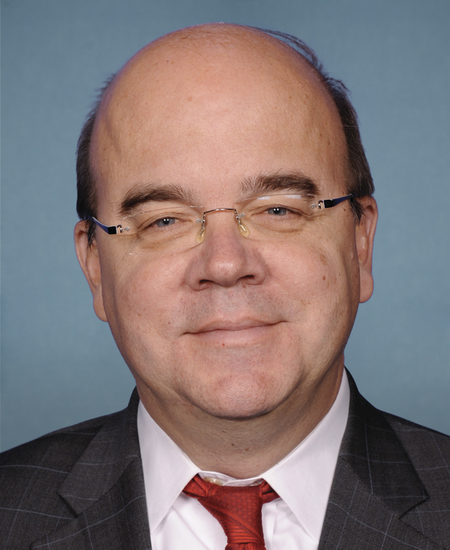
Rep. James P. McGovern
Sponsored bills
This resolution calls on the United States and North Korea to begin the process of reuniting Korean Americans with their immediate relatives in North Korea. (Many families were divided after the signing of the Korean War Armistice Agreement, which divided the Korean Peninsula into North and South Korea.)
Bankruptcy Venue Reform Act This bill limits where a non-individual debtor (e.g., a corporate debtor) may file for bankruptcy to prevent forum shopping. Specifically, these debtors must file in the district court where their principal place of business or principal assets are located. Corporate debtors may also file in a district where there is a pending bankruptcy case concerning an affiliate that has a certain level of control over or ownership of the debtor (e.g., if the affiliate is a controlling shareholder of the debtor), if that pending case is in a proper venue under this bill. Under current law, these debtors may also file where they are domiciled (i.e., incorporated) or where there is a pending bankruptcy case concerning any affiliate, general partner, or partnership of the debtor. For corporate debtors that are issuers of securities, their principal place of business is defined in the bill as the address of the entity's principal executive office as provided in specified Securities and Exchange Commission filings.
Maddy summaryHR 1014, the Big Oil Windfall Profits Tax Act, imposes a tax on major oil companies (defined as those averaging over 300,000 barrels of crude oil daily in 2019) based on the difference between current Brent crude oil prices and the 2015-2019 average, calculated at 50% of that excess. The tax revenue funds the "Protect Consumers from Gas Hikes Fund," which provides quarterly rebates to eligible individuals (with income limits of $75,000-$150,000 depending on filing status) via refundable tax credits. The bill directly affects large oil producers through the new excise tax and eligible U.S. residents through the rebate program. Key mechanisms include the price-based tax calculation, automatic fund transfers for rebates, and income-adjusted credit limits. The tax applies to crude oil extracted or imported in the U.S., with rebates distributed starting in 2022.
Maddy summaryThis bill expands health care coverage under TRICARE for military dependents. It eliminates a separate premium for young adults aged 21-26 enrolled in the TRICARE Young Adult Program, meaning they will no longer pay an extra fee for coverage. The bill also removes an eligibility restriction that previously limited coverage for some dependents in this age group. These changes directly affect military service members' adult children and spouses who rely on TRICARE Young Adult coverage. The policy update simplifies enrollment and reduces out-of-pocket costs for these beneficiaries.
Maddy summaryThis bill authorizes a single Congressional Gold Medal to honor all U.S. Army Dustoff crews who served during the Vietnam War (1962-1973). It recognizes their critical role in evacuating nearly 900,000 wounded personnel, including U.S., South Vietnamese, and allied forces, under extreme combat conditions. The medal, designed with input from the Secretary of Defense, will be presented to the U.S. Army Medical Department Museum for permanent display. Duplicate bronze medals may be sold to cover costs, but the primary action is the commemorative recognition of these crews' service.
Department of Veterans Affairs Continuing Professional Education Modernization Act or the VA CPE Modernization Act This bill modifies the program under which the Department of Veterans Affairs (VA) reimburses certain full-time health care professionals for continuing professional education expenses. Under current law, only board-certified physicians and dentists are eligible for such reimbursement. The bill expands the program to require reimbursement for various specified full-time health care professionals (e.g., registered nurses) and increases the amount available for a physician or dentist. Additionally, the bill removes the requirement that an individual be board-certified to receive reimbursement. The VA may adjust the amount of the reimbursement, so long as the adjustment does not result in a reimbursement of less than $2,000 per year for each specified position.
Veterans Infertility Treatment Act of 2023 This bill requires the Department of Veterans Affairs (VA) to furnish infertility treatments, standard fertility preservation services, or both to a covered veteran or partner of a covered veteran. A covered veteran is a veteran who is enrolled in the VA health care system and has infertility or is at risk of having infertility, as determined by a licensed physician. The VA may furnish up to three completed in vitro fertilization cycles that result in live birth, or 10 attempted cycles, whichever occurs first. Additionally, the VA may furnish in vitro fertilization treatment using donated gametes or embryos. The VA must receive consent to furnish an in vitro fertilization cycle from the covered veteran, the partner of a covered veteran, and the third-party donor (if applicable). For purposes of paying travel expenses for treatment or services to the partner of a covered veteran, the VA must deem the partner to be a veteran receiving treatment or care. The VA must prescribe regulations related to the provision of infertility treatments and standard fertility preservation services as required by this bill. Prior to the enactment of such regulations, the VA must ensure that (1) counseling and treatment furnished under existing authority is available to a veteran and the veteran's partner, regardless of whether they are married; and (2) treatment under existing authority may be furnished using donated gametes or embryos.
Maddy summaryThis bill amends the Food and Nutrition Act to allow Puerto Rico to transition from its current block grant nutrition assistance program to the federal Supplemental Nutrition Assistance Program (SNAP), aligning it with how states like Hawaii and Guam operate. Puerto Rico must submit a transition plan to the U.S. Department of Agriculture within 60 days, which the agency must review and approve within 180 days. The bill extends Puerto Rico’s existing block grant funding for up to five years or until the transition is complete, whichever comes first, and requires annual progress reports to Congress. This change directly affects Puerto Rico residents currently receiving nutrition assistance under the block grant, potentially providing them with benefits consistent with the SNAP program.
Maddy summaryHR 987 authorizes the U.S. Mint to produce commemorative coins honoring Golda Meir, Israel's first female Prime Minister, and the 75th anniversary of U.S.-Israel relations. It specifies three coin types: $5 gold coins (max 50,000), $1 silver coins (max 400,000), and half-dollar clad coins (max 750,000), with detailed weight and composition requirements. All coins will include Golda Meir's image, her name, and commemorative inscriptions, and will be sold during 2026. A surcharge ($35 for $5 coins, $10 for $1 coins, $5 for half-dollars) will be paid to the American Friends of Kiryat Sanz Laniado Hospital Inc. to support its hospital operations.