

Maddy summaryHR 2539 permanently extends the New Markets Tax Credit (NMTC) program, which incentivizes private investment in low-income communities. The bill directly affects community development financial institutions (CDFIs) and investors who fund projects in designated low-income areas by ensuring the credit remains available beyond 2025. Key provisions include automatically adjusting the credit amount annually for inflation starting in 2024 and clarifying that the credit can be used to offset alternative minimum tax liability. This maintains the program’s effectiveness in channeling capital to underserved neighborhoods without changing eligibility or funding levels.
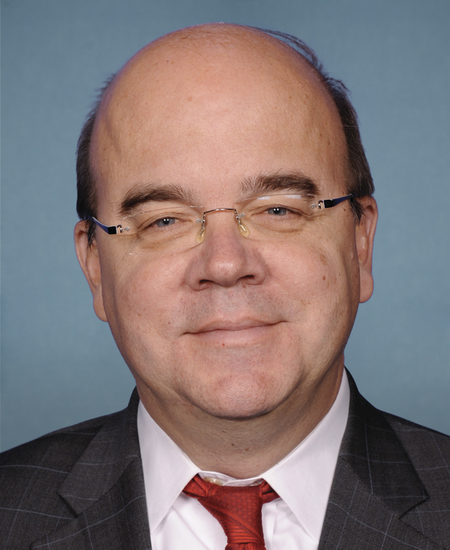
Rep. James P. McGovern
Sponsored bills
Maddy summaryHR 1509 reauthorizes annual federal funding for the Healthy Food Financing Initiative (HFFI), which helps establish grocery stores and healthy food access in underserved communities. The bill mandates increasing annual funding from $25 million in fiscal year 2024 up to $50 million per year starting in 2028. This funding supports projects like new supermarkets in "food desert" areas, directly benefiting residents in low-income neighborhoods with limited grocery options. The initiative provides grants and loans to developers, aiming to improve nutrition access without changing existing program rules.
Maddy summaryHR 1465, "Violet’s Law," requires federal research facilities to establish standards for placing eligible animals (dogs, cats, primates, guinea pigs, hamsters, rabbits) no longer needed for research with animal rescue organizations, sanctuaries, shelters, or individuals. Federal departments and agencies operating such facilities must create these placement standards within one year of the law's enactment. The law mandates that animals must be vet-certified as healthy (free of infectious disease or physical issues) before placement and prohibits facilities from using animals for commercial trade, breeding, or public exhibitions. This policy directly affects federal research facilities and aims to provide permanent homes for research animals through defined, safe pathways.
This bill provides specified funds to the 1890 Scholarships Program for FY2025 and each succeeding year for student scholarships. The bill also permanently reauthorizes the 1890 Scholarships Program. This National Institute of Food and Agriculture program provides grants to 1890 Institutions (i.e., historically Black colleges and universities that belong to the U.S. land-grant university system) for students who intend to pursue a career in the food and agricultural sciences.
Maddy summaryThis bill amends the SNAP program to prevent retail food stores or wholesale food businesses from being denied authorization to accept benefits solely due to past criminal convictions. It restricts consideration of criminal offenses to those occurring within the last 5 years and establishes pathways for businesses to prove rehabilitation, such as demonstrating 5 years of compliance after a felony conviction or 3 years without reconviction. Businesses may also provide evidence of mitigating circumstances, age at the time of offense, or relevance of the offense to SNAP responsibilities. The changes apply directly to food retailers seeking or maintaining SNAP authorization, aiming to reduce automatic disqualifications based on historical criminal records.
Maddy summaryHCONRES 31 is a congressional resolution that commends environmental defenders worldwide and condemns violence against them. It directs U.S. agencies to create a dedicated State Department position on environmental defenders, integrate their protection into climate programs, and use diplomatic pressure on countries targeting activists. The resolution also urges U.S. companies and financial institutions to respect defenders' rights in sectors like mining and energy. As a symbolic policy directive - not a new law - it focuses on shifting U.S. government actions to support global environmental defenders.
Maddy summaryHCONRES 32 is a symbolic resolution supporting International Transgender Day of Visibility, introduced in the U.S. House of Representatives on March 30, 2023. It encourages Americans to observe the day through ceremonies and activities, celebrates transgender achievements, and recognizes the community's fight for dignity amid ongoing discrimination and anti-trans legislation. The resolution does not create new laws or policies - it is a non-binding statement of support, referencing over 700 anti-trans bills introduced in 2021-2023 that target education, healthcare, and identity documents. It directly acknowledges transgender individuals and their contributions without altering any legal rights or obligations.
Maddy summaryThe RISE Act (HR 2401) requires colleges to accept multiple types of documentation - such as past Individualized Education Programs (IEPs), Section 504 plans, or licensed professional evaluations - to verify a student’s disability for accommodations, rather than requiring current evaluations. It also mandates institutions to publicly share clear, accessible processes for determining accommodation eligibility and to report specific disability-related enrollment data (like total students with disabilities and accommodations used) to federal databases. The bill authorizes $10 million for a national support center to assist postsecondary students with disabilities. It applies directly to institutions of higher education and students formally registered with disability services offices, without altering existing ADA definitions or rights.
Maddy summaryThe Fossil Free Financing Act of 2023 requires large banks (with over $50 billion in assets) to create and implement plans to reduce their financed emissions - greenhouse gases linked to their investments - in line with science-based climate targets. Key requirements include ending all new fossil fuel projects by January 2023, stopping thermal coal financing by 2025, eliminating all fossil fuel financing by 2030, and achieving zero financed emissions by 2050. The bill prohibits using carbon offsets in these plans and mandates banks to prioritize communities disproportionately impacted by fossil fuel dependence. Banks must submit annual plans to the Federal Reserve, which can impose penalties for noncompliance, including loss of deposit insurance. The law also expands oversight of nonbank financial firms contributing significantly to climate emissions.
Maddy summaryThe International Human Rights Defense Act of 2023 creates a permanent Special Envoy at the State Department to coordinate U.S. efforts against discrimination and violence targeting LGBTQI+ people globally. The bill requires the development of an annual global strategy to address criminalization, discrimination, and violence based on sexual orientation, gender identity, or sex characteristics. It also mandates that U.S. country reports on human rights practices include detailed information about laws and practices affecting LGBTQI+ communities. The legislation authorizes U.S. foreign assistance programs to support LGBTQI+ rights through health services, legal protections, and community capacity building. This bill aims to strengthen U.S. diplomatic engagement on LGBTQI+ rights as part of broader human rights policy.