

Alabama Underwater Forest National Marine Sanctuary and Protection Act This bill designates an ancient cypress forest in the Gulf of Mexico as the Alabama Underwater Forest National Marine Sanctuary under the Marine Protection, Research, and Sanctuaries Act of 1972. In the sanctuary, the following activities are prohibited: cutting, removing, or any kind of subsurface salvage of the cypress trees; lowering certain devices (e.g., dredging) below the surface of the water; detonating explosives below the surface of the water; drilling or coring the seabed; and lowering, laying, positioning, or raising any type of seabed cable or cable-laying device. However, the prohibitions do not apply to fishing, diving, mooring, or similar recreational or commercial activities; necessary operations of public vessels; construction or placement of artificial reef structures for the purpose of enhancing fishery resources, fishing opportunities, or recreational diving opportunities; exploration, development, or production of oil or gas projects authorized before this bill's enactment; and certain other activities authorized by the Office of National Marine Sanctuaries. The National Oceanic and Atmospheric Administration (NOAA) must develop a comprehensive management plan for the sanctuary. NOAA must also establish an advisory council for the sanctuary.
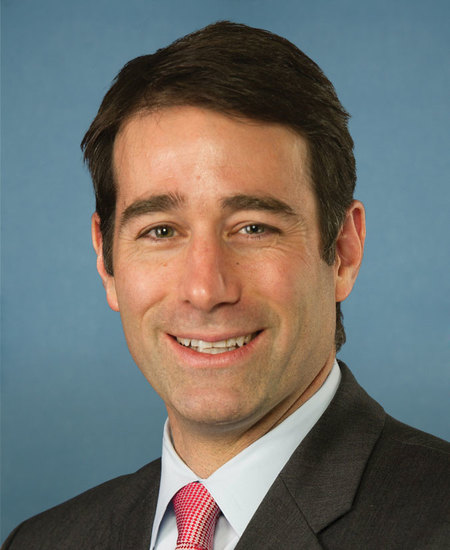
Rep. Garret Graves
Sponsored bills
This bill posthumously provides for the award of a Congressional Gold Medal in commemoration of the 13 service members who died on August 26, 2021, while stationed at Hamid Karzai International Airport in Afghanistan.
Strategic Production Response Act This bill limits the drawdown of petroleum in the Strategic Petroleum Reserve until the Department of Energy develops a plan to increase the percentage of federal lands leased for oil and gas production.
Employee Retention Tax Credit Reinstatement Act This bill provides for a reinstatement of the employee retention tax credit through 2021. The credit was established to compensate employers whose businesses were negatively impacted by the COVID-19 pandemic for wages paid to their employees.
Conscience Protection Act of 2021 This bill provides statutory authority for certain protections for health care providers that refuse to participate in abortions based on religious beliefs or other convictions. Health care providers include individual professionals, medical facilities, health insurance organizations, and social services providers that refer clients to health care services. The federal government and entities that receive federal funding for health-related activities, including state and local governments, may not discriminate against a health care provider that refuses to be involved in, or provide coverage for, abortions. Currently, similar requirements apply to various related activities, including certain employment or personnel decisions (the Church Amendments), abortion services training (the Coats-Snowe Amendment), qualified health plans offered through health insurance exchanges, and annual appropriations bills for the Department of Health and Human Services (HHS) and other federal agencies (the Weldon Amendment). The HHS Office for Civil Rights must investigate complaints of this kind of discrimination. Furthermore, HHS may terminate or reduce HHS funding for health-related activities if a person or entity fails to comply with nondiscrimination requirements. Additionally, the Department of Justice or any entity adversely affected by such discrimination may bring a civil action to obtain appropriate relief. A plaintiff does not need to seek or exhaust administrative remedies before bringing the action. A plaintiff may also bring an action, including one for money damages, against a governmental entity. In many cases, principles of sovereign immunity shield states and some localities from these kinds of actions.
Parents Bill of Rights Act This bill outlines various rights of parents and guardians regarding the elementary or secondary school education of their children. Among other requirements, the bill (1) directs local educational agencies to publicly post the curriculum for each elementary and secondary school grade level; and (2) requires schools to notify parents and guardians of their rights, including the right to review the school's curriculum and budget.
Pregnancy Loss Mental Health Research Act of 2021 This bill expands research and related activities that address mental health complications following a pregnancy loss (i.e., miscarriage, stillbirth, or abortion). Specifically, the National Institutes of Health and the National Institute of Mental Health (NIMH) must expand and intensify research on mental health complications following pregnancy loss. In particular, NIMH must conduct a longitudinal study to determine the prevalence and other information about such mental health complications. Additionally, the Department of Health and Human Services must award grants to health providers, state or local governments, or other appropriate nonprofits to deliver services to individuals with mental health conditions following a pregnancy loss. Funding made available under this bill may not be provided to an entity (or an entity's affiliate, subsidiary, successor, or clinic) that performs abortions other than in the case of a pregnancy (1) that is the result of rape or incest; or (2) when the life of the woman is in danger due to a physical disorder, injury, or illness.
This joint resolution nullifies a Department of Labor emergency temporary standard for preventing the transmission of COVID-19 in employment settings. Under the standard issued on November 5, 2021, employers with 100 or more employees must require their onsite employees to either be fully vaccinated against COVID-19 or undergo weekly COVID-19 testing.
Advanced Air Mobility Coordination and Leadership Act This bill directs the Department of Transportation to establish an Advanced Air Mobility (AAM) interagency working group to plan and coordinate efforts related to the safety, operations, infrastructure, physical security, cybersecurity, and federal investment necessary to bolster the AAM ecosystem in the United States. Advanced Air Mobility refers to a transportation system that transports people and property by air between two points in the United States using aircraft, including electric aircraft or electric vertical take-off and landing aircraft, in both controlled and uncontrolled airspace.
Maddy summaryHRES 386 is a symbolic resolution introduced in the U.S. House of Representatives that expresses support for recognizing "National Police Week" each year. The resolution acknowledges law enforcement officers' sacrifices, particularly during the pandemic, and encourages the public to honor their service. As a non-binding statement, this resolution does not create new law or change policy but serves as a formal expression of support for law enforcement officers across the United States.