

American Aerospace Supply Chain Resiliency, Innovation, and Advancement Act of 2022 This bill directs the Department of Transportation to establish an Aerospace Supply Chain Resiliency Task Force to identify and assess risks to the U.S. aerospace supply chain and identify best practices and make recommendations to mitigate such risks. The task force must convene for an initial meeting within 120 days after enactment of the bill and at least every 90 days thereafter. It must also report to Congress on the activities it carries out, including recommendations for regulatory, policy, or legislative action to improve government efforts to reduce barriers, mitigate risk, and bolster the resiliency of the U.S. aerospace supply chain. The task force shall terminate upon submission of the report to Congress.
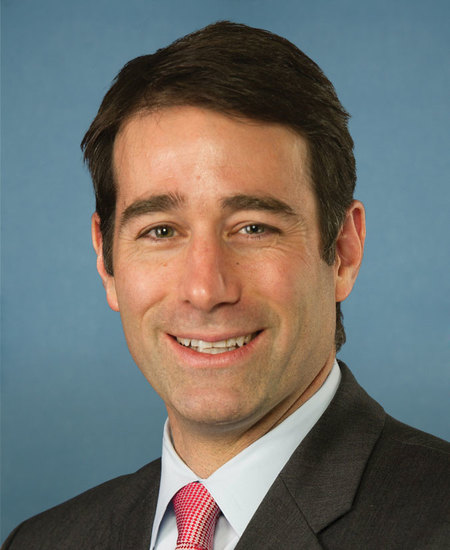
Rep. Garret Graves
Sponsored bills
Advanced Aviation Infrastructure Modernization Act or the AAIM Act This bill establishes a pilot grant program to support advanced air mobility (AAM) infrastructure. AAM infrastructure refers to an air transportation system that transports individuals and property between points in the United States in both controlled and uncontrolled airspace using certain aircraft, including remotely piloted, autonomous, or vertical take-off and landing aircraft. The Department of Transportation (DOT) must award planning grants for AAM infrastructure to (1) state, local, or tribal governments; (2) airport sponsors; (3) transit agencies; (4) port authorities; (5) metropolitan planning organizations; or (6) consortia of such entities. Entities that receive these grants must develop a comprehensive plan for AAM infrastructure, including vertiports (sites that support the landing, takeoff, loading, and other operations of vertical take-off and landing aircraft). Topics covered in the plan must address matters such as identifying locations for AAM infrastructure and available sources of funding. DOT must brief Congress about the plans it receives. The briefing must include an evaluation of the planned or proposed locations for vertiports and a description of best practices or lessons learned through the review of comprehensive plans. If the Federal Aviation Administration issues type certificates for at least two aircraft models designed to provide AAM transportation and other requirements are met, DOT may award construction grants to entities that submitted comprehensive plans. Recipients may use grant funds for design, environmental studies, and other capital costs related to the construction of a public-use vertiport or associated infrastructure. Grants may not be awarded after September 30, 2023.
Safe Schools Act This bill allows state and local educational agencies to use certain COVID-19 emergency relief funds to carry out school security measures (e.g., trainings and security assessments).
Disaster Resiliency Planning Act This bill requires the Office of Management and Budget to establish guidance that requires federal agencies to incorporate natural disaster resilience into real property asset management and investment decisions. Specifically, the guidance must direct each agency to incorporate assessments of natural disaster risk information conducted by the agency, such as from vulnerability and other risk assessments, into real property asset management and investment decisions.
This resolution condemns the unauthorized leak of a draft Supreme Court opinion concerning abortion and the related violence, property damage, and attempted intimidation of Supreme Court Justices by activists. It also encourages the enforcement of federal criminal laws that prohibit protests and picketing outside of the homes of federal judges, jurors, witnesses, and others involved in the U.S. court system.
This bill prohibits the use of Department of Homeland Security (DHS) funds to carry out the activities of a Disinformation Governance Board or to establish or carry out the activities of any other DHS entity that is substantially similar to the board.
Benjamin Berell Ferencz Congressional Gold Medal Act This bill provides for the award of a Congressional Gold Medal to Benjamin Berell Ferencz in recognition of his service to the United States and the international community during the post-World War II Nuremberg trials and his lifelong advocacy for international criminal justice and the rule of law.
No Timber From Tyrants Act This bill prohibits the importation of wood and related articles from Russia and Belarus. It also directs the Department of the Interior and the Department of Agriculture (USDA) to replace these prohibited imports with timber production on certain lands. Specifically, the bill directs the President to prohibit the importation of all wood and related articles from Russia and Belarus. The President may terminate this prohibition upon certification to Congress that certain conditions have been met, including that Russia or Belarus (or both, as applicable) reached an agreement to withdraw forces in Ukraine. Additionally, the bill directs Interior and USDA to authorize timber harvest in an amount sufficient to equal the volume, with respect to calendar year 2021, of imports of wood and related articles from Russia and Belarus. Interior may authorize timber harvest only on public lands and USDA may authorize timber harvest only on National Forest System lands. The bill generally prohibits Interior and USDA from approving a plan that reduces the allowable sale quantity of timber.
Protection of Women and Girls in Sports Act of 2021 This bill makes it a violation of federal law for a recipient of federal funds who operates, sponsors, or facilitates athletic programs or activities to permit a person whose sex is male to participate in an athletic program or activity that is designated for women or girls. The bill specifies that sex shall be recognized based solely on a person's reproductive biology and genetics at birth.
Ensuring Lasting Smiles Act This bill requires private health insurance plans to cover diagnosis and treatment of congenital anomalies and birth defects, such as reconstructive services and items. Coverage must include services and items that functionally improve, repair, or restore any body part that is medically necessary for normal bodily functions or appearance, as determined by the treating physician. Coverage limits and cost-sharing requirements for such services and items may not be more restrictive than those applicable to all medical and surgical benefits under the plan.