This resolution directs the Department of the Interior to provide the House of Representatives certain information and documents about the 2023-2028 program for offshore oil and gas leasing, including information on funding implications.
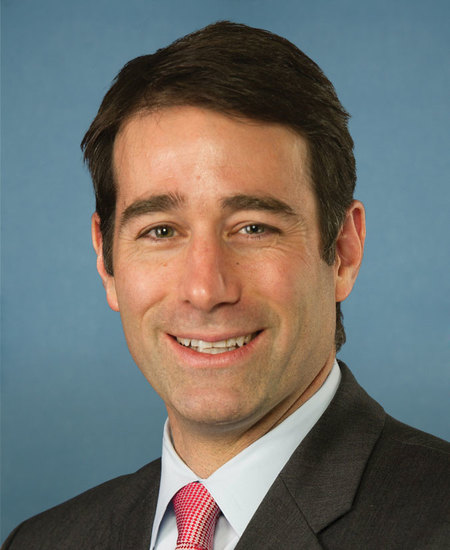
Rep. Garret Graves
Sponsored bills
This bill requires the Department of the Interior to authorize certain geological and geophysical surveys related to oil and gas activities. The surveys must cover areas of the Gulf of Mexico Outer Continental Shelf that are not subject to existing moratoria on oil and gas leasing. Authorized surveys are deemed to comply with applicable laws to protect marine mammals and endangered species.
Maddy summaryHRES 1386 is a non-binding resolution designating the week of September 26-30, 2022, as "National Clean Energy Week." It expresses the House’s support for this designation and encourages individuals, organizations, and governments to promote clean energy solutions. The resolution highlights clean energy’s economic benefits (like supporting 7.8 million jobs in 2021) and urges investment in affordable, low-emission energy technologies. It does not create new laws, funding, or obligations - it is purely symbolic recognition of the clean energy sector’s role in the U.S. economy.
Social Security Fairness Act of 2021 This bill repeals provisions that reduce Social Security benefits for individuals who receive other benefits, such as a pension from a state or local government. The bill eliminates the government pension offset , which in various instances reduces Social Security benefits for spouses, widows, and widowers who also receive government pensions of their own. The bill also eliminates the windfall elimination provision , which in some instances reduces Social Security benefits for individuals who also receive a pension or disability benefit from an employer that did not withhold Social Security taxes. These changes are effective for benefits payable after December 2021.
TCJA Permanency Act This bill makes permanent provisions affecting individual and business taxpayers that were enacted in 2017 by the Tax Cuts and Jobs Act and are scheduled to expire at the end of 2025. The bill makes permanent reductions in individual and capital gain tax rates. The bill increases the standard tax deduction for individual taxpayers. It also increases and modifies the child tax credit and raises the contribution base for the tax deduction for charitable contributions. The bill allows additional contributions to ABLE accounts (tax-exempt accounts designed to enable individuals with disabilities to save and pay for disability-related expenses). It exempts from taxation combat zone benefits of members of the Armed Forces serving in the Sinai Peninsula of Egypt and limits the deduction for moving expenses to active duty members of the Armed Forces. Additionally, the bill expands the types of elementary and secondary school expenses eligible for payment from qualified tuition programs (529 programs); lowers to $750,000 the amount of mortgage debt eligible for an interest expense tax deduction; reinstates after 2023 the exclusion of income from the gross income of student loan borrowers for loan debt discharged due to death or total and permanent disability; makes permanent the limitation on the tax deduction for state and local taxes and denies a deduction for foreign real property taxes; makes permanent the tax deduction of the income of certain pass-through business entities; repeals the tax deduction for personal tax exemptions and the exclusion of employer-provided bicycle commuter fringe benefits; terminates certain miscellaneous itemized tax deductions; doubles the estate and gift tax exemption amount; and makes permanent the increase of the alternative minimum tax exemption amount for individual taxpayers.
Keep America’s Refuges Operational Act of 2022 This bill reauthorizes through FY2027 (1) the volunteer services, community partnerships, and refuge education programs of the National Wildlife Refuge System; and (2) provisions authorizing the Department of the Interior to accept and use gifts, devises, or bequests of real and personal property for the benefit of the U.S. Fish and Wildlife Service in the performance of its activities and services.
Peace Corps Reauthorization Act of 2022 This bill reauthorizes through FY2024 and modifies operations of the Peace Corps. Changes include increasing the readjustment allowance paid to volunteers when their service terminates and providing statutory authority for an executive order that grants returned volunteers noncompetitive eligibility for federal civil-service positions. Additionally, the bill entitles returned volunteers to sixty days of health care benefits. The Peace Corps must also provide volunteers with information about enrolling in U.S. health plans before service termination and mental health care during and after service. The bill also includes provisions to address involuntary termination of Peace Corps service in emergencies, including by expediting re-enrollment of involuntarily terminated volunteers. The Peace Corps must also adequately insure volunteers' safety and must coordinate with the Department of State to periodically update agreements concerning the security of Peace Corps volunteers and staff abroad. The bill also authorizes Peace Corps to recruit domestically based volunteers to serve in the United States at the request of another agency or to provide services in a host country virtually, modifies the Peace Corps National Advisory Council's membership and functions, expands whistleblower protections for volunteers, increases the rate of pay that applies to a volunteer's workers compensation claim, requires Peace Corps to implement a zero tolerance drug use policy regarding volunteer involvement with illegal drugs, and emphasizes the use of the internet in Peace Corps programs. Furthermore, the bill requires reporting, including on the provision of mental health services to volunteers.
Expediting Disaster Recovery Act This bill authorizes the President, after the declaration of a major disaster, to direct the Federal Emergency Management Agency (FEMA) to provide to the state assistance necessary for meeting unmet needs as a result of such disaster. The President may provide financial assistance or direct assistance to individuals or households to construct permanent or semi-permanent housing in insular areas outside the continental United States and in other locations if the President considers it a cost effective alternative to other housing solutions. The Government Accountability Office must conduct a review on the fiscal controls by states that receive funds under provisions pertaining to public assistance grant program eligibility and oversight for debris removal. The President may not impose additional income criteria on a potential grant recipient who has accepted a qualified disaster loan in determining eligibility for duplications of benefit relief.
Drone Infrastructure Inspection Grant Act This bill establishes programs within the Department of Transportation (DOT) to support the use of drones and other small, unmanned aircraft systems when inspecting, repairing, or constructing road infrastructure, electric grid infrastructure, water infrastructure, or other critical infrastructure. Specifically, DOT must award grants to state, tribal, and local governments; metropolitan planning organizations; or groups of those entities to purchase or otherwise use drones to increase efficiency, reduce costs, improve worker and community safety, reduce carbon emissions, or meet other priorities related to critical infrastructure projects. Grant recipients must use domestically manufactured drones that are made by companies not subject to influence or control from certain foreign entities, including China and Russia. DOT must also award grants to certain institutions of higher education for training students for careers using drones and related technologies.
DHS Restrictions on Confucius Institutes and Chinese Entities of Concern Act This bill restricts funding to an institution of higher education (IHE) that has a relationship with a Confucius Institute (a cultural institute directly or indirectly funded by the Chinese government). It also requires certain disclosures related to Chinese entities of concern (generally, universities or colleges involved in China's military, police, or intelligence activities). Specifically, the Department of Homeland Security (DHS) must ensure that an IHE that has awarded a contract to, entered into an agreement with, or received an in-kind donation or gift from a Confucius Institute is ineligible to receive specified funds from DHS, unless the IHE terminates the relationship. The IHE may regain eligibility for these funds upon termination of the relationship. DHS may waive this funding restriction, on a case-by-case basis and for a period of not more than one year, if it is in the national security interests of the United States. Additionally, an IHE that has a relationship with a Chinese entity of concern and is seeking to receive or receives specified DHS funds must notify DHS about the relationship. DHS must provide outreach and, upon request, technical assistance to IHEs related to compliance with this bill.