

Maddy summaryThis resolution designates the week of September 25-29, 2023, as "National Clean Energy Week" to recognize the growing role of clean energy in the U.S. economy. It expresses support for clean energy jobs and innovation, noting the sector employed about 8.1 million people in 2022. The resolution encourages federal, state, and local investment in affordable clean energy technologies and promotes "commonsense solutions" for energy needs. As a symbolic gesture, it has no legal force or funding implications - it simply urges recognition of clean energy's economic and environmental contributions.
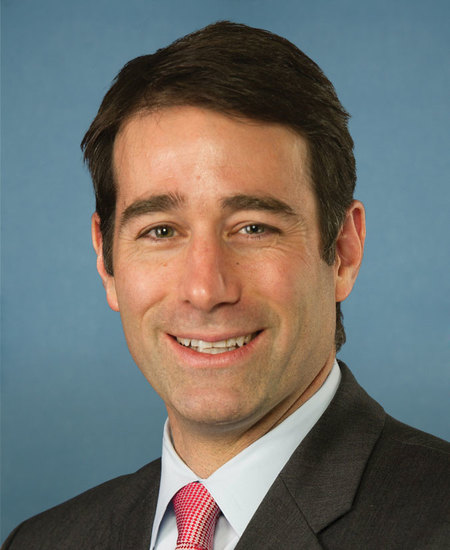
Rep. Garret Graves
Sponsored bills
Maddy summaryThe NEWBORN Act creates a federal grant program to reduce infant mortality in the 50 U.S. counties with the highest rates, using $10 million annually from 2023-2027. It funds local health departments (including tribal, county, or state agencies) to design pilot programs addressing causes like preterm birth, maternal complications, and infant injuries through community assessments, outreach to at-risk mothers, and coordinated services such as postpartum care and smoking cessation. Grantees must report annually on program outcomes and methods, with no more than 10% of funds used for evaluation. The bill directly affects communities in high-mortality areas by supporting targeted, evidence-based interventions.
Maddy summaryThis bill extends existing aviation programs and tax authorities through December 2023. It modifies deadlines for airport improvement grants (extending $842 million in funding for Q4 2023), unmanned aircraft regulations, FAA operations, and key tax collections like fuel and ticket taxes. These changes maintain current funding levels for airports, airlines, and FAA programs relying on the Airport and Airway Trust Fund. The bill does not create new programs but ensures continuity of existing authorizations. It directly affects airports receiving federal grants, airlines paying aviation taxes, and FAA operational activities.
Drought Assistance Improvement Act This bill modifies access to two Farm Service Agency (FSA) administered programs: the Livestock Forage Disaster Program (LFP) and the Emergency Assistance for Livestock, Honey Bees, and Farm-Raised Fish Program (ELAP). The bill modifies the LFP to allow for one monthly payment when a county has four consecutive weeks of a D2 rating (severe drought) and two payments for eight consecutive weeks of D2. Currently, one payment is available for eight consecutive weeks of D2. (LFP makes payments to eligible livestock producers who have suffered grazing losses on drought-affected pastureland, including cropland planted specifically for grazing.) The bill also expands coverage under ELAP for losses caused by adverse weather or drought. The bill includes under ELAP the loss of a crawfish harvest due to adverse weather or drought. (ELAP provides payments to producers of livestock, honey bees, and farm-raised fish as compensation for losses due to disease, adverse weather, feed or water shortages, or other conditions that are not covered under other programs.) The FSA must establish ELAP documentation standards for (1) collecting data, (2) the production of crawfish, and (3) defining loss conditions due to drought.
Maddy summaryThis bill creates a new exemption from U.S. passport application fees for first responders participating in disaster relief. Specifically, it allows the Secretary of State to waive both passport issuance and execution fees for volunteers working under U.S. government contracts, grants, or agreements to conduct search, rescue, or disaster relief operations within seven days of a natural disaster in a foreign country. The bill does not change existing fee exemptions for military personnel, seamen, or families of fallen service members. It also requires the Secretary of State to report annually on the number of such fee waivers granted to first responders.
Maddy summaryThe FEMA Independence Act of 2023 would restructure the Federal Emergency Management Agency (FEMA) as a cabinet-level independent agency directly reporting to the President, rather than operating within the Department of Homeland Security (DHS). This would transfer all FEMA functions to the new independent agency within 120 days, establishing a Director appointed by the President with Senate confirmation who oversees FEMA's mission of disaster preparedness, response, and recovery. The bill includes provisions to maintain continuity of operations and personnel during the transition, and updates references to FEMA in other laws to reflect its new status as an independent agency. The change aims to strengthen FEMA's focus on emergency management by removing it from the DHS structure.
Maddy summaryHR 5455, the Collision Avoidance Systems Act of 2023, allows automakers to install pulsating light systems as rear-end collision avoidance technology on new vehicles. The bill requires the Secretary of Transportation to issue new regulations within 180 days updating Federal Safety Standard 108 to include performance-based rules for these systems. Specifically, it defines a "pulsating light system" as a high-mounted brake light that flashes rapidly (up to 4 times for no more than 1.2 seconds) before switching to steady light, with a 5-second lockout period after braking stops. This directly affects vehicle manufacturers who must comply with the updated safety standards for brake lights.
Maddy summaryThis bill amends U.S. military law to authorize the Secretary of Defense to provide training and equipment to foreign security forces. It specifically targets efforts to counter illegal, unreported, and unregulated (IUU) fishing operations. The key mechanism adds a new provision allowing U.S. support for partner nations' coast guards and navies to build capacity in maritime enforcement. It directly affects foreign security forces in countries where IUU fishing threatens regional stability and fisheries.
Maddy summaryHR 4949, the Don Young Veterans Advancing Conservation Act, establishes a Department of Commerce grant program to fund nonprofit organizations that train or employ veterans for underwater marine and coastal conservation work. The program, authorized for $1 million in fiscal year 2024 and increasing to $1.8 million by 2028, supports specific activities like coral restoration, invasive species removal, marine debris cleanup, and hurricane recovery. Nonprofits must be 501(c)(3) organizations and use funds to employ veterans in these conservation roles, with coordination required with the Department of the Interior. This directly affects veterans seeking meaningful employment and conservation-focused nonprofits receiving federal grants.
Maddy summaryHR 4547, the Laws Ensuring Safe Shrimp Act (LESS Act), creates a dedicated fund using 70% of U.S. import duties on shrimp and shrimp products (e.g., frozen shrimp, shrimp-based dishes) to improve safety and labor compliance. The fund allocates 50% to the FDA for inspecting high-risk shrimp for antibiotic contamination and verifying imports aren’t sourced from forced labor or illegal fisheries, and 50% to the USDA to boost domestic shrimp consumption. It directly affects shrimp importers (who pay the duties), federal agencies (FDA, USDA, CBP), and domestic shrimp producers (who benefit from consumption programs). The bill ensures funding supplements existing programs and remains available until spent, focusing on concrete safety and labor checks rather than speculative outcomes.