

Maddy summaryThis bill requires family planning services funded under Title V of the Social Security Act to provide pamphlets containing regional adoption center contact information to patients during consultations about medical or abortion services. The pamphlets must include a comprehensive list of adoption centers in the region, along with each center's address and phone number. It mandates that services offer patients the opportunity to read these pamphlets at the time of inquiry. The provision uses existing Title V funding and does not create new financial obligations.
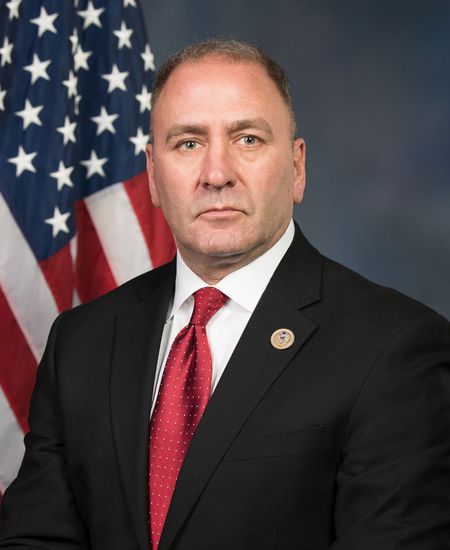
Rep. Clay Higgins
Sponsored bills
Maddy summaryHR 128, the Defund Planned Parenthood Act of 2023, blocks federal funding to Planned Parenthood Federation of America and its affiliates for one year unless they certify they will not perform or fund abortions (except in cases of rape, incest, or life-threatening conditions for the patient). This directly affects Planned Parenthood clinics and their federal funding streams. The bill redirects $235 million to community health centers under the Public Health Service Act to continue providing women’s health services like contraception, cancer screenings, and prenatal care. It requires repayment of funds if Planned Parenthood violates the certification and explicitly states the law won’t reduce overall federal funding for women’s health services.
Maddy summaryHJRES 17 is a congressional resolution disapproving the District of Columbia Council's approval of the Local Resident Voting Rights Amendment Act of 2022 (D.C. Act 24-640), which the Council enacted on October 18, 2022. If passed by Congress and signed into law, this resolution would block the local voting rights amendment from taking effect. The bill directly affects the District of Columbia government by preventing implementation of the amendment, which aimed to address voting rights for residents. This resolution follows the District of Columbia Home Rule Act's requirement for congressional disapproval of certain local laws.
Maddy summaryHR 311, the Cost Estimates Improvement Act, requires the Congressional Budget Office (CBO) and Joint Committee on Taxation (JCT) to include debt servicing costs in their budget estimates where practicable and to list duplicative federal programs covered by legislation. The bill mandates that all CBO and JCT cost estimates must identify overlapping or redundant agency programs, initiatives, or activities within the proposed legislation. This change aims to improve transparency in federal budget analysis by providing clearer data on long-term debt impacts and program efficiency for lawmakers. The bill directly affects the CBO and JCT as they prepare budget estimates for Congress.
No Taxpayer Funding for the World Health Organization Act This bill prohibits the United States from providing any assessed or voluntary contributions to the World Health Organization.
Maddy summaryH.J.Res. 12 proposes a constitutional amendment requiring the federal government to balance its budget annually, meaning spending cannot exceed revenue except under specific circumstances. It would directly affect Congress and the President by mandating that annual budgets must not exceed revenue, with exceptions requiring a 3/5 vote in both chambers of Congress or a military conflict waiver approved by a joint resolution. Key provisions include prohibiting increases to the national debt without a 3/5 congressional vote, requiring the President to submit a balanced budget proposal each year, and defining "receipts" to exclude borrowing. The amendment would take effect five years after ratification by 38 states (three-fourths of states) and includes limited waivers for declared wars or imminent national security threats. This is a procedural constitutional change, not a spending bill, and would fundamentally alter federal budgeting processes.
Maddy summaryHJRES 8 proposes a constitutional amendment to permanently set the Supreme Court's size at nine justices. The bill would require any future changes to the Court's composition to follow this specific number, locking in the current structure. It does not alter the existing Court size (which has been nine since 1869) but aims to prevent future adjustments through legislative action. The amendment must be ratified by three-fourths of state legislatures within seven years to take effect. This is a procedural proposal focused on constitutional structure, not a direct policy affecting citizens or programs.
WHO Withdrawal Act This bill requires the President to immediately withdraw the United States from the World Health Organization (WHO) and prohibits using any federal funds to provide for U.S. participation in the WHO. The bill also repeals the 1948 act authorizing the United States to join the WHO.
Maddy summaryThis bill establishes nationwide recognition for valid concealed carry permits. It allows permit holders from any state to carry concealed handguns in states that either issue such permits or don't ban concealed carry, provided they carry a photo ID and their valid permit. Key provisions include making presentation of a valid permit and ID prima facie evidence of compliance, shifting the burden of proof to prosecutors if challenged, and requiring courts to award attorney fees to successful defendants. It does not override state laws prohibiting concealed carry on private property or government lands, nor does it affect restrictions on federal lands like national parks.
Jurists United to Stop Trafficking Imitation Child Exploitation Act of 2023 or the JUSTICE Act of 2023 This bill broadens the federal criminal prohibition on importation or transportation of obscene materials. Specifically, the bill makes it a crime to import, or knowingly use a common carrier or interactive computer service to transport, a child sex doll.