

Let Experienced Pilots Fly Act of 2023 This bill raises the mandatory retirement age for pilots engaged in commercial aviation operations from 65 to 67 years of age, unless the operation takes place in (1) the territorial airspace of a foreign county where such operations are prohibited by the foreign country, or (2) international airspace where such operations are not in compliance with the Annexes to the Convention on International Civil Aviation. The Federal Aviation Administration must also submit a report to Congress on further increasing the age limitation for pilots engaged in commercial aviation operations.
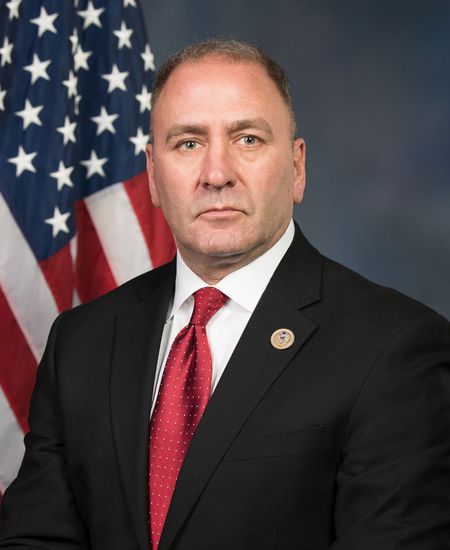
Rep. Clay Higgins
Sponsored bills
This resolution supports the preservation of the stepped-up basis tax rule that allows recipients of inherited assets such as land, equipment, or buildings to adjust the cost basis of the assets to reflect their fair market value. The resolution opposes any efforts to impose new taxes on family farms or small businesses and recognizes the importance of generational transfers of farm and family-owned businesses.
Pregnancy Resource Center Defense Act This bill increases criminal penalties and authorizes additional civil remedies for intentionally damaging or destroying property that is a place of religious worship or a facility that exclusively provides abortion-alternative services. The bill also increases the mandatory minimum prison term for maliciously damaging or destroying, by means of fire or explosives, a building that is a place of religious worship or a facility that exclusively provides abortion-alternative services.
Protecting Legal Firearms Ownership Act of 2023 This bill states that any firearm or firearm attachment that was lawfully manufactured before the effective date of a new rule or regulation shall be grandfathered and shall be permitted to be sold, transferred, and possessed in accordance with the previous rule regime. The bill specifies that the manufacturing date of a firearm or firearm attachment shall be determined by the serial number recorded on the firearm or firearm attachment, or any other legal method of recording the date of manufacturing, including packaging.
Maddy summaryH.J. Res. 26 is a congressional disapproval resolution blocking the District of Columbia Council's approval of its Revised Criminal Code Act of 2022 (D.C. Act 24-789). It directly affects the District of Columbia by preventing the new criminal code from taking effect, as Congress disapproved the Council's action under the Home Rule Act. The resolution formally rejects the Council's enactment of the code, which was transmitted to Congress on January 27, 2023. This procedural action stops the District from implementing the revised criminal code without further congressional action.
Maddy summaryThis bill adds a new section to federal law making murder of law enforcement officers a capital offense. It mandates death or life imprisonment for individuals who murder federal officers during official duties, or state/local officers when the crime involves interstate activity (like using a weapon that crossed state lines). Key provisions include specific aggravating factors considered for sentencing, such as ambush tactics, prior violent advocacy, or ties to extremist groups. The bill explicitly states it does not affect state court jurisdiction over such cases.
Maddy summaryHR 140, the Protecting Speech from Government Interference Act, prohibits federal employees from using their authority to censor speech, particularly affecting individuals with pending applications (like grants or permits) or under investigation by the agency. It bans employees from advocating censorship of speech, suppressing speech of people involved in agency matters, or engaging in censorship while on duty in government spaces, wearing uniforms, or using government vehicles. Exceptions cover law enforcement actions against child pornography, human trafficking, or national security threats. Violations can result in penalties including removal, fines up to $10,000, or reprimands. The bill defines "censorship" broadly to include removing speech from platforms or adding disclaimers.
Maddy summaryHR 1556, the "Define WOTUS Act," redefines which water bodies fall under federal Clean Water Act jurisdiction. It explicitly includes rivers, lakes, and wetlands connected to larger waterways, while excluding intermittent streams, groundwater, man-made ditches, and temporary water features like stormwater basins. The bill requires the Army Secretary to provide landowners with a binding, 60-day official ruling on whether waters on their property qualify as regulated "navigable waters." This directly affects property owners, developers, and farmers by clarifying regulatory boundaries and reducing uncertainty about federal water regulations.
Restoring Competitive Property Insurance Availability Act This bill excludes from the gross income of specified insurance companies (other than life insurance companies) certain income from providing qualified real property insurance after a federally declared disaster. The bill defines qualified real property insurance income to mean the excess of premiums received by such insurance companies for real property insurance for property located in the disaster area, over deductions properly allocable to such premiums.
Maddy summaryThis bill requires the U.S. State Department to officially designate four specific Mexican drug cartels (Gulf Cartel, Cartel Del Noreste, Cartel de Sinaloa, and Cartel de Jalisco Nueva Generacion) as foreign terrorist organizations under existing law. It mandates a 30-day report explaining why these groups meet the legal criteria for such designation, including justification if they don't. The report must be submitted to specified congressional committees and may lead to additional cartels being designated based on the findings. The bill also clarifies that this designation won't affect asylum eligibility for individuals fleeing these groups.