

Maddy summaryHRES 518 is a non-binding House resolution expressing support for parental rights in education and sports. It opposes labeling parents as "extreme" for seeking age-appropriate school curriculum (like avoiding sexual orientation discussions for young children) and for wanting biological males excluded from women’s sports. The resolution also states opposition to weakening Title IX protections and affirms that parents - not government - should have final say in their children’s education. As a procedural resolution, it does not create new laws but formally states the House’s position on these issues.
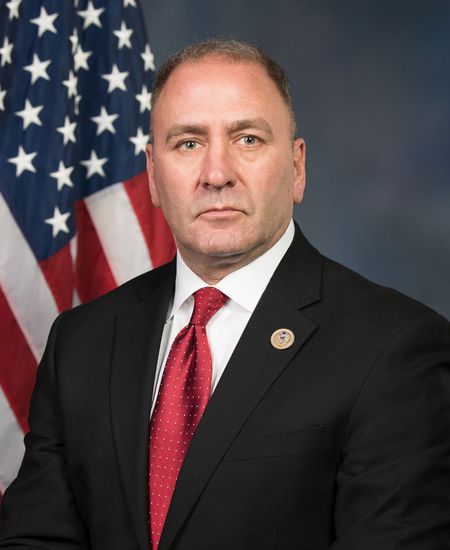
Rep. Clay Higgins
Sponsored bills
Maddy summaryThe Federal Prisons Accountability Act of 2023 requires the President to appoint the Director of the Bureau of Prisons with Senate confirmation, replacing the current system where the Director is appointed directly by the Attorney General. It also establishes a 10-year term limit for the Director, though the current Director may continue serving for up to three months after the bill's enactment. This change directly affects the leadership structure of the Bureau of Prisons, which oversees over 176,000 federal inmates across 122 facilities and has a budget exceeding $7 billion annually. The bill aims to increase oversight of this major Department of Justice component by aligning its leadership appointment process with other senior Justice Department officials.
Maddy summaryHJRES 42 is a congressional resolution disapproving the District of Columbia Council's approval of the *Comprehensive Policing and Justice Reform Amendment Act of 2022* (D.C. Act 24-781), which the Council enacted on January 19, 2023. This resolution, introduced by 18 House members on March 9, 2023, formally expresses Congress's objection to the DC law but does not alter the law itself or its implementation in the District. The resolution targets the DC Council’s action under the Home Rule Act, requiring Congress to formally disapprove such local legislation before it takes effect. It affects DC’s local policing policies but does not directly change federal law or impact residents beyond this procedural disapproval.
Maddy summaryHR 4070, the Disaster Mitigation and Tax Parity Act of 2023, excludes certain payments received from state disaster mitigation programs from taxable income. It directly affects homeowners who get funds from state or state-regulated programs to make property improvements specifically designed to reduce damage from windstorms, earthquakes, or wildfires (like installing fire-resistant roofing or seismic upgrades). The bill adds a new tax exclusion in the Internal Revenue Code, meaning these qualified mitigation payments won't be counted as gross income for tax purposes. This change applies to payments made after December 31, 2020, with options for retroactive tax filings.
Maddy summaryHR 4035, the Protecting Small Business Information Act of 2023, requires the Treasury Secretary to coordinate the effective dates of all rules under the Corporate Transparency Act. It mandates that all final rules related to beneficial ownership reporting must take effect on the same date, delaying implementation until the Secretary certifies to Congress that all rules are issued and will align on a single effective date. This directly affects small businesses required to report beneficial ownership information under the Corporate Transparency Act. The bill’s key mechanism is creating a unified implementation timeline, preventing staggered rule deadlines that could complicate compliance for small entities. It does not change reporting requirements but ensures a synchronized rollout of the regulations.
Maddy summaryHRES 482 is a ceremonial resolution commending Raul L. Ortiz upon his retirement after 32 years of service with the U.S. Border Patrol. It formally recognizes his career, including his role as the 25th Chief of the Border Patrol (appointed August 2021), and acknowledges his leadership during his tenure. The resolution contains no policy changes or new laws; it is solely a gesture of appreciation from the House of Representatives. It does not affect any individuals or policies beyond expressing formal recognition of Ortiz’s service.
This resolution impeaches Secretary of Homeland Security Mayorkas for high crimes and misdemeanors for ceasing construction of a border wall and for other activities relating to immigration and the southern border.
This resolution requires the Clerk of the House of Representatives to place in the House Chamber a real-time display of the outstanding national debt.
Beautifying Federal Civic Architecture Act This bill declares U.S. policy applicable to public buildings and establishes the President's Council on Improving Federal Civic Architecture. The policy includes that applicable federal public buildings should uplift and beautify public spaces, command respect from the general public, be visually identifiable as civic buildings, respect regional architectural heritage, and meet other specified criteria; in the District of Columbia, classical architecture is the preferred and default architecture for federal public buildings absent exceptional factors; buildings that do not meet specified criteria should be considered for redesign where feasible and economical, particularly with respect to the exterior of the applicable federal building; and the General Services Administration (GSA) should seek input from future users of the applicable federal public buildings and the general public in the community where such buildings will be located before selecting an architectural firm or design style and give the general public's input substantial consideration. The GSA must adhere to the policy. If the GSA proposes to approve a design for a new applicable federal public building that diverges from the preferred architecture, it must notify the Office of the Domestic Policy Advisor and Congress not later than 30 days before the date on which the GSA could reject the design without incurring substantial expenditures and describe the reasons for proposing to approve the design.
Maddy summaryHR 3455, the TSP Act, prohibits the Thrift Savings Fund (TSP) from investing in any "security of concern." This directly affects federal employees and retirees whose retirement savings are held in the TSP, as their accounts would no longer include certain investments tied to countries identified as national security threats. A "security of concern" includes stocks listed in a "country of concern" (per the Director of National Intelligence's annual report), companies incorporated in such countries, or firms generating over 50% of revenue there. The law bans all forms of these investments, including through mutual funds or synthetic instruments like equity swaps, without exception.