

Maddy summaryThis bill requires the Department of Homeland Security (DHS) to submit annual reports detailing staffing plans for all Joint Task Forces, with specific focus on Joint Task Force-East. It mandates annual briefings to four congressional committees on staffing adequacy and resource allocation for Joint Task Force-East, including cost and timeline plans if shortages are identified. The bill also requires a one-time report comparing the cost and effectiveness of Joint Task Force-East's Portsmouth, Virginia headquarters to alternative locations. These reports must begin by December 23, 2024, and continue annually thereafter.
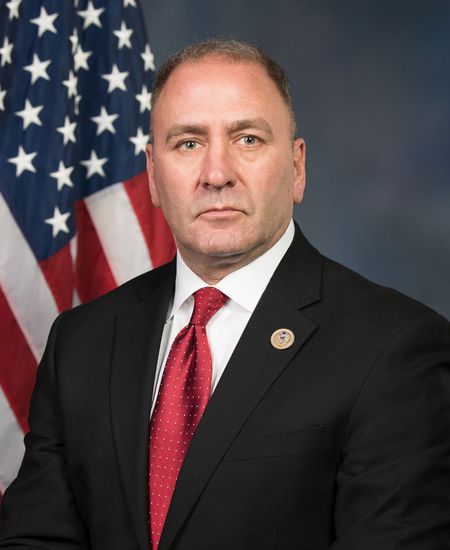
Rep. Clay Higgins
Sponsored bills
Maddy summaryThis bill requires federal agencies to create a public, searchable database containing ethics records for certain employees, including financial disclosures, gift approvals, and ethics waivers. Agencies must submit these records electronically within 60 days of enactment, include records from the previous 9 years, and ensure they remain publicly available for 10 years. The database must be free to access, fully accessible (meeting Web Content Accessibility Guidelines), and exclude only specific sensitive information like trade secrets or safety risks. It directly affects executive branch agencies and employees in political or sensitive roles, such as presidential appointees and noncareer staff covered under federal ethics rules.
Maddy summaryHR 705, the Veterans 2nd Amendment Protection Act, prohibits the Department of Veterans Affairs (VA) from automatically sending veterans' personal information to the national background check system solely because a fiduciary (like a guardian) manages their benefits. It specifically blocks the VA from sharing this data with the Justice Department without a court order finding the veteran a danger to themselves or others. This directly affects veterans who have a fiduciary appointed due to incapacity but are not deemed dangerous, preventing automatic barriers to firearm purchases based only on their fiduciary status. The bill amends 38 U.S.C. § 5501B to require judicial authorization before such data can be transmitted.
Maddy summaryThis bill blocks U.S. Department of Homeland Security (DHS) funding to colleges and universities that maintain relationships with Confucius Institutes or "Chinese entities of concern" (defined as institutions linked to China's military or defense sectors). It requires affected schools to terminate such relationships within 12 months of the bill's enactment to regain eligibility for DHS funds. The law directly impacts higher education institutions receiving DHS funding, not all schools or federal programs. Key provisions mandate DHS to deny funding to institutions with ongoing ties to these entities, with eligibility restored only after relationship termination.
Maddy summaryHR 9534, the National Constitutional Carry Act, would prohibit states and localities from banning or restricting the public carrying of legally owned firearms by eligible U.S. citizens. It directly affects all gun owners who meet federal and state possession requirements, removing the need for permits or licenses to carry in public spaces. Key provisions state that any state law restricting public carry - such as requiring permits or imposing financial barriers - would be invalidated, with exceptions for privately-owned businesses that clearly prohibit firearms or locations with security screening. The bill bases this on Supreme Court rulings affirming the constitutional right to carry firearms for self-defense outside the home.
Maddy summaryHR 8282, the "Illegitimate Court Counteraction Act," imposes U.S. sanctions on foreign individuals or entities supporting the International Criminal Court (ICC) in investigating or prosecuting "protected persons." Protected persons include U.S. military personnel, officials, and allied personnel (from non-ICC member countries) who are not under ICC jurisdiction. The bill requires the President to block assets and deny visas to targeted foreign persons and their immediate family members within 60 days of the ICC attempting such actions. It mandates congressional notification of sanctions and allows termination if the ICC ceases all such efforts against protected persons. The law focuses on restricting U.S. economic and travel access to ICC supporters targeting specific U.S. and allied personnel.
Maddy summaryHR 8632, the BIOSAFE Act of 2024, directs the Secretary of the Interior to withdraw a specific proposed rule titled "National Wildlife Refuge System; Biological Integrity, Diversity, and Environmental Health" (published February 2, 2024, in 89 Fed. Reg. 7345). This rule would have established new standards for managing biodiversity and environmental health within National Wildlife Refuges. The bill directly affects the management of these refuges by halting the implementation of the proposed rule. It is a procedural measure that reverses an existing regulatory proposal without creating new policy.
Maddy summaryThis bill amends an existing reporting requirement in the 2023 National Defense Authorization Act. It changes the provision to require the Department of Homeland Security to submit annual reports on counter-illicit cross-border tunnel operations, rather than just one report after developing a strategic plan. The bill does not create new programs or alter border security policy; it only modifies the frequency of required reporting. This procedural change directly affects the Department of Homeland Security's reporting obligations.
Maddy summaryHR 2864, the Countering CCP Drones Act, adds DJI Technologies (Shenzhen Da-Jiang Innovations Sciences and Technologies Company Limited) and its equipment/services to the list of prohibited communications products under the Secure and Trusted Communications Networks Act. The bill directly affects U.S. federal agencies and entities receiving federal funds by prohibiting them from using DJI's telecommunications or video surveillance equipment or services. Its key mechanism requires federal agencies to remove DJI equipment from their networks and bans future procurement or use of such equipment. This policy change aims to address security concerns related to Chinese-owned drone technology in U.S. communications infrastructure.
Maddy summaryHR 8658, the Emerging Digital Identity Ecosystem Report Act of 2024, requires the Transportation Security Administration (TSA) to submit a report to Congress within 180 days of the bill's enactment. The report must describe the current state of digital identity systems in transportation, evaluate their homeland security benefits and risks, and explore how they could enhance security and U.S. competitiveness. It specifically asks the TSA to include input from private companies, state/local governments, tribes, and territories. This bill does not create new regulations but mandates a study to inform future policy decisions. The report will focus on transportation sector applications, such as secure traveler verification systems.