

Maddy summaryThis bill prohibits U.S. Small Business Administration (SBA) assistance - including loans, contracts, and other support - from going to small businesses that are either headquartered in China or have more than 25% of their voting stock owned by Chinese-affiliated entities. It directly affects small business concerns meeting either of these criteria, blocking their access to SBA programs. The bill amends the Small Business Act to add this restriction and requires the SBA to update its regulations (including specific sections of the Code of Federal Regulations) to implement the change. The policy change is a direct eligibility requirement for SBA programs, with no additional funding or program modifications.
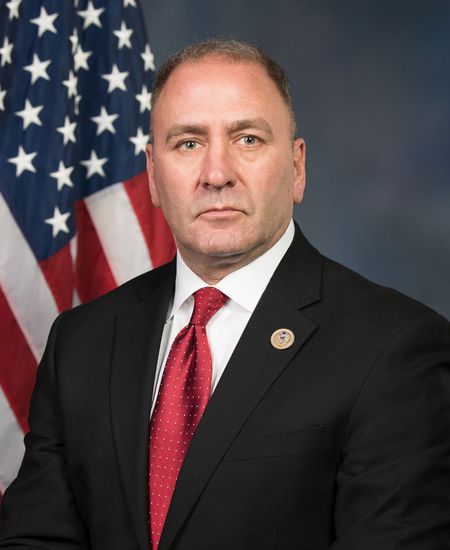
Rep. Clay Higgins
Sponsored bills
Maddy summaryHRES 1509 is a symbolic resolution designating the week beginning November 11, 2024, as "National Pregnancy Center Week." It recognizes community-supported pregnancy centers across the U.S. for providing services like pregnancy testing, counseling, ultrasounds, parenting education, and material support to individuals facing pregnancy decisions. The resolution highlights that these centers, which serve approximately 2 million people annually through volunteer and staff efforts, operate as local, nonprofit organizations. It does not create new laws or funding but formally acknowledges their role in offering support to women and men.
Maddy summaryThis bill removes legal immunity for vaccine manufacturers by allowing individuals injured by vaccines to sue them directly in court after filing a claim with the federal vaccine injury compensation program (VICP). It eliminates time limits for filing VICP claims (previously 24-36 months) and explicitly excludes COVID-19 vaccines from the program's coverage. The changes affect people seeking compensation for vaccine injuries and vaccine manufacturers, who will no longer automatically avoid lawsuits. The bill also repeals provisions that previously restricted legal action after VICP claims.
Maddy summaryThe Cyber PIVOTT Act creates the PIVOTT Program to build a cybersecurity workforce by providing full scholarships to students at community colleges and technical schools pursuing cyber or cyber-relevant associate's degree programs. The program covers tuition, fees, certification costs, and internship expenses, requiring participants to complete a two-year service obligation in a cyber role after graduation, with exceptions for military service. It mandates skills-based exercises like hackathons and labs, internship placements with government entities and critical infrastructure organizations, and maintains a database mapping training to job roles. The bill sets enrollment goals of 250 students in the first year, doubling annually until reaching 1,000 students, with a long-term target of 10,000 students annually. The program aims to address cybersecurity workforce gaps by creating direct pathways from education to government cyber positions.
Maddy summaryHR 9731, the Special Interest Alien Reporting Act of 2024, requires the Department of Homeland Security (DHS) to publish monthly reports on individuals classified as "special interest aliens" attempting unlawful entry into the U.S. These reports, due by the seventh day of each month, must detail the total number and nationalities of such individuals, broken down by geographic region and location of encounter (e.g., ports of entry, border areas, or interior). The reports must also identify if encounters involve individuals from "covered nations" (as defined in existing law). This bill mandates transparency for Congress and the public but does not change immigration law or enforcement practices.
Maddy summaryHR 9722, the CATCH Fentanyl Act, directs U.S. Customs and Border Protection (CBP) to test new technology at land border ports to improve detection of fentanyl, drugs, weapons, and smuggling. Over five years, CBP must run pilot projects evaluating at least five types of nonintrusive inspection technologies - such as AI-powered scanners and machine learning tools - to enhance detection accuracy, reduce inspection wait times, and integrate with existing systems. The bill requires CBP to analyze performance metrics like detection rates and false alarms, prioritize cost-effective solutions, and submit reports on privacy impacts and recommendations for broader implementation. The pilot program ends after five years, with no new funding authorized for the initiative.
Maddy summaryHR 5729 blocks federal funding for creating a "Homeland Intelligence Experts Group" at the Department of Homeland Security (DHS) and prohibits funding for any equivalent group, program, or activities. It prevents the DHS Secretary from using allocated funds to establish such a group or similar efforts starting from the bill's enactment date. This directly affects DHS budget planning and spending authority for intelligence-related initiatives.
Maddy summaryHR 3169, the Port Crane Security and Inspection Act of 2023, requires the Department of Homeland Security to inspect internet-connected foreign cranes deemed high-risk for security threats before they are used at U.S. ports. It mandates a threat assessment of existing and new cranes within 180 days of enactment and orders cranes posing security risks to be taken offline until certified safe. The bill prohibits operating new foreign cranes (from "covered foreign countries" like those identified as adversaries by U.S. intelligence) after enactment and bans the use of foreign software on port cranes after a 5-year deadline. This directly affects port operators and crane manufacturers from countries designated as security threats, focusing on securing port cyber infrastructure.
Maddy summaryHRES 1493 is a symbolic congressional resolution condemning Vice President Kamala Harris for her past support of climate policies as a senator. It specifically references her 2019 cosponsorship of the Green New Deal resolution and her 2020 climate plan proposals, which the resolution claims would increase national debt and harm energy independence. The resolution does not create new laws or affect any policies - it only expresses disapproval of these historical positions. It has no legal effect or direct impact on current legislation or constituents.
Maddy summaryThe CLAWS Act of 2024 requires U.S. federal agencies (like NIH or the Department of Defense) to annually report detailed information about biomedical research projects funded by U.S. agencies but conducted in China or involving Chinese entities. The report must include specifics such as the project's purpose, whether it involves pandemic-potential pathogens or military-linked research locations, funding details, security measures, and any compliance issues. This applies to all federally funded biomedical research - such as disease treatment or vaccine development - carried out in China or with Chinese partners. The goal is to increase transparency about research collaborations with China, focusing on security and oversight.