

Federal Lands and Waters Leasing Transparency Act This bill directs the Department of the Interior to provide explanations to the highest bidders when it rejects their bids for certain offshore oil and gas leases. The bill also prohibits courts from invalidating or delaying certain onshore and offshore oil and gas leases. When Interior determines that the federal government will not receive the fair market value for offshore lease tracts on submerged lands of the Outer Continental Shelf from the highest bidder, then Interior must provide a report to the bidder that explains the basis for the determination. If the bid was subject to a resource and economic evaluation, the report must include information on how the bid compares to specified valuation metrics. These requirements apply to lease sales in which Interior received at least one bid and did not issue a lease to the highest bidder. Additionally, courts may not prevent Interior from issuing certain onshore oil and gas leases by a 60-day statutory deadline unless the lease would violate federal law. Further, the bill prohibits civil actions that challenge certain offshore oil and gas lease sales from (1) invalidating leases issued under such sales; and (2) delaying the consideration of plans, documents, or applications for a federal authorization or approval of activities for a lease. If a court finds that the sale was not carried out in compliance with federal law, the court must (1) remand the matter to Interior, and (2) direct Interior to correct the noncompliance.
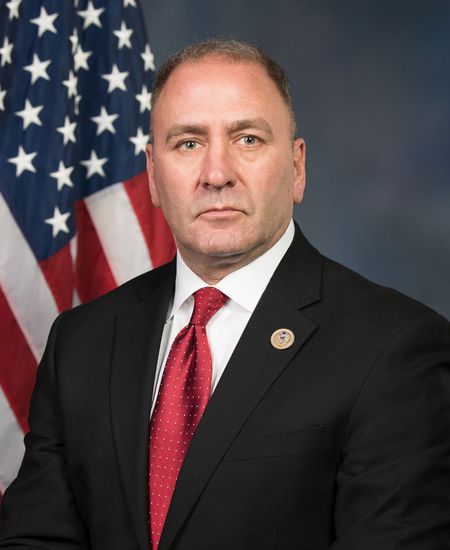
Rep. Clay Higgins
Sponsored bills
This bill repeals the Impoundment Control Act of 1974 (ICA). The ICA generally limits the authority of the President to impound (i.e., withhold from obligation or expenditure) funds that have been appropriated by Congress and establishes related procedures. It also establishes expedited legislative procedures that Congress may use to consider legislation to enact rescissions proposed by the President.
Maddy summaryThis bill, titled "Emergency Border Control Resolution," is actually a budget resolution establishing fiscal year 2025-2034 budget levels for the U.S. government. It sets detailed revenue, spending, and deficit targets across various government functions, including defense, health, and social programs. The resolution includes reconciliation instructions for committees to adjust laws within their jurisdictions to meet deficit targets. The title appears to be a political label rather than an accurate description of the bill's content, as it contains no actual border control provisions.
Maddy summaryHR 1165, the Port Crane Security and Inspection Act of 2025, requires the Department of Homeland Security to inspect high-risk foreign cranes connected to port cyber infrastructure before they are used at U.S. ports. It mandates a 180-day assessment of security risks from existing and new cranes and orders the removal of any crane posing a threat until certified safe. The bill prohibits operating new foreign cranes (from countries identified as security threats) after enactment and bans foreign software on port cranes after a 5-year phaseout period. This directly affects U.S. ports using cranes with technology from designated "covered foreign countries," such as those identified in national threat assessments.
Maddy summaryThe HALT Fentanyl Act (HR 27) creates a new category of Schedule I controlled substances for "fentanyl-related substances" defined by specific chemical modifications to fentanyl. This law directly affects researchers, medical professionals, and law enforcement by expanding the legal definition of fentanyl-related substances to include many structurally similar compounds. Key provisions include streamlined registration processes for research on these substances, allowing researchers to conduct studies with expedited procedures if related to FDA-approved drug development or government-funded research. The bill requires the Attorney General to issue implementing rules within six months and includes penalties for violations involving these substances.
Maddy summaryThis bill expands 529 college savings account flexibility by allowing funds to cover costs for industry-recognized postsecondary credentials, not just traditional degrees. It defines "qualified expenses" to include tuition/fees for recognized credential programs (like certifications or apprenticeships), required testing fees, and continuing education needed to maintain credentials. To qualify, programs must meet specific criteria, such as appearing on state lists under the Workforce Innovation and Opportunity Act or being listed in VA or Defense directories. The change applies to 529 distributions made after the law's enactment, giving families more options to use these accounts for job-focused training.
Maddy summaryHJRES 37 proposes a constitutional amendment to change how U.S. Representatives are apportioned among states. It would require counting only U.S. citizens in each state when determining representation, rather than the current total population (including non-citizens). This would directly affect states with large non-citizen populations, potentially reducing their number of House seats. The amendment, if ratified, would replace the current constitutional standard for apportionment. It is a procedural proposal seeking constitutional change, not an enacted law.
Maddy summaryThis bill amends existing federal grant programs (Byrne and COPS grants) to allow local law enforcement agencies to use these funds for purchasing and operating drones specifically for public safety purposes. It does not create new funding but expands the eligible uses of current grant money to include unmanned aircraft systems (drones) as defined in existing federal law. The bill directly affects state and local police departments receiving these federal grants by giving them a new option for public safety technology. The key provision simply adds drone-related purchases and operations to the list of approved grant expenditures under two established programs.
Maddy summaryHR 1070, the "Restoring Competitive Property Insurance Availability Act," creates a tax exclusion for property insurance companies operating in federally declared disaster areas. It excludes "qualified real property insurance income" (premiums minus allocable deductions) from taxable income for the first five years after a disaster (the "recovery period"). This applies specifically to non-life insurance companies that provided property insurance in the affected area before the disaster. The provision takes effect for disasters with incident dates after December 31, 2024, and covers both real property and personal property insured under the same policy.
Maddy summaryHR 1081, the Preventing SBA Assistance from Going to China Act, amends the Small Business Act to bar certain businesses from qualifying as small business concerns for SBA programs. It prohibits businesses located or incorporated in China, or those with over 25% voting stock owned by Chinese affiliates, from accessing SBA loans, contracts, or other assistance. This directly affects U.S. businesses with significant Chinese ownership or ties that would otherwise qualify for federal small business support. The key mechanism is a new definition in the law that blocks eligibility based on foreign ownership or location.