

Maddy summaryHRES 1101 is a non-binding resolution expressing the House of Representatives' support for collaborating with the Congressional Black Caucus to develop a "Black Wealth Agenda." It commits the House to outlining legislative priorities focused on closing the racial wealth gap through key areas like expanding Black entrepreneurship, reforming housing policies, building workforce development programs, and updating the federal minimum wage. The resolution emphasizes addressing systemic barriers in homeownership, education access, employment discrimination, and tax policy to advance economic equity for Black communities. It does not create new laws but directs the House to coordinate with the CBC on policy solutions targeting wealth-building opportunities.
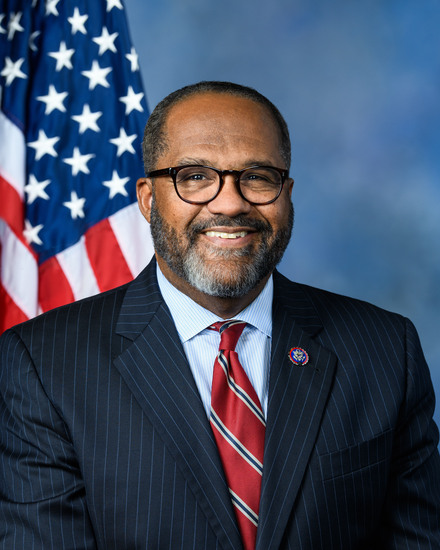
Rep. Troy A. Carter
Sponsored bills
Maddy summaryThis bill would provide federal grants to public housing agencies to modernize public housing through energy efficiency upgrades, infrastructure improvements, and renewable energy systems. It requires all public housing to become "zero-carbon homes" that produce enough renewable energy to meet their own consumption within 10 years. The bill includes specific requirements for workforce development, hiring from low- and very low-income communities (40% in year 1, 50% in year 2, 90% after that), and contracting with resident-owned businesses (20% in year 1, 30% in year 2, 50% after that). It also mandates resident and community engagement in planning, and requires public housing agencies to meet specific energy efficiency and water quality standards. The bill directly affects all public housing agencies managing housing for low- and very low-income residents across the United States, including tribal housing entities.
Maddy summaryHR 7770, the Rosie the Riveter Commemorative Coin Act, authorizes the U.S. Mint to produce and sell three commemorative coins honoring women who worked on the U.S. home front during World War II. It specifies $5 gold coins (max 50,000), $1 silver coins (max 400,000), and half-dollar coins (max 750,000), all to be issued between January 1, 2025, and December 31, 2025. Each coin sale includes a surcharge ($35 for gold, $10 for silver, $5 for half-dollar), with all surcharge funds directed to the Rosie the Riveter Trust for maintaining the Rosie the Riveter WWII Home Front National Historical Park and educational programs. The coins will feature designs reflecting the legacy of diverse women workers and must meet specific weight, diameter, and composition standards.
Maddy summaryHR 5247, the Expedited Hiring for VA Trained Psychiatrists Act of 2023, allows the Veterans Health Administration (VA) to hire psychiatrists who complete VA-residency programs without following standard civil service hiring rules. The bill permits immediate appointment after residency completion (or before, if the process begins early) for positions that have remained unfilled for at least 35 days. This directly affects VA psychiatrists completing specific residency programs and streamlines their hiring into VA clinical roles.
Maddy summaryHRES 1096 is a non-binding resolution expressing support for the House of Representatives to collaborate with the Congressional Black Caucus in developing the "Black Wealth Agenda." It identifies key areas requiring policy action, including closing the racial wealth gap through improvements in homeownership access, education equity, fair employment practices, affordable housing, and tax reform. The resolution outlines priorities such as expanding support for Black entrepreneurship, addressing systemic housing discrimination, raising the federal minimum wage, and investing in historically Black colleges. It does not create new laws or mandate specific actions but commits the House to coordinating legislative efforts focused on these economic equity goals. The resolution was introduced by multiple representatives and referred to relevant committees for review.
Maddy summaryThis bill prohibits the interstate transport, sale, breeding, or possession of captive American mink raised for fur production (including parts or offspring), directly affecting mink fur farmers and the fur industry. It includes a limited exception for entities covered under the Lacey Act and establishes a buy-out program where the government may purchase mink farms. The buy-out amount is based on the farmer's average mink count over three years and the farm's infrastructure value. Funding for the buy-out depends on available appropriations. The bill does not apply to mink not raised for fur or to certain wildlife management activities.
Maddy summaryHR 7634, the Plastic Pellet Free Waters Act, prohibits plastic pellets and pre-production plastic materials from being discharged into water through wastewater, spills, or runoff from specific facilities. It directly affects plastic polymer production facilities, plastic molding and forming facilities, and any point source (like packaging or transport operations) handling plastic pellets. The bill requires the EPA to issue a final rule within 60 days of enactment banning these discharges and updating all relevant wastewater, stormwater, and performance standards in permits and regulations. This creates a legal requirement for facilities to prevent plastic pellet pollution in waterways, targeting a major source of ocean plastic pollution.
Maddy summaryThis concurrent resolution (HCONRES 97) recognizes the gender wage gap, noting that women working full-time earn 84 cents for every dollar earned by men. It highlights racial disparities (e.g., Latinas earn 57 cents, Black women 69 cents) and the economic impact of the gap, including $965 billion in annual lost wages for women. As a symbolic resolution, it does not create new laws or policies but formally acknowledges the issue and reaffirms Congress’s commitment to addressing wage inequality.
Maddy summaryHRES 1042 is a ceremonial resolution recognizing the historical significance of the Freedom House Ambulance Service, founded in Pittsburgh's Hill District in 1967. It acknowledges the service as the first U.S. ambulance program staffed by trained paramedics (beyond basic first aid), which pioneered national standards for prehospital emergency care - including life-saving techniques like field intubation and advanced trauma treatment. The resolution highlights how the service, established to provide job training and medical care in an underserved Black community, revolutionized emergency medical services nationwide before ending in 1975 due to political pressures. It does not create new laws or affect any policies - it solely commends the service's legacy and contributions to emergency medical care.
Maddy summaryHR 7503, the Health Equity for People with Disabilities Act, amends Section 330 of the Public Health Service Act to require health centers and programs serving underserved communities to explicitly include people with disabilities and provide accessible healthcare services. The bill inserts "including people with disabilities" in multiple sections and adds requirements for communication devices or services to meet accessibility needs. These changes apply to community health centers, migrant health centers, and other programs funded under Section 330, which serve medically underserved populations. The law clarifies that existing funding mechanisms remain unchanged but ensures people with disabilities are included in program eligibility and access to care.