

Maddy summaryThe School Hunger Elimination Act of 2024 automatically certifies children for free or reduced-price school meals if they are already receiving Medicaid benefits (with household income at or below 133% of the federal poverty line for free meals) or Supplemental Security Income (SSI). It requires states to establish data-sharing agreements with Medicaid agencies by the 2025 school year, eliminating the need for families to submit separate applications for meal eligibility. This change directly affects children in low-income households already enrolled in Medicaid or SSI, streamlining access to school meals without additional paperwork.
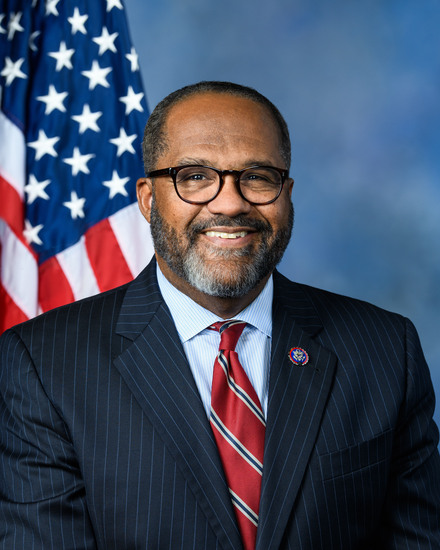
Rep. Troy A. Carter
Sponsored bills
Maddy summaryHR 9226, the Domestic Seafood Production Act, funds new or repaired seafood processing facilities and training in coastal communities historically dependent on fishing or facing economic hardship. It targets communities with high poverty rates (≥20%) or low median income (≤80% of state/metro average), requiring the Agriculture Secretary to create an action plan identifying eligible areas for grants. The bill allocates $45 million over two years for projects like cold storage infrastructure, local workforce training, and community-based seafood markets, while banning new offshore aquaculture projects. It mandates tribal consultation and requires projects to prioritize domestic seafood sales, local hiring, and minimizing community disruption.
Maddy summaryThis bill would require the federal government to cover 100% of state agencies' costs for SNAP program staff salaries, hiring, and training. It sets minimum wage standards for SNAP workers at the same rate as federal employees, with annual updates tied to federal pay increases. States must submit detailed wage plans for federal approval. The policy aims to improve staffing stability and retention for SNAP operations.
Maddy summaryThis bill amends the Food and Nutrition Act to expand SNAP (food stamp) eligibility for foster care youth and homeless youth aged 18 to 26 enrolled at least half-time in college. It adds specific definitions for these groups and allows them to use SNAP benefits for meals prepared by their college dining services, provided their housing lacks individual cooking facilities. The bill treats these young adults as a separate household for SNAP purposes, ensuring their benefits aren’t affected by household size. These changes directly support vulnerable college students transitioning from foster care or experiencing homelessness, improving access to nutritious food during their education.
Maddy summaryThis bill requires the Energy Information Administration (EIA) to include new data on sustainable aviation fuel (SAF) in its regular energy reports, such as the Petroleum Supply Monthly. The data must cover feedstock sources (by state, U.S. total, and foreign countries), production volumes, and imports, while defining SAF as fuel meeting environmental standards (at least 50% lower lifecycle emissions than jet fuel) and not derived from palm oil or petroleum. The EIA must collect this information using reliable statistical methods without double-counting. This provides transparency on the SAF industry but does not change production rules or regulations.
Maddy summaryThis bill would allow states to skip in-person interviews for SNAP (food stamp) benefit renewals if applicants agree to waive the interview and have already proven they qualify for continued benefits. It also requires states to offer phone or virtual interview options when interviews are still needed for renewal. The change directly affects SNAP recipients who may face fewer in-person requirements and state agencies administering the program. The policy aims to reduce paperwork burdens without altering eligibility rules for food assistance.
Maddy summaryHRES 1411 is a non-binding House resolution recognizing July 2024 as the 30th anniversary of the reproductive justice movement, founded in 1994 by Black women addressing systemic inequities in healthcare and rights. It honors the movement’s origins in centering the experiences of Black women, girls, and marginalized communities facing reproductive oppression due to racism, classism, and gender bias. The resolution highlights historical issues like maternal mortality disparities, forced sterilizations, and the impact of the Dobbs decision, while supporting existing policies like the EACH Act and expanded maternal health coverage. It aims to raise public awareness and encourage officials to advance policies ensuring bodily autonomy and equity for all, without creating new legal requirements.
Maddy summaryThis resolution expresses the House of Representatives' sense that the U.S. Postal Service should issue a commemorative stamp honoring Lt. Col. Charity Adams Earley. It specifically directs the Citizens' Stamp Advisory Committee (a USPS entity) to recommend such a stamp to the Postmaster General. The resolution highlights her historic role as the first Black officer in the Women’s Army Corps and her leadership of the 6888th Central Postal Directory Battalion during WWII, which cleared critical mail backlogs in Europe. This is a symbolic measure with no binding effect on USPS policy.
Maddy summaryThis resolution (HRES 1406) commemorates the 175th anniversary of formal diplomatic relations between the United States and Guatemala, established on January 31, 2024. It honors the contributions of Guatemalan-Americans to U.S. society, recognizes Ambassador Francisco Villagrán de León’s service, and acknowledges ongoing U.S.-Guatemala cooperation on trade, migration, anti-corruption efforts, and shared democratic values. The resolution includes non-binding statements urging Guatemala to address corruption, support indigenous communities, protect activists, and continue recognizing Taiwan, while calling on the U.S. to counter Chinese economic coercion against Guatemala. As a commemorative resolution, it does not create new laws or obligations but formally acknowledges historical and current bilateral ties.
Maddy summaryHR 9238, the Marine Energy Technologies Acceleration Act, establishes a $1 billion Marine Energy Acceleration Fund to advance marine energy projects. It allocates $600 million for 20+ demonstration projects connecting to microgrids, community grids, or utility-scale grids, prioritizing projects supporting rural, Tribal, and disadvantaged communities, energy resilience, and environmental monitoring. Additional funding includes $230 million for research and development, $50 million for site assessments, $15 million for streamlining permitting processes across federal agencies, and $85 million for workforce development programs focused on communities near project sites. The bill directly affects marine energy developers, coastal communities, and federal agencies like the Department of Energy and Bureau of Ocean Energy Management.