

Maddy summaryThis bill amends customs fee rules to allow U.S. Customs and Border Protection (CBP) to adjust merchandise processing fees to cover capital costs like equipment upgrades and facility construction/maintenance at sea ports of entry. It requires CBP to submit annual reports detailing how fee proceeds are used for port infrastructure and outlining remaining capital needs. The bill also prohibits CBP from requiring sea ports to provide administrative, training, or recreational facilities for CBP operations. These provisions aim to improve CBP's funding transparency and infrastructure planning at border ports.
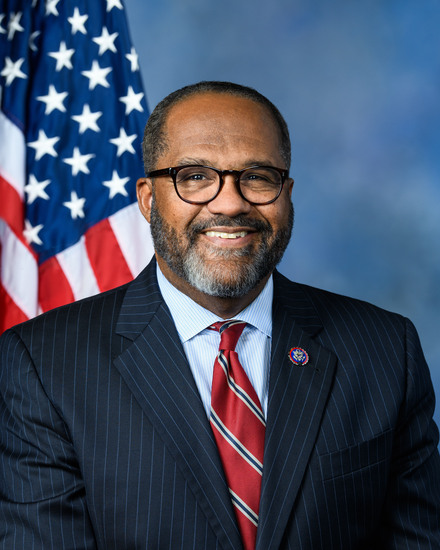
Rep. Troy A. Carter
Sponsored bills
Maddy summaryThe ARCC Act provides $100 million in federal funding to help apprentices and pre-apprentices in job training programs cover childcare costs. It authorizes competitive grants to 10 states, which must distribute monthly stipends of at least $500 per dependent child directly to eligible childcare providers on behalf of participants in these programs. The bill prioritizes individuals from historically underrepresented groups (based on race, ethnicity, or gender) and ensures stipends are tax-free while not affecting eligibility for other federal benefits. States must report on participation, program completion rates, and demographic data, with the Secretary later summarizing program impacts for Congress.
Maddy summaryThis bill directs the Architect of the Capitol to create a time capsule for the U.S. Semiquincentennial (250th anniversary of independence). Congressional leadership will determine its contents, including representative materials about the Semiquincentennial, copies of key legislative milestones, and a message to future Congress. The capsule will be sealed on the Capitol's West Lawn by July 4, 2026, and remain unopened until July 4, 2276, when it will be presented to the 244th Congress for their consideration. The bill is procedural and does not affect citizens or change existing laws.
Maddy summaryThe Ejiao Act of 2023 prohibits the import, export, transportation, sale, or purchase of donkeys, donkey hides, and products containing ejiao (a gelatin made from donkey skin) within U.S. borders. It directly affects U.S. businesses and consumers involved in trading these items, aiming to reduce global demand driving the slaughter of millions of donkeys - particularly harming communities in Africa and Latin America that rely on donkeys for farming, transportation, and livelihoods. Key mechanisms include civil penalties of up to $10,000 per violation, criminal penalties for severe breaches (including fines and imprisonment), and mandatory forfeiture of violative goods. The bill is grounded in congressional findings that the donkey skin trade has caused population collapses (e.g., 76% decline in China since 1992) and devastating social impacts on impoverished families.
Maddy summaryHR 5840, the Transportation Security Screening Modernization Act of 2024, simplifies the process for transportation workers to obtain multiple TSA security credentials. It requires the TSA to allow individuals to apply for and renew programs like the TWIC (Transportation Worker Identification Credential) and HAZMAT Endorsement through a single enrollment at any TSA center, with a combined fee lower than separate applications. The bill mandates coordinated expiration dates for all credentials and ensures state-issued commercial driver's licenses reflect the correct HAZMAT endorsement validity. These changes aim to reduce duplication and costs for workers needing multiple security clearances. The TSA must implement these changes within two years and publish details online.
Maddy summaryThis bill establishes an Agricultural Trade Enforcement Task Force to address foreign trade barriers harming U.S. agricultural exports, specifically targeting India's WTO-violating price support programs for rice, wheat, and other commodities. The Task Force, led by the U.S. Trade Representative and Agriculture Department, must identify systemic trade barriers, develop enforcement strategies, and file a WTO dispute against India within 60 days of consultations if needed. It requires quarterly reports to Congress on progress, including a specific plan to challenge India's subsidies that exceed WTO limits (e.g., rice supports at 93.9% of production value). The bill directly affects U.S. farmers, ranchers, and exporters who face market access barriers due to these foreign subsidies.
Maddy summaryThe Climate Resilience Workforce Act establishes a coordinated federal system to build a workforce for climate resilience, directly affecting workers in climate-related sectors and prioritizing frontline communities (low-income, communities of color, Tribal communities) and populations facing employment barriers (undocumented individuals, formerly incarcerated people). Key mechanisms include grant programs for state and local climate resilience planning, job creation grants requiring 40% of jobs to go to frontline communities and populations facing barriers, and minimum labor standards including $15/hour wages (increasing annually), employer-paid health insurance, and protections against discrimination. The bill creates an Office of Climate Resilience, a Climate Resilience Equity Advisory Board, and a Center for the Climate Resilience Workforce to define climate resilience sectors and ensure equitable hiring practices. It also removes employment barriers through immigration status protections, criminal record reforms, and drug testing policy changes for climate resilience workers.
Maddy summaryThe MORE Act (HR 5601) would federally decriminalize cannabis by removing it from the Schedule I list of controlled substances under the Controlled Substances Act. It requires federal courts to expunge non-violent cannabis convictions and associated arrests, with a focus on addressing racial disparities in cannabis enforcement. The bill creates an Opportunity Trust Fund that would allocate 50% of funds to criminal justice programs, 20% to small business assistance for minority cannabis entrepreneurs, and 20% to community reinvestment grants for individuals impacted by the War on Drugs. It also prohibits federal agencies from denying benefits or security clearances based on cannabis use or past cannabis convictions, and establishes a Cannabis Justice Office to administer these programs.
Maddy summaryThe HOPE for Haitian Prosperity Act extends duty-free access for Haitian goods to the U.S. market until 2035, with specific extensions for apparel and other exports. It requires Haitian producers to meet labor standards on minimum wages, working hours, and safe conditions to maintain this trade benefit. The bill also creates a new U.S. technical assistance program to help Haiti diversify exports, focusing on agriculture, apparel, and services, while requiring collaboration with Haitian government, businesses, and labor groups. Annual reports to Congress will track progress on these efforts.
Maddy summaryHR 5008, the HEAL for Immigrant Families Act of 2023, would remove immigration status as a barrier to health insurance coverage for immigrants in the United States. The bill would make all lawfully present immigrants, including those with Deferred Action for Childhood Arrivals (DACA) status, eligible for Medicaid, CHIP, and Affordable Care Act health insurance subsidies. It would eliminate state-level restrictions on Medicaid eligibility for immigrants and allow individuals with federally authorized presence to access premium tax credits and cost-sharing reductions. This legislation aims to address health coverage disparities that disproportionately affect immigrant communities, particularly Black, Indigenous, Latinx, and other communities of color.