

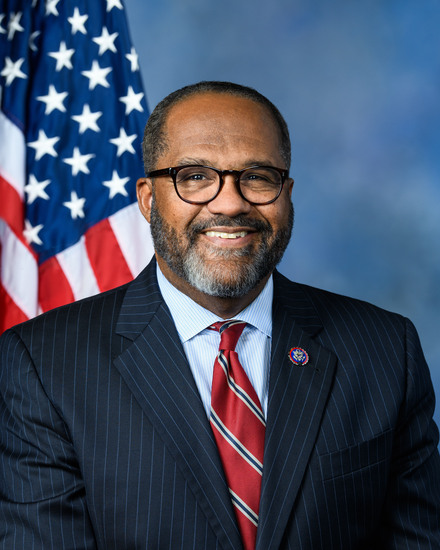
Photo of Troy A. Carter
D United States House · District 2 · Louisiana On the 2026 ballot

Rep. Troy A. Carter

Compare
Total votes
2,715
all sessions
Attendance
99%
37 missed
Near the chamber average
With party
98%
of cast votes
Higher than 82% of chamber peers
Bipartisan score
1%
crosses aisle rarely
Lower than 83% of chamber peers
Sponsored
1,610
bills & resolutions
Higher than 92% of chamber peers
Committees
7
assignments
1,610 bills and resolutions

Sponsored bills

Total
1,610
Primary
74
Co-sponsor
1,536
This page
1,610
matching current filters
Co-sponsor HR 1494
In committee · United States House · Co-sponsor
Sporting Goods Excise Tax Modernization Act

Maddy summaryHR 1494, the Sporting Goods Excise Tax Modernization Act, requires online marketplaces (like Amazon or eBay) to collect the federal excise tax on sporting goods sold through their platforms, rather than leaving this responsibility to individual sellers. It specifically targets platforms that host third-party seller listings and facilitate transactions for goods imported from outside the U.S. The bill treats these marketplaces as the "importer" for tax purposes, making them liable for the tax on qualifying sporting goods sales. This change applies to sales after a 60-day grace period following the bill's enactment, with no impact on taxes already owed by other parties.

In committee Feb 21, 2025 1 co-sponsor
Co-sponsor HR 1464
In committee · United States House · Co-sponsor
MODERN WIC Act of 2025

More Options to Develop and Enhance Remote Nutrition in WIC Act of 2025 or the MODERN WIC Act of 2025 This bill permanently allows individuals to remotely certify their eligibility for, and receive benefits through, the Special Supplemental Nutrition Program for Women, Infants, and Children (WIC). Specifically, the bill requires that a state agency allow an individual seeking a WIC certification, recertification, or a nutritional risk evaluation to do so by phone or through video teleconference, in addition to the in-person option. A state agency has 90 days to collect data for a nutritional risk evaluation for a remotely certified individual. Further, a state agency may consider an applicant who meets the income eligibility standards to be temporarily eligible on an interim basis to participate in the program and may certify the individual for immediate participation without waiting for a nutritional risk evaluation. The bill also allows states to provide benefits on WIC electronic benefit transfer cards through mail or remote issuance instead of requiring participants to pick up or reload benefits in person at a WIC office. Further, the Department of Agriculture must report to Congress about the use of remote technologies and other digital tools in the WIC program. Currently, individuals are generally required to be physically present to certify their WIC eligibility and receive benefits, with exceptions. The Food and Nutrition Service  has temporarily waived these requirements and allowed remote certification and benefits using authorities that were provided by laws that were enacted to address COVID-19.

In committee Feb 21, 2025 1 co-sponsor
Co-sponsor HR 1477
In committee · United States House · Co-sponsor
Animal Cruelty Enforcement Act of 2025

Maddy summaryHR 1477 creates a new Animal Cruelty Crimes Section within the Justice Department's Environment and Natural Resources Division to enforce federal animal cruelty laws. This unit will coordinate with agencies like the FBI, USDA, and U.S. Marshals to investigate and prosecute cases, addressing current gaps in enforcement. The bill requires the unit to submit annual reports to Congress detailing prosecutions, convictions, and investigations where charges weren't filed. It does not change existing animal cruelty laws but establishes a dedicated federal unit to improve enforcement of current statutes.

In committee Feb 21, 2025 1 co-sponsor
Co-sponsor HR 1449
In committee · United States House · Co-sponsor
Energy Resilient Communities Act

Maddy summaryHR 1449, the Energy Resilient Communities Act, creates a federal grant program to fund clean energy microgrids that support critical community infrastructure like hospitals, schools, and emergency facilities. Eligible entities - including states, local governments, nonprofits, and tribal agencies - can apply for grants covering up to 90% of costs for technical assistance, community outreach, or microgrid projects in environmental justice communities. Key provisions prioritize projects that reduce emissions, lower energy costs for low-income residents, minimize land use impacts, and ensure 40% of construction labor comes from local residents meeting specific criteria (e.g., displaced workers, environmental justice community members). The program authorizes $1.5 billion over 10 years, with at least 10% reserved for community-owned microgrid projects, and requires annual reporting on project outcomes and labor practices.

In committee Feb 21, 2025 1 co-sponsor
Co-sponsor HR 484
In committee · United States House · Co-sponsor
Food Deserts Act

Maddy summaryThe Food Deserts Act (HR 484) creates a federal grant program to help establish grocery stores in underserved communities by providing capitalization grants to states. States would use these grants to build revolving funds that make low-interest loans to grocery stores meeting specific criteria, such as offering unprocessed foods, affordable pricing, and local hiring. The program prioritizes stores that source from local farms, provide nutrition education, and commit to keeping healthy foods in stock, while requiring applicants to contribute 20% of loan costs from non-federal funds. It authorizes $150 million for fiscal year 2026 to support these loans, which must be repaid over up to 30 years to replenish the revolving fund for future use.

In committee Feb 14, 2025 1 co-sponsor
Co-sponsor HCONRES 12
In committee · United States House · Co-sponsor
Supporting the Local Radio Freedom Act.

This concurrent resolution declares that Congress should not impose any new performance fee, tax, royalty, or other charge relating to the public performance of sound recordings on a local radio station for broadcasting sound recordings over the air, or on any business for such public performance of sound recordings.

In committee Feb 13, 2025 1 co-sponsor
Co-sponsor HR 1314
In committee · United States House · Co-sponsor
TIPS Act

Maddy summaryThis bill (HR 1314, TIPS Act) requires employers to pay tipped workers the standard federal minimum wage instead of the current lower rate (currently $2.13/hour), directly affecting workers in hospitality, food service, and similar roles. It also creates a new tax deduction for cash tips received in qualifying jobs (e.g., restaurants, hotels), allowing workers to deduct these tips from taxable income up to $112,500 in adjusted gross income. The deduction applies only to tips from unrelated customers without business ownership stakes, excluding credit card tips. The tax provisions take effect for 2026 tax years.

In committee Feb 13, 2025 1 co-sponsor
Co-sponsor HR 1300
In committee · United States House · Co-sponsor
PSA Screening for HIM Act

Maddy summaryHR 1300, the PSA Screening for HIM Act, requires health insurance plans and issuers to cover prostate cancer screenings without cost-sharing (like copays or deductibles) for men aged 40+ who are at high risk of prostate cancer. This directly affects African-American men and men with a family history of prostate cancer, as defined by the bill. The law amends existing insurance coverage rules to mandate this specific screening coverage, effective for plan years starting January 1, 2026. It does not change screening guidelines but removes financial barriers to recommended screenings for these high-risk groups.

In committee Feb 13, 2025 1 co-sponsor
Co-sponsor HR 1359
In committee · United States House · Co-sponsor
Black History Matters Act

Maddy summaryThe Black History Matters Act directs the National Museum of African American History and Culture to study how public elementary and secondary schools teach Black history across the U.S. The study will identify which schools require this education, assess teaching quality through classroom discussions and materials, and examine how schools measure student learning. It requires the Director to complete the study within three years of the bill’s passage and submit a report to Congress within 180 days of completion. The bill does not change school curricula but aims to gather data on existing practices to inform future education policies. This study directly affects all public schools covered under the Elementary and Secondary Education Act.

In committee Feb 13, 2025 1 co-sponsor
Co-sponsor HR 1285
In committee · United States House · Co-sponsor
Water Infrastructure Subcontractor and Taxpayer Protection Act of 2025

Maddy summaryThis bill requires federal agencies administering water infrastructure funding (like the WIFIA program) to ensure projects have construction payment and performance security. It directly affects contractors working on federally assisted water projects and state/local governments with construction requirements. The key provision mandates that projects must have security covering at least 50% of the construction contract value - either through state/local rules or federal bonds meeting specific standards under 40 U.S.C. §3131(b). This aims to protect taxpayers by reducing the risk of unpaid subcontractors or project failures. The bill modifies existing federal requirements without creating new funding or altering project eligibility.

In committee Feb 13, 2025 1 co-sponsor
Showing 591 to 600 of 1,610 bills
Previous 1 … 59 60 61 … 161 Next