

Maddy summaryThis bill requires colleges and universities to include suicide prevention contact information on student identification cards or their websites. Specifically, institutions must list the 988 Suicide and Crisis Lifeline, Crisis Text Line, and their campus mental health center on student IDs (or post the info online if IDs aren't issued). The requirement applies to all higher education institutions creating student ID cards after the bill's enactment, with a one-year implementation period. It directly affects students by ensuring immediate access to critical mental health resources through a routine campus tool.
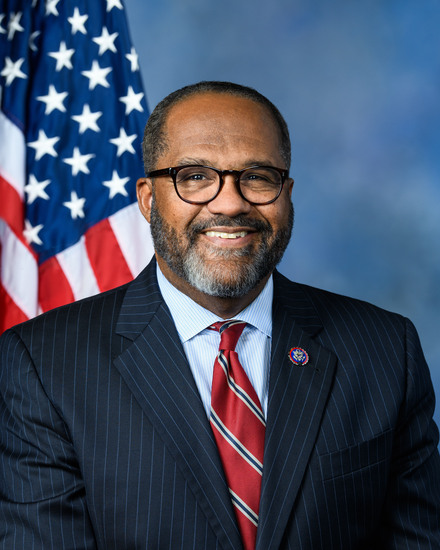
Rep. Troy A. Carter
Sponsored bills
Maddy summaryThis bill reorganizes collective bargaining rules for Veterans Health Administration (VHA) employees by removing existing subsections (b), (c), and (d) from Section 7422 of Title 38 and redesignating the current subsection (e) as (b). It directly affects VA health care employees by altering the structure of their collective bargaining framework. The bill explicitly states it does not change the Secretary of Veterans Affairs' existing authorities over incentive pay or expedited hiring under Section 706 of Title 38. The change is purely procedural, focusing on the internal organization of bargaining rules without introducing new employee benefits or obligations.
Maddy summaryHR 3585 establishes the Capacity Building for Business Districts Pilot Program to provide targeted support for business districts in low-income, rural, minority, and Native communities. The program awards competitive grants through intermediary organizations ("specified recipients") to deliver technical assistance, training, and capacity-building services directly to local business district organizations ("eligible subrecipients"). These organizations must provide services to business districts in underserved areas, with grants requiring annual reporting on job impacts, geographic reach, and fund usage. The pilot mandates geographic diversity in grant distribution and prioritizes applicants serving distressed communities or multiple regions. Grants must last at least two years, focusing on enhancing local business districts' ability to attract investment and support small businesses.
Maddy summaryHRES 446 is a symbolic House resolution supporting the designation of July 3-10, 2025, as "National Extreme Heat Awareness Week." It aims to raise public awareness about extreme heat dangers to health, infrastructure, agriculture, and safety through educational campaigns and community initiatives. The resolution encourages federal and local efforts to promote heat safety knowledge and preparedness, citing that extreme heat causes over 1,300 U.S. deaths annually. It does not create new laws or allocate funding but formally expresses congressional support for this awareness observance.
Maddy summaryHRES 444 is a symbolic House resolution calling on all Americans to observe Memorial Day 2025 by honoring military personnel who died in service. It does not create new laws or affect specific groups, as it is a non-binding expression of national remembrance. The resolution states that Americans should commemorate the sacrifices of over one million service members who died pursuing freedom and peace, framing Memorial Day as a day to express respect for their ultimate sacrifice. This is a routine ceremonial resolution with no policy changes or concrete mechanisms beyond urging public observance.
Maddy summaryHR 3604, the *Reducing Waste in National Parks Act*, requires National Park Service (NPS) units to reduce and eliminate the sale of disposable plastic products (including water bottles, bags, and food containers) where feasible, considering operational factors like cost, waste reduction, and concessioner impacts. Park officials must develop visitor education plans, implement refill stations, and weigh 13 specific factors before eliminating sales, such as infrastructure costs, revenue effects, and public health safety. The program must be evaluated every two years to measure visitor satisfaction, waste collection rates, and safety outcomes. This bill directly affects NPS operations, concessioners, and park visitors who use park facilities.
Maddy summaryThis bill prohibits the U.S. military from discriminating against service members or applicants based on gender identity. It bans policies that would deny service, involuntarily separate members, deny medically necessary healthcare, or require service in a gender different from one's identity. The law defines "gender identity" broadly to include a person's internal sense of gender, appearance, and mannerisms, regardless of sex assigned at birth. It directly affects transgender and gender-diverse individuals currently serving or seeking to serve in the Armed Forces.
Maddy summaryThe Flight Education Access Act increases federal student loan limits for students in eligible undergraduate flight education programs, with specific annual and aggregate limits based on student dependency status and year of study. To qualify, flight programs must meet completion rate requirements (70% minimum after 3 years of data collection) and follow specific certification standards for pilot training under FAA regulations. The bill requires the Department of Education to collect data on program completion rates (measured by students earning a private pilot's certificate) and submit annual reports to Congress. It authorizes $3 million annually for 11 years to implement these changes, without affecting existing pilot training requirements under current law.
This bill prohibits the President from selling, transferring, or exporting certain defense articles or services to Israel, except in specified circumstances. Defense articles covered by the prohibition include BLU-109 bunker busting bombs, Joint Direct Attack Munition (JDAM) assemblies, and 155mm artillery ammunition. Defense services directly related to such articles are also covered. The President may sell, transfer, or export such defense articles or services to Israel if (1) a law is enacted specifying the purposes for which such articles or services may be used, and (2) Israel provides written assurances that the defense articles or services will be used for those specific statutory purposes and in a manner consistent with certain other laws, including international human rights laws.
Maddy summaryHR 3506 reauthorizes annual funding for the Healthy Food Financing Initiative through fiscal year 2030, setting specific mandatory funding levels starting at $25 million for 2026 and increasing to $50 million annually after 2029. The bill directs the Commodity Credit Corporation to allocate these funds to support projects expanding access to healthy food in underserved communities. It directly affects low-income neighborhoods lacking grocery stores and local food businesses seeking financing for development or expansion. The legislation provides no new policy mechanisms beyond establishing these fixed annual funding amounts.