Maddy summaryThis bill prohibits the interstate trade and possession of captive mink raised for fur production, directly affecting fur farmers and businesses involved in the mink fur supply chain. It includes an exception for entities covered under existing Lacey Act provisions and authorizes the Secretary to buy out mink farms at a price based on the farmer's recent mink population and farm infrastructure value. The law aims to end commercial mink farming for fur by banning related commerce while offering a voluntary transition option for affected farms. It does not apply to wild mink or non-fur-related mink uses.
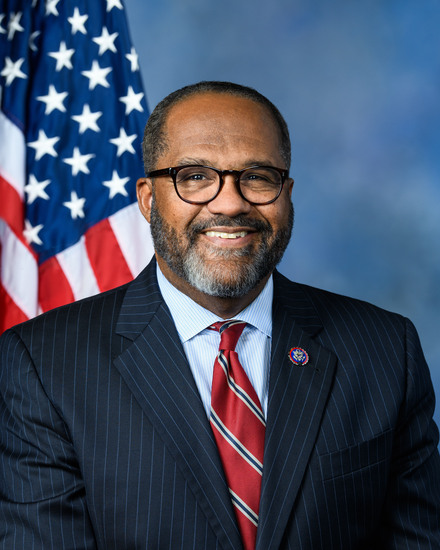
Rep. Troy A. Carter
Sponsored bills
Maddy summaryHR 6088, the *Restoring Food Security for American Families and Farmers Act of 2025*, repeals specific sections (10101-10108) from a prior reconciliation law. This action revives previous provisions related to food security programs that were modified by those repealed sections. The bill directly affects federal food assistance and agricultural support programs by restoring their prior legal framework. It does not create new policies but reverses recent changes to existing food security measures.
Maddy summaryThe MORE Act (HR 5068) would remove cannabis from the federal list of controlled substances, effectively decriminalizing it at the federal level while establishing a new tax on cannabis products. The bill creates an Opportunity Trust Fund that would distribute tax revenues to support communities disproportionately impacted by cannabis prohibition, including funding for expungement programs, job training, and equitable licensing initiatives for minority business owners. It also includes provisions to prevent discrimination based on cannabis use in federal programs, immigration proceedings, and workplace policies. The bill would require federal courts to expunge non-violent cannabis convictions and establish a process for resentencing individuals currently serving time for such offenses. These provisions aim to address racial disparities in cannabis enforcement and create more equitable opportunities in the legal cannabis industry.
Maddy summaryHR 4782, the Local Farmers Feeding our Communities Act, establishes a USDA program to connect local farmers with food distribution networks. It requires eligible entities (like state agriculture agencies) to use funds to purchase unprocessed or minimally processed local foods from covered producers - including at least 25% from small-size, mid-size, beginning, or veteran farmers - while providing technical assistance for food safety and supply chains. The bill allocates $200 million annually (2026-2030) from the Commodity Credit Corporation, mandating 10% for Tribal governments and 1% per state before distributing remaining funds. This directly supports regional food security by boosting economic opportunities for local farmers and improving access to fresh, nutritious food through established distribution channels.
Maddy summaryHR 3453, the Empower Charter School Educators to Lead Act, creates new federal grants to help educator-led teams plan and open charter schools. It provides up to $100,000 per team for pre-charter planning, targeting groups led by educators with at least 4.5 years of school-based experience (including after-school programs) and a demonstrated ability to lead. To qualify, teams must submit a community needs assessment and a plan showing how their proposed school will address those needs. The bill reserves 5% of relevant funding for these educator-led grants, adjusting existing ESEA grant formulas to prioritize this new support. This directly affects educators seeking to start charter schools and the communities where those schools would operate.
Maddy summaryHR 2426 requires the VA Secretary to commission an independent study comparing the quality of mental health and addiction care provided by VA health care providers versus non-VA providers for veterans. The study must examine health outcomes, use of proven treatment methods, care coordination, veteran satisfaction, and access times across different care types like telehealth and in-person visits. It mandates a report to Congress and public release within 18 months, detailing findings on factors like symptom improvement, suicide risk assessment, and whether veterans with multiple conditions receive integrated care. This bill directly affects veterans seeking mental health or addiction therapy services and aims to identify gaps in care quality between VA and non-VA systems.
Maddy summaryHR 909, the Crime Victims Fund Stabilization Act of 2025, modifies how funds from the False Claims Act are deposited into the Crime Victims Fund. It specifies that from 2025 through 2029, certain False Claims Act proceeds (specifically those for qui tam plaintiff payments and government damage reimbursements) cannot be deposited into the fund. This change directly affects the composition of the Crime Victims Fund by excluding these specific revenue streams during the specified period. The bill does not create new benefits or alter victim services; it only adjusts fund allocation rules for existing False Claims Act revenues.
Maddy summaryThe Customer Non-Discrimination Act (HR 7005) amends the Civil Rights Act of 1964 to prohibit discrimination based on sex - including sexual orientation and gender identity - in public accommodations. It expands the definition of "public accommodations" to cover stores, online retailers, banks, healthcare providers, transportation services, and other establishments offering goods or services. The bill clarifies that "sex" includes sexual orientation, gender identity, pregnancy, and sex stereotypes, and specifies that individuals cannot be denied access to facilities like restrooms based on their gender identity. These changes apply directly to businesses and service providers covered under the Civil Rights Act, ensuring broader protection against discrimination for LGBTQ+ individuals.
Maddy summary# Summary of Reserve Component Duty Consolidation Legislation This legislation is a comprehensive revision of military reserve component terminology and definitions throughout the U.S. Code. The primary purpose is to replace the outdated term "inactive duty training" with the more accurate and consistent term "reserve component duty" across all relevant sections of federal law. ## Key Provisions: 1. **Terminology Change**: - Replaces "inactive duty training" with "reserve component duty" in over 50 sections of the U.S. Code (primarily Titles 10, 32, and 37) - Also replaces related terms like "inactive duty" and "inactive duty for training" with "reserve component duty" 2. **Repeals**: - Repeals Chapter 13 of Title 10 - Repeals Sections 10147, 10148, 12406, 12503, 12552 of Title 10 - Repeals Sections 114, 115, and 328 of Title 32 3. **Definition Updates**: - Creates new definitions for "reserve component duty" and "remote assignment" in Title 10 - Defines "Active Guard and Reserve functions" more precisely - Clarifies that reserve component duty includes: * Training as described in sections 552(a) and 553(a) of Title 32 * Support activities authorized for members of the reserve components * Duty prescribed under sections 543 of Title 32 4. **Transition Provisions**: - Establishes a 10-year transition period from the date of enactment - Allows for earlier implementation if all relevant departments (Defense, Homeland Security, Veterans Affairs) certify readiness - Provides for early TRICARE eligibility for members ordered to active duty or full-time National Guard duty 5. **Conforming Amendments**: - Makes numerous technical changes to ensure consistent terminology throughout the U.S. Code - Updates references to training requirements, pay, and benefits to reflect the new terminology This legislation represents a significant effort to modernize military reserve component terminology, eliminate confusing and outdated references, and create a more consistent framework for understanding and managing reserve component service obligations and benefits.

Maddy summaryThis concurrent resolution (HCONRES 69) commemorates the 15th anniversary of the January 8, 2011, Tucson shooting that killed six people and injured 13, including former Congresswoman Gabby Giffords. It honors the victims, survivors, and Giffords - now a prominent advocate for gun violence prevention - and recognizes her leadership in promoting civility and reducing gun violence. The resolution also commends Tucson residents and first responders for their resilience and reaffirms Congress’s commitment to respectful dialogue and opposing political violence. As a ceremonial resolution, it does not create new laws or policies.