

Support, Treatment, and Overdose Prevention of Fentanyl Overdoses Act of 2023 or the STOP Fentanyl Overdoses Act of 2023 This bill addresses data collection, treatment, harm reduction, and other issues related to substance misuse and addiction. It particularly focuses on opioids, fentanyl, and related substances. Specifically, the bill expands surveillance of fentanyl and related substances. This includes requiring a study on how to track overdoses by type of drug (including fentanyl) and awarding grants to states for collecting data about fentanyl-involved overdoses. The bill also provides for (1) training on detecting and handling fentanyl for law enforcement, and (2) grants for forensic laboratories to facilitate surveillance of controlled substances seized by law enforcement. Additionally, the bill establishes and modifies requirements to increase access to treatment and prevention services. For example, the Bureau of Prisons must make certain services, including medication-assisted treatments, available to individuals in its custody. The bill also establishes grants and requires other efforts to expand access to medications that temporarily reverse opioid overdoses (e.g., naloxone) and related harm reduction activities. Furthermore, the bill extends, subject to some conditions, liability protections for those who administer aid in an emergency (commonly known as Good Samaritan laws) to individuals who administer opioid overdose reversal drugs and to individuals who seek medical attention for themselves or on behalf of another for a drug overdose. The bill also requires multiple reports, including a report by the Department of State on foreign sources of certain drugs.
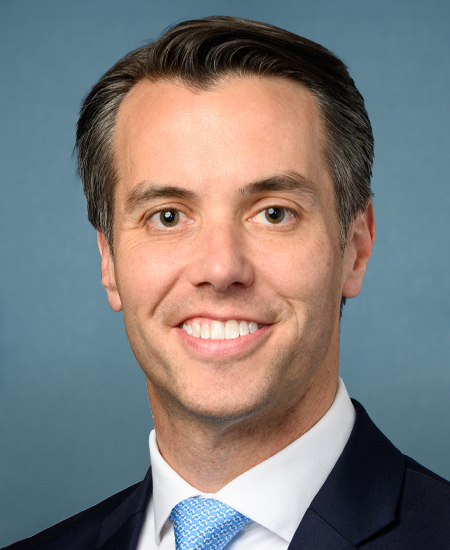
Rep. Morgan McGarvey
Sponsored bills
Maddy summary# Comprehensive Summary: Maternal Health and Vaccination Legislation This proposed legislation establishes a comprehensive framework to improve maternal health outcomes across multiple dimensions, with a strong focus on equity and addressing systemic disparities. The bill is organized into 13 titles covering various aspects of maternal health care. ## Key Focus Areas 1. **Maternal Health Equity**: The legislation emphasizes reducing racial and ethnic disparities in maternal health outcomes, with specific provisions targeting communities of color and underserved populations. 2. **Incarcerated Mothers**: Includes provisions to end shackling of pregnant individuals in correctional facilities and establishes programs for maternal health care in prisons and jails. 3. **Technology and Telehealth**: Creates grant programs for telehealth models, technology-enabled collaborative learning, and digital tools to improve access to maternal care. 4. **Climate Change Impact**: Addresses how climate change affects maternal and infant health, with a focus on vulnerable populations. 5. **Public Health Emergencies**: Establishes protocols for maternal care during public health crises like pandemics. 6. **Vaccinations**: Expands maternal vaccination awareness and equity campaigns. ## Major Provisions **Maternal Vaccination Campaign (Title XIII)**: - Expands awareness campaigns to specifically target pregnant and postpartum individuals - Allocates $17 million annually (2024-2028) for vaccination outreach - Includes specific efforts to increase vaccination rates among racial/ethnic minority groups **Technology and Telehealth (Titles IX)**: - $6 million annually for technology-enabled collaborative learning models - $6 million annually for digital tools to promote equity in maternal health - Creates a demonstration project for alternative payment models in maternal care **Climate Change and Maternal Health (Title XII)**: - $100 million for a grant program to protect vulnerable mothers and babies from climate change risks - $5 million for education and training at health profession schools - Establishes a National Institutes of Health Consortium on Birth and Climate Change Research **Incarcerated Mothers (Title VIII)**: - Requires 25% grant reduction for states that don't restrict restraints on pregnant incarcerated individuals - Establishes model programs in Bureau of Prisons facilities for pregnant and postpartum incarcerated individuals - $10 million annually for State and local prison and jail programs **Public Health Emergency Response (Title XI)**: - $100 million for data collection on maternal health during public health emergencies - $30 million for expanding maternal mortality reviews - $45 million for Pregnancy Risk Assessment Monitoring System (PRAMS) - $15 million for research on public health emergencies' impact on maternal health ## Cross-Cutting Themes - **Equity Focus**: Nearly every provision includes specific measures to address racial and ethnic disparities - **Data Collection**: Strong emphasis on collecting and analyzing demographic data - **Community Involvement**: Requires input from community-based organizations and affected populations - **Interagency Coordination**: Mandates collaboration between multiple federal agencies - **Long-Term Investment**: All funding is allocated for 5-year periods (2024-2028) The legislation represents a comprehensive, multi-faceted approach to improving maternal health outcomes in the United States, with particular attention to vulnerable populations and systemic barriers that contribute to poor maternal health outcomes.
Justice is Beneficial Limitation on Investments and Necessary Disclosure Act of 2023 or the Justice is BLIND Act of 2023 This bill requires a federal judge, as well as any spouse or dependent child of a federal judge, to place specified investments into a qualified blind trust (i.e., an arrangement in which certain financial holdings are placed in someone else's control to avoid a possible conflict of interest) until 180 days after the end of their tenure as a federal judge.
Maddy summaryHCONRES 44 is a non-binding congressional resolution urging the creation of a U.S. Commission on Truth, Racial Healing, and Transformation. It does not establish the commission itself but calls for its formation to acknowledge historical injustices against Black, Indigenous, and other people of color - including systemic discrimination in housing, Social Security, the GI Bill, and land policies - and to address ongoing racial inequities. The resolution emphasizes the need to dismantle the "belief in a hierarchy of human value" and promote racial healing as a national priority. It complements ongoing efforts like H.R. 40 (a bill to study reparations) but does not create new legal requirements or funding.
This resolution condemns the great replacement theory, which it describes as a white supremacist conspiracy theory that has been used to falsely justify racially motivated, violent acts of terrorism domestically and internationally.
Maddy summaryHR 3409, the Healthy Families Act, requires most employers to provide employees with paid sick leave. Employees earn 1 hour of paid sick time for every 30 hours worked, up to a maximum of 56 hours per year, which can be used for their own illness, caring for family members, or addressing domestic violence, sexual assault, or stalking situations. Smaller employers with fewer than 15 employees can provide unpaid sick leave instead of paid leave. The bill includes protections against retaliation for using sick leave and requires employers to inform employees about their rights under this law.
Maddy summaryHR 3435, the Charitable Act, creates a temporary tax deduction for charitable contributions for individual taxpayers who do not itemize deductions. It allows these taxpayers to deduct up to one-third of their standard deduction amount for charitable gifts in 2023 and 2024. The bill directly affects millions of filers who typically take the standard deduction instead of itemizing, making charitable giving more tax-advantageous for them during these two years. The provision expires after 2024 and does not change the standard deduction amount itself.
Maddy summaryHRES 319 is a symbolic resolution passed by the U.S. House of Representatives on April 24, 2023, recognizing the federal government's duty to develop a Green New Deal. It states the House believes the government should create a comprehensive plan to address climate change and economic inequality through a 10-year national mobilization. The resolution outlines goals like achieving net-zero emissions by 2050, creating high-wage union jobs, upgrading infrastructure, and prioritizing frontline communities, but it does not establish binding policy or funding mechanisms. As a non-binding resolution, it serves as a statement of legislative intent rather than a law.
Maddy summaryThe FIGHT Act (HR 2742) amends the Animal Welfare Act to specifically target animal fighting events, such as cockfighting, by defining "rooster" as any male chicken over six months old and banning the live broadcasting (simulcasting) of such events. It prohibits using the postal service or interstate transport to move roosters for animal fighting purposes and adds civil enforcement tools allowing citizens to sue violators after a 60-day notice period. Fines up to $5,000 per violation may be imposed, and property used in animal fighting ventures can be seized. These changes strengthen enforcement against animal fighting by expanding legal remedies for the public and authorities.
Maddy summaryThe PAST Act of 2023 amends the Horse Protection Act to ban specific devices used to cause pain (soring) in horses at shows, particularly affecting Tennessee Walking Horses, Racking Horses, and Spotted Saddle Horses. It defines prohibited "action devices" (like boots or chains causing friction) and requires licensed, conflict-free inspectors at events to enforce rules. The bill increases penalties for violations to up to $5,000 fines or 3 years in jail, and mandates longer disqualifications for repeat offenses (180 days → 1 year → 3 years). Horse show organizers, exhibitors, and participants must comply with these new inspection and penalty requirements.