

Maddy summaryHR 4466 would rename the National School Lunch Program Act from "Richard B. Russell National School Lunch Act" to "Jean E. Fairfax National School Lunch Act" to honor Jean E. Fairfax, a civil rights activist who advocated for equitable access to the program. The bill would update this name in the law and over 40 other federal statutes referencing the current title, but does not alter the program's operations, funding, or eligibility. It directly affects legal references in federal law without changing how the program serves students.
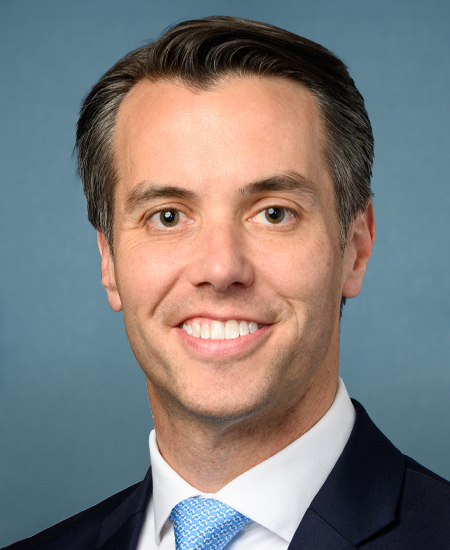
Rep. Morgan McGarvey
Sponsored bills
This resolution expresses the sense of the House of Representatives that (1) lesbian, gay, bisexual, transgender, queer, intersex, and asexual (LGBTQIA+) rights are human rights and protected by the U.S. Constitution; (2) LGBTQIA+ Pride Month should be celebrated; and (3) all Americans should be treated equally regardless of sexual orientation, sex characteristics, or gender identity.
Maddy summaryHRES 561 is a non-binding House resolution opposing state laws that criminalize access to essential health care. It specifically condemns using criminal penalties against people for pregnancy outcomes (such as miscarriages), seeking abortion or contraception, or receiving gender-affirming care, and disapproves of punishing health care providers or supporters for facilitating such care. The resolution affirms that patients deserve access to reproductive and gender-affirming health services without fear of prosecution or discrimination. It emphasizes that criminalizing these health care decisions violates patient rights and ethical provider obligations, without creating new legal requirements.
Maddy summaryThis bill prohibits defendants in federal criminal cases from using a victim's LGBTQ+ identity (sexual orientation, gender identity, or expression) as a legal excuse for violence or to reduce sentences - a practice known as the "LGBTQ+ panic defense." It specifically bans arguments that a "nonviolent sexual advance or perception" of the victim's identity justified the crime, while allowing evidence of the defendant's past trauma under standard evidence rules. The law directly affects federal criminal trials where defendants attempt to justify violence against LGBTQ+ victims using prejudice-based excuses. It also requires the Attorney General to report annually on federal prosecutions involving bias-motivated crimes against LGBTQ+ individuals.
Maddy summaryThe Protecting Children Act increases penalties for employers who violate child labor laws, with higher civil fines and stronger criminal penalties for violations that endanger children. It creates a National Advisory Committee on Child Labor to provide expert guidance and establishes a fund using collected penalties to support enforcement, research, and education. The bill improves processes for updating safety standards for children, mandates periodic reviews of hazardous occupations, and requires better data collection on child labor and workplace injuries. These changes aim to strengthen protections for children in the workplace through enhanced enforcement, better research, and more robust standards. The bill directly affects employers who hire children in violation of labor laws, children working in hazardous conditions, and government agencies responsible for enforcement.
Maddy summaryHR 4422 (Global Respect Act) requires the President to publicly identify foreign officials responsible for violence, torture, or arbitrary detention against LGBTQI individuals and block their entry to the U.S., including revoking visas for them and their immediate families. It mandates annual reporting to Congress on the list of sanctioned individuals, the reasons for additions/removals, and efforts to coordinate with other countries on similar sanctions. The bill also updates U.S. human rights reporting requirements to explicitly include data on violence and discrimination against LGBTQI people worldwide. These measures aim to increase accountability for human rights violations against LGBTQI individuals without advocating for specific policy outcomes.
Maddy summaryHR 4340, the Therapeutic Fraud Prevention Act of 2023, prohibits paid providers from offering conversion therapy - defined as any commercial service attempting to change a person's sexual orientation or gender identity - and bans advertising that claims such therapy is effective or harmless. It directly affects therapists, counselors, or organizations offering paid conversion therapy services, including those advertising such services. Key provisions make it unlawful to provide, advertise, or facilitate paid conversion therapy, with enforcement led by the Federal Trade Commission (FTC) under consumer protection laws and allowing states to pursue civil actions. The bill explicitly excludes supportive care for gender transition or identity exploration from its definition of prohibited therapy.
This resolution expresses support for (1) equal rights and protections for all people, regardless of actual or perceived sexual orientation, gender identity, or sex characteristics; and (2) the designation of LGBTQI+ Equality Day to commemorate Supreme Court decisions handed down on June 26 in 2003, 2013, and 2015. The resolution also acknowledges the need for further legislation to ensure that people in the United States are free from all forms of discrimination on the basis of actual or perceived sexual orientation, gender identity, or sex characteristics.
Equal Access to Reproductive Care Act This bill includes assisted reproduction as a tax deductible medical expense. It defines assisted reproduction as any methods, treatments, procedures, and services for effectuating a pregnancy and bringing it to term, and treats it as medical care of the taxpayer, the taxpayer's spouse, or a dependent to the extent that they intend to take legal custody or responsibility for any children born as a result of such assisted reproduction.
Maddy summaryHRES 551 is a non-binding House resolution (not a bill) introduced in June 2023 that calls for action to address U.S. child poverty. It recommends making permanent the expanded Child Tax Credit (which lifted nearly 3 million children out of poverty in 2021), establishing a federal council to coordinate child-focused policies, and increasing federal investment in children’s programs like early education and nutrition assistance. The resolution highlights that child poverty rebounded sharply after the 2021 tax credit expansion expired, affecting over 4 million children, and emphasizes the need for equitable access to benefits for immigrant families, children in Puerto Rico, and children with disabilities. It does not create new laws but urges Congress and federal agencies to prioritize these policy changes.