

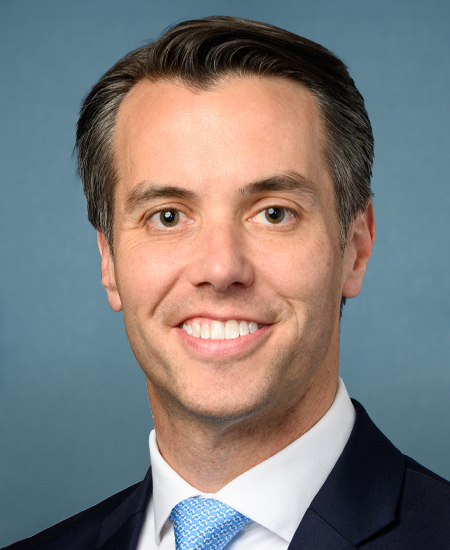
Photo of Morgan McGarvey
D United States House · District 3 · Kentucky On the 2026 ballot

Rep. Morgan McGarvey

Compare
Total votes
1,879
all sessions
Attendance
100%
4 missed
Higher than 92% of chamber peers
With party
98%
of cast votes
Near the chamber average
Bipartisan score
1%
crosses aisle rarely
Near the chamber average
Sponsored
743
bills & resolutions
Near the chamber average
Committees
7
assignments
743 bills and resolutions

Sponsored bills

Total
743
Primary
48
Co-sponsor
695
This page
743
matching current filters
Co-sponsor HR 3203
Passed · United States House · Co-sponsor
Stop Chinese Fentanyl Act of 2023

Maddy summaryHR 3203, the Stop Chinese Fentanyl Act of 2023, expands U.S. sanctions to target Chinese entities and government officials involved in fentanyl trafficking. It redefines "foreign opioid trafficker" to specifically include Chinese government bodies (like the National Narcotics Control Commission) and officials who fail to prevent fentanyl trafficking or cooperate with U.S. efforts. The bill also extends the statute of limitations for enforcement from 5 to 10 years under key laws and requires annual presidential reports to Congress on sanctions effectiveness. These changes directly affect Chinese government agencies and officials responsible for regulating or failing to combat fentanyl-related activities.

Passed Jul 26, 2023 1 co-sponsor
Co-sponsor HR 1096
Signed into law · United States House · Co-sponsor
250th Anniversary of the United States Marine Corps Commemorative Coin Act

Maddy summaryThis bill directs the U.S. Treasury to mint commemorative coins marking the Marine Corps' 250th anniversary in 2025. It authorizes three coin types: $5 gold coins (max 50,000), $1 silver coins (max 400,000), and half-dollar coins (max 750,000), with surcharges of $35, $10, and $5 respectively. The surcharge proceeds will fund the Marine Corps Heritage Center's educational programs, with no net cost to taxpayers as the Treasury must recover all minting costs through the surcharges. The coins can only be issued during 2025, and the Treasury must ensure all costs are covered before distributing funds to the Heritage Foundation.

Signed into law Jul 26, 2023 1 co-sponsor
Co-sponsor HR 4889
In committee · United States House · Co-sponsor
Raise the Wage Act of 2023

Maddy summaryHR 4889, the Raise the Wage Act of 2023, would gradually increase the federal minimum wage for most workers to $15.50 per hour by 2027, with specific annual targets: $9.50 starting in 2023, rising to $11.00 after one year, $12.50 after two years, and $15.50 after four years. It would also phase out the separate lower minimum wage for tipped employees (starting at $6.00/hour) by aligning their pay with the regular minimum wage by 2028, while requiring employers to let workers keep all tips. The bill includes similar phased increases for workers under 20 and transitions toward fairer wages for workers with disabilities under special certificates, which would sunset after 2028. Future annual increases after 2028 would tie the minimum wage to the median hourly wage of all workers.

In committee Jul 25, 2023 1 co-sponsor
Co-sponsor HR 4157
In committee · United States House · Co-sponsor
Not Just a Number Act

Maddy summaryHR 4157, the "Not Just a Number Act," requires the Department of Veterans Affairs (VA) to produce annual reports on veteran suicide rates and their connection to VA healthcare and benefits. The reports must break down suicide rates by age, gender, and race, and examine how engagement with VA services (like Vet Centers, healthcare enrollment, benefits claims, and housing loans) correlates with suicide trends. The bill also mandates a VA toolkit for state/local coroners to improve veteran suicide death reporting, and a study on creating a dedicated VA suicide prevention office. These measures aim to standardize data collection and identify effective prevention strategies, directly affecting VA operations, congressional oversight, and veteran care systems.

In committee Jul 25, 2023 1 co-sponsor
Co-sponsor HR 4769
In committee · United States House · Co-sponsor
PFAS Alternatives Act

Maddy summaryHR 4769, the PFAS Alternatives Act, funds research and training to develop PFAS-free turnout gear for firefighters. It authorizes $25 million annually (2024-2028) for grants to eligible organizations to research, develop, and test next-generation gear without per- and polyfluoroalkyl substances (PFAS), which are linked to firefighter cancer risks. The bill requires partnerships with firefighting organizations to ensure research translates into practical training and gear care guidance, including decontamination protocols. It also allocates $2 million yearly for training programs on proper gear use and maintenance, aiming to reduce exposure to hazardous chemicals during fire operations.

In committee Jul 21, 2023 1 co-sponsor
Co-sponsor HR 4774
In committee · United States House · Co-sponsor
Empowering Resilient Communities Act

Maddy summaryThis bill amends the Robert T. Stafford Disaster Relief Act to define "high need communities" as small areas (under 10,000 people) with high disaster risk, not already covered by existing programs. It requires FEMA to issue guidance on extreme temperature events within one year and mandates that state and local hazard mitigation plans include resilience goals, address disparities in underserved communities, and integrate nature-based solutions. The bill also allows communities meeting advanced building codes to use disaster funds for resilience projects and directs FEMA to provide technical assistance for implementing these plans. These changes primarily affect small, high-risk communities and state/local governments managing disaster recovery funds.

In committee Jul 21, 2023 1 co-sponsor
Co-sponsor HR 4699
In committee · United States House · Co-sponsor
The People’s Response Act

Maddy summaryThe People's Response Act establishes a new Division on Community Safety within the Department of Health and Human Services to fund community-based approaches to safety that are disconnected from traditional law enforcement and criminal justice systems. It creates four grant programs totaling $13 billion over five years: one for community-led organizations serving disproportionately impacted communities (especially Black and Indigenous communities), one for local governments to conduct safety needs assessments, one for states to support statewide implementation, and one for hiring and training first responders who provide non-carceral crisis response. These grants require recipients to use "qualified approaches to community safety" that avoid collaboration with carceral institutions and prioritize organizations led by or serving communities most affected by the criminal legal system. Recipients must report on outcomes including racial disparities in arrests, incarceration, and how funds are used to address safety needs through community-led initiatives.

In committee Jul 21, 2023 1 co-sponsor
Co-sponsor HRES 608
In committee · United States House · Co-sponsor
Recognizing the importance of diversity, equity, and inclusion efforts in higher education.

Maddy summaryHRES 608 is a non-binding House resolution recognizing the value of diversity, equity, and inclusion (DEI) efforts at colleges and universities. It affirms that DEI initiatives help create supportive learning environments where all students, faculty, and staff thrive, and specifically supports programs like implicit bias training and cultural competence resources. The resolution emphasizes that DEI efforts strengthen institutions’ ability to recruit diverse talent and align with academic freedom principles. It also notes concerns about state-level efforts to restrict DEI programs and states that such restrictions threaten campus inclusivity. As a symbolic resolution, it does not create new laws or funding but expresses congressional support for DEI work in higher education.

In committee Jul 20, 2023 1 co-sponsor
Co-sponsor HR 4817
In committee · United States House · Co-sponsor
SHADE Act

Maddy summaryThe SHADE Act creates a federal grant program to plant trees in historically disadvantaged neighborhoods, primarily targeting redlined areas (former HOLC "hazardous" zones) and overburdened areas (where at least 35% of households are low-income, or 40% identify as minority/tribal, or 40% are limited English proficiency). Eligible entities - like cities, tribes, or nonprofits - must submit applications with 5-year plans, community input strategies, and evidence of housing policies preventing displacement. Grants cover tree planting, maintenance for 5 years, and training, with $50 million annually authorized through 2034. The bill directly affects communities facing environmental inequities by linking tree planting to neighborhood revitalization efforts.

In committee Jul 20, 2023 1 co-sponsor
Co-sponsor HR 4585
In committee · United States House · Co-sponsor
Advancing Maternal Health Equity Under Medicaid Act

Advancing Maternal Health Equity Under Medicaid Act This bill provides a 90% federal matching rate for Medicaid maternal health care expenditures that exceed 2019 levels. Qualifying services must be provided by maternity care providers or perinatal health workers (e.g., doulas) and include prenatal and postpartum telehealth services, home visits, and behavioral health care.

In committee Jul 20, 2023 1 co-sponsor
Showing 561 to 570 of 743 bills
Previous 1 … 56 57 58 … 75 Next