

This bill requires the President to provide Congress with certain information at least 30 days before issuing an executive order related to agriculture, food, and the livelihood of farmers, ranchers, and producers in the United States. Before issuing such an order, the President shall provide Congress with (1) the executive order text, (2) a list of the federal laws affected, (3) information about how the President is working within the parameters of federal law and the Constitution, (4) information about how the executive order will be accomplished, and (5) a list of all the individuals and entities that the President engaged with before issuing the order.
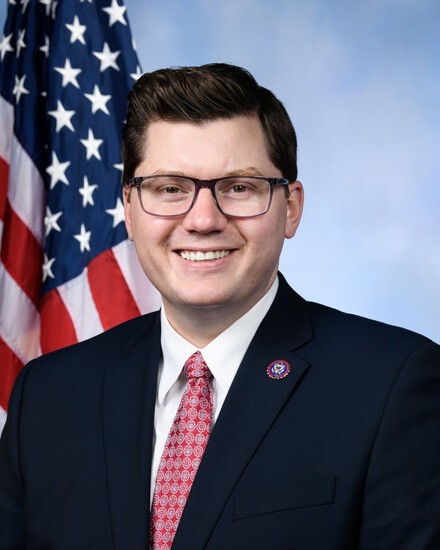
Rep. Jake LaTurner
Sponsored bills
Second Chance at Life Act of 2021 This bill requires abortion providers to disclose information about the possibility of reversing a medication abortion. This is a procedure that uses a medication regimen to terminate a pregnancy, typically with a two-drug protocol. Providers must inform patients that it may be possible to reverse the effects of a medication abortion after taking the first drug. They must also let patients know that more information and assistance is available on the Department of Health and Human Services (HHS) website. At least 24 hours before the procedure, the provider must share this information with the patient in person or by telephone. The provider must also include the information in written discharge instructions after the first drug is dispensed. The bill sets out an exception to these notification requirements when an abortion is necessary to resolve a physical injury or condition that threatens the life of the woman. The provider must document the circumstances giving rise to the exception in the patient's medical file. Furthermore, providers must post signs with this information in their offices or facilities, and HHS must maintain information about reversing medication abortions on its website.
Defund Planned Parenthood Act of 2021 This bill restricts federal funding for Planned Parenthood Federation of America Inc. or any of its affiliates or clinics for one year. Specifically, it prohibits funding those entities unless they certify that the affiliates and clinics will not perform, and will not provide funds to entities that perform, abortions during that year. If the certification requirement is not met, the Department of Health and Human Services and the Department of Agriculture must recoup any federal assistance received by those entities. However, the bill's funding restriction does not apply to abortions performed in cases of rape or incest or when necessary to resolve a physical condition that endangers a woman's life. The bill also provides additional funding for community health centers for the one-year period. These funds are subject to the same abortion-related restrictions and exceptions.
Protecting Life and Integrity in Research Act of 2021 This bill prohibits the Department of Health and Human Services from conducting or supporting any research that involves the use of human fetal tissue from an induced abortion. The bill also prohibits soliciting or acquiring a donation of human fetal tissue from an induced abortion, other than for purposes of an autopsy or burial. The bill applies requirements on the research of transplantation of fetal tissue for therapeutic purposes to research on fetal tissue in general.
Support And Value Expectant Moms and Babies Act of 2021 or the SAVE Moms and Babies Act of 2021 This bill prohibits the Food and Drug Administration (FDA) from approving any new drug (either as a brand-name drug or a generic) intended to terminate a pregnancy and imposes additional restrictions on such drugs that are already approved. Under the bill, an already-approved drug intended to terminate a pregnancy may be dispensed to a patient only with a prescription. Furthermore, the FDA may not approve any labeling change that would authorize (1) using the drug after 70 days of gestation, or (2) dispensing the drug by any means other than in-person administration by the prescribing health care practitioner. The FDA must also impose additional restrictions on such already-approved drugs, including by (1) requiring the prescribing health care practitioner to receive a special certification, (2) prohibiting the practitioner to also act as the dispensing pharmacist, and (3) requiring the practitioner to have the ability to provide surgical intervention to the patient. The bill also rescinds any investigational use exemption already granted to such a drug if the bill would have prohibited the FDA from granting the exemption. (Currently, the FDA may grant an exemption to certain market approval requirements if a drug is intended solely for use in safety and effectiveness investigations.)
Protecting Americans from Unnecessary Spread upon Entry from COVID-19 Act of 2021 or the PAUSE Act of 2021 This bill maintains immigration restrictions put in place under public health emergency authorities to prevent the introduction of COVID-19 (i.e., coronavirus disease 2019) from foreign countries. Specifically, the bill prohibits the Department of Health and Human Services from rescinding or reducing the stringency of the restrictions. It also prohibits the Department of Homeland Security from stopping or reducing enforcement of the restrictions. These prohibitions remain in effect until (1) federal and state COVID-19 emergency orders are lifted, and (2) the risk of introducing COVID-19 in or from Canada and Mexico is minimal.
Rebuilding Our Communities by Keeping aggregates Sustainable Act of 2021 or the ROCKS Act This bill directs the Department of Transportation to establish a working group of stakeholders (e.g., state, tribal, and local transportation and planning agencies) with knowledge and expertise in the production and transportation of materials used in the construction and maintenance of transportation infrastructure projects to conduct a study on access to such materials, including access to stone, sand, and gravel.
No Abortion Bonds Act This bill denies a tax exclusion for the interest paid on state and local bonds that are used to provide a facility owned or used (for any purpose) by an abortion provider for more than 30 days during a year in which interest is paid on the bonds. An entity is not considered an abortion provider solely as a result of performing abortions if (1) the pregnancy is the result of an act of rape or incest; or (2) a woman suffers from a physical disorder, physical injury, or physical illness that would, as certified by a physician, place the woman in danger of death unless an abortion is performed, including a life-endangering physical condition caused by or arising from the pregnancy itself. The Department of the Treasury may exempt certain hospitals from being considered an abortion provider by making the name of the hospital available on Treasury's public website.
This resolution supports the recognition of January 22 each year as the Day of Tears in the United States and encourages citizens to lower their flags to half-staff to memorialize the unborn.
Save Democracy Act This bill addresses issues involving voter registration, casting of ballots, and tabulation of ballots in federal elections. Specifically, regarding voter registration for federal elections, the bill prohibits the use of automatic voter registration systems, requires individuals to provide documentary proof of U.S. citizenship to register to vote, requires individuals to provide their full Social Security number on their voter registration application, and requires courts to notify state election officials when an individual is recused from jury duty because the individual is not a U.S. citizen. Next, regarding the casting of ballots in federal elections, the bill requires individuals to provide proof of identification for absentee and in-person voting, prohibits states from mailing unrequested absentee ballots, prohibits the use of a drop box for collecting voted absentee ballots unless it is located inside of a building that serves as an office for the election official, restricts the delivery of ballots by third parties (i.e., prohibits ballot harvesting), requires that absentee ballots be received before the polls close on election day, and requires states to use Social Security numbers to verify the identification of each individual who casts a ballot. Finally, regarding the tabulation of ballots in federal elections, the bill requires states to permit poll watching by at least two campaign representatives per campaign, requires continuous counting of ballots after the closure of polling places on election day, and requires an audit of voting systems.