

Department of Energy Science for the Future Act This bill supports specified research and development activities of the Department of Energy (DOE) Office of Science. The bill establishes various programs, including a basic energy sciences research and development program; a program of research and development for the application of advanced computing practices to foundational and emerging research problems in chemistry and materials science; a web-based platform to develop and provide access to a database of computed information on known and predicted materials properties and computational tools to accelerate breakthroughs in materials discovery and design; a biological systems science and climate and environmental science research and development program; research and development activities in biomolecular characterization and imaging science; earth and environmental systems science research; a coastal zone research initiative; an initiative focused on the development of engineered ecosystems; a program to implement a strategy for achieving computing systems with capabilities beyond exascale computing systems; a program of fundamental research and development of energy efficient computing and data center technologies relevant to advanced computing applications; a Quantum User Expansion for Science and Technology program or QUEST program; a collaborative research and development program of fusion energy technologies; a research program in elementary particle physics and advanced technology research and development to improve the understanding of the fundamental properties of the universe, including constituents of matter and energy and the nature of space and time; research activities on the nature of the primary contents of the universe, including the nature of dark energy and dark matter; a research program to discover and understand various forms of nuclear matter; a program across the DOE for the production of isotopes, including the development of techniques to produce isotopes, that the DOE determines are needed for research, medical, industrial, or related purposes; a midscale instrumentation program to enable the development and acquisition of novel, state-of-the-art instruments ranging in cost from $1 million to $20 million each that would significantly accelerate scientific breakthroughs at user facilities; and a high intensity laser research initiative. The DOE Office of Science shall continue to leverage U.S. participation in the Large Hadron Collider and prioritize expanding international partnerships and investments in the Long-Baseline Neutrino Facility and Deep Underground Neutrino Experiment. DOE shall support construction of a Facility for Rare Isotope Beams to advance the understanding of rare nuclear isotopes and the evolution of the cosmos. DOE shall expand opportunities to increase the number, diversity, equity, and inclusion of highly skilled science, technology, engineering, and mathematics (STEM) professionals working in DOE mission-relevant disciplines and broaden the recruitment pool to increase diversity, including expanded partnerships with Historically Black Colleges, Tribal Colleges, Minority Serving Institutions, emerging research institutions, and scientific societies. DOE shall establish within the DOE Office of Science, a cross-cutting research initiative to leverage the federal government's innovative analytical resources and tools, user facilities, and advanced computational and networking capabilities in order to prevent, prepare for, and respond to emerging infectious diseases, including COVID-19. DOE may not carry out gain-of-function research of concern.
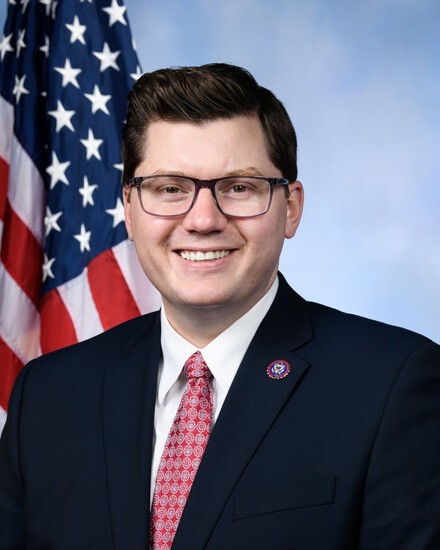
Rep. Jake LaTurner
Sponsored bills
National Science Foundation for the Future Act This bill reauthorizes the National Science Foundation (NSF) through FY2026 and authorizes programs and activities at the NSF. The bill establishes requirements for the NSF, including to enter into a contract with the National Academies of Science, Engineering, and Medicine to assess the status and opportunities for Pre-K through 12 science, technology, engineering, and mathematics, including computer science, (STEM) education research; award grants to establish no fewer than three multidisciplinary Centers for Transformative Education Research and Translation to support research and development of STEM education innovations; provide grants for research on programming that engages students in grades Pre-K through 8, including underrepresented and rural students, in STEM in order to prepare such students to pursue degrees or careers in STEM; award grants to support research and development activities to encourage greater collaboration and coordination between institutions of higher education and industry to enhance education, foster hands-on learning experiences, and improve alignment with workforce needs; award grants to establish a network of centers for science and technical education; award grants to advance research on the nature of learning and teaching at community colleges; award grants to establish traineeship programs for graduate students who pursue artificial intelligence-related research leading to a masters or doctorate degree; award grants to carry out research on the cyber workforce; establish a cybersecurity workforce data initiative; carry out a national initiative to facilitate the development of networks and partnerships to broaden participation in STEM studies and careers of groups historically underrepresented in such studies and careers; maintain a Research Security and Policy office to coordinate all research security policy issues across the NSF; award grants to support research to improve our understanding of the climate system and related human and environmental systems; support research to significantly advance our understanding of the food-energy-water system; award grants to advance knowledge of risk assessment and predictability to improve our ability to predict extreme events and natural hazards, including pandemics; and award grants to support basic research that will accelerate innovation to advance critical minerals mining strategies and technologies. The bill also establishes within the NSF a Directorate for Science and Engineering Solutions to advance research and development solutions to address societal and national challenges.
Broadband for Rural America Act This bill modifies and consolidates Department of Agriculture (USDA) programs for expanding broadband internet in rural areas. Specifically, the bill modifies a program that provides grants, loans, and loan guarantees to support broadband expansion in rural areas. Modifications include revising the criteria used to prioritize applications and projects and changing the name of the program to the ReConnect Rural Broadband Program. Additionally, the bill terminates on June 30, 2022, a Department of Agriculture (USDA) COVID-19 response program that supports broadband expansion in rural areas for distance learning and telemedicine. Any remaining program funds available after the termination date shall be used for the ReConnect Rural Broadband Program. The bill also expands coordination requirements that apply to the Department of Commerce, USDA, the Federal Communications Commission (FCC), and the National Telecommunications and Information Administration. This includes requiring the use of specified FCC maps when assessing a community's access to broadband.
Excellence in Mental Health and Addiction Treatment Act of 2021 This bill increases the number of states that may participate in two-year Medicaid demonstration programs that improve access to community mental health services. It also provides for additional grants to certified community behavioral health clinics.
No Land Grab Act of 2021 This bill prohibits from having the force and effect of law a provision of Executive Order 14008 (86 Fed. Reg. 7619), titled Tackling the Climate Crisis at Home and Abroad , that requires the Department of the Interior to recommend steps to achieve the goal of conserving at least 30% of U.S. lands and waters by 2030.
Advancing FASD Research, Services, and Prevention Act or the FASD Respect Act This bill expands and establishes programs for fetal alcohol spectrum disorders (FASD). Specifically, it directs the Department of Health and Human Services, the National Institutes of Health, the National Center on Birth Defects and Developmental Disabilities, and the Health Resources and Services Administration to carry out and coordinate research, surveillance, and related activities to diagnose, prevent, and treat FASD. Furthermore, the bill establishes various grant programs to support FASD coalitions and develop systems of care; provide services for individuals affected by FASD and other conditions related to prenatal substance exposure; identify and implement best practices for educating children with FASD; and establish centers for excellence to build relevant capacity for preventing, treating, and responding to the needs of individuals with FASD. The bill also directs the Department of Education and the Department of Justice to develop and disseminate trainings and best practices related to FASD in schools and correctional facilities, respectively.
Unclaimed Savings Bond Act of 2021 This bill establishes requirements and procedures for the Department of the Treasury to transfer ownership of certain matured, unredeemed savings bonds and related records to states.
Foreign Gain-of-Function Research Prevention Act of 2021 This bill prohibits the use of federal funds to conduct or support gain-of-function research involving potential pandemic pathogens by China, Russia, Iran, North Korea, or other foreign adversaries. Gain-of-function research is any research that is anticipated to confer an attribute on a pathogen to enhance its pathogenicity or transmissibility in mammals. If the Department of State finds that an entity has used funds for prohibited research, the entity may not receive any federal funding for a period of five years.
This bill expands eligibility for Post-9/11 GI Bill benefits to members of the National Guard who perform certain full-time service at the request of the President or the Secretary of Defense (i.e., full-time National Guard duty). Specifically, the bill eliminates the existing requirement that eligible full-time service must be in response to a declared national emergency. The bill also specifies that training is not included as full-time service for purposes of eligibility for these members.
Merit Systems Protection Board Reauthorization Act of 2021 This bill reauthorizes the Merit Systems Protection Board through FY2026 and modifies its authority. Specifically, the bill requires the board to establish and collect a filing fee to be paid by any individual filing a claim or appeal. The bill requires the board to make a decision in a matter after receiving the written representations of the parties and after an opportunity for a hearing, and the bill authorizes the board to grant a motion for summary judgment. With respect to an appeal from a performance or conduct-based adverse action, the bill prohibits the board from mitigating the personnel action unless it is so disproportionate as to be without justification. Further, the bill requires that all decisions of the agency be supported by substantial evidence. In addition, the bill limits furlough appeals and provides for the reappointment of board members (currently, board members may not be reappointed). The bill also makes the board the arbiter of appeals involving the removal, demotion, or suspension of an employee of the Department of Veterans Affairs.