Protect and Serve Act of 2021 This bill establishes a new criminal offense for knowingly assaulting a law enforcement officer and causing serious bodily injury (or attempting to do so) in circumstances that affect interstate commerce. It imposes criminal penalties—a prison term, a fine, or both—on a violator.
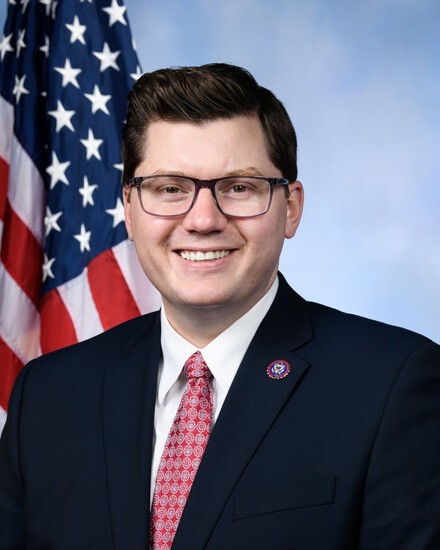
Rep. Jake LaTurner
Sponsored bills
Truckers Responding At National Shipping Ports Overcoming Retail Turmoil Act or the TRANSPORT Act This bill requires the Department of Transportation (DOT) to award grants to motor carriers and motor private carriers for transporting goods from ports during declared national emergencies or when DOT determines a port is at least 50% congested. DOT may use unobligated funds available under specified COVID-19 relief laws for the grants.
Outpatient Surgery Quality and Access Act of 2021 This bill establishes and modifies certain requirements relating to Medicare payments for ambulatory surgical center (ASC) services. Specifically, the bill (1) requires the payment system for ASC services to feature certain positive annual adjustments equivalent to those made with respect to hospital outpatient department (OPD) services; (2) revises quality reporting requirements to permit publicly available, side-by-side comparisons of quality measures for ASCs and OPDs in the same geographic area; and (3) requires the Centers for Medicare & Medicaid Services (CMS), when excluding requested procedures from the list of those approved to be performed in ASCs, to cite specified reasons for doing so. With respect to excluding procedures from the approved list for ASCs, the CMS may not cite as a basis for exclusion that a procedure can only be reported using an unlisted surgical procedure code. (Physicians sometimes use unlisted codes when performing new procedures or services if no existing code is adequately descriptive.) The bill also limits the copayment amount for ASC services under Medicare to that of the inpatient hospital deductible.
Maddy summaryHRES 754 is a non-binding resolution expressing the House of Representatives' opposition to proposed "punitive natural gas taxes" on U.S. businesses, families, and workers. It cites claims that such taxes would raise average energy bills by 17%, reduce GDP by $9 billion, and eliminate 90,000 jobs, while disproportionately harming low-income households. The resolution argues that opposing these taxes supports U.S. energy security, national security, and continued leadership in reducing emissions through domestic natural gas production. As a procedural resolution, it does not create law but formally states the House's position against this policy approach.
This bill prohibits the use of federal funds to require a member of the Armed Forces to receive a COVID-19 vaccination. The bill also prohibits adverse action (e.g., punishment) being taken against a member of the Armed Forces because the member refuses to receive a COVID-19 vaccination.
Simon Crosier Act This bill requires hospitals and other health care providers, as a condition of Medicare and Medicaid participation, to have certain written policies and procedures in place that limit the implementation of do-not-resuscitate (DNR) orders for unemancipated minors in accordance with specified criteria. Among other provisions, such policies and procedures must (1) require the informed consent of at least one parent and a reasonable attempt to contact the other parent before instituting a DNR order, (2) allow either parent to refuse to consent to a DNR order, and (3) allow a parent to transfer a minor to another facility after being informed of an intent to institute a DNR order.
Transparency in COVID-19 Expenditures Act This bill requires the Government Accountability Office (GAO) to audit certain funding that was provided to address COVID-19. Specifically, the GAO must audit and report on the use of funding provided by the Coronavirus Preparedness and Response Supplemental Appropriations Act, 2020; the Families First Coronavirus Response Act; the Coronavirus Aid, Relief, and Economic Security Act (CARES Act); the Paycheck Protection Program and Health Care Enhancement Act; Divisions M and N of the Consolidated Appropriations Act, 2021; and the American Rescue Plan Act of 2021.
Long-Term Care Pharmacy Definition Act of 2021 This bill establishes a statutory definition for long-term care pharmacy under the Medicare prescription drug benefit. Currently, there is no statutory definition. Regulations from the Centers for Medicare & Medicaid Services (CMS) define a long-term care pharmacy as a pharmacy that is owned by or under contract with a long-term care facility to provide prescription drugs to the facility's residents. Additional requirements are set out in CMS guidance relating to the Medicare prescription drug benefit; pharmacies are also subject to regulations and guidance from other agencies (e.g., packaging requirements from the Food and Drug Administration). The bill defines a long-term care pharmacy as a state-licensed pharmacy that is able to provide enhanced pharmacy and clinical services to individuals who have certain comorbid and medically complex chronic conditions and who reside in skilled nursing facilities, nursing facilities, or any other applicable setting (as determined by the CMS). The term enhanced pharmacy and clinical services includes medication dispensed in special packaging, drug utilization review, and 24-7 availability of medication delivery and on-call pharmacists.
Marginal Well Protection Act This bill prohibits the Environmental Protection Agency from imposing fees for methane emissions from wells that produce less than 15 barrels of oil per day and less than 90 Mcf (90,000 cubic feet) of natural gas per day.
Lower Costs, More Cures Act of 2021 This bill establishes and modifies several programs and requirements to address prescription drug prices. The bill modifies provisions under Medicare and Medicaid relating to prescription drug coverage and price transparency. Among other changes, the bill requires the Centers for Medicare & Medicaid Services to publish certain information, as reported by pharmacy benefit managers (PBMs), relating to generic dispensing rates, drug discounts and rebates, and payments between PBMs, health plans, and pharmacies; caps annual out-of-pocket spending under the Medicare prescription drug benefit; allows prescription drug plan sponsors under the Medicare prescription drug benefit to offer additional plans in a region; requires pass-through pricing models, and prohibits spread-pricing, for payment arrangements with PBMs under Medicaid; and allows states to include in the Medicaid Drug Rebate Program covered outpatient drugs that are provided as part of physician or outpatient hospital services. The bill also generally modifies other provisions relating to the regulation and costs of generic and brand-name drugs. Among other changes, the bill prohibits the manufacturer of a brand-name, generic, or biosimilar drug from entering into certain agreements to resolve or settle a patent infringement claim in connection with the sale of a drug or biological product; permanently allows high deductible health plans to waive deductibles for insulin and associated products; and establishes the position of Chief Pharmaceutical Negotiator in the Office of the U.S. Trade Representative.