

Employee Rights Act This bill makes various changes with respect to the collective bargaining process and labor relations. For example, the bill permits an employer to refuse to collectively bargain with a union within 90 days prior to the expiration of a collective bargaining agreement if the employer receives evidence that the majority of the employees in the bargaining unit do not support the union. The bill requires support from a majority of the employees in the bargaining unit (not just a majority of the employees voting) when electing union representation. The bill also requires unions to provide bargaining unit employees with the right to vote by secret ballot, including when voting whether to engage in a strike or refusal to work. Further, union dues, fees, assessments, and other contributions may be used for only collective bargaining or contract administrative functions. Additionally, the bill establishes a process for nullifying executive orders that the Office of Management and Budget determines are likely to result in an employer ordering a plant closure or mass layoff.
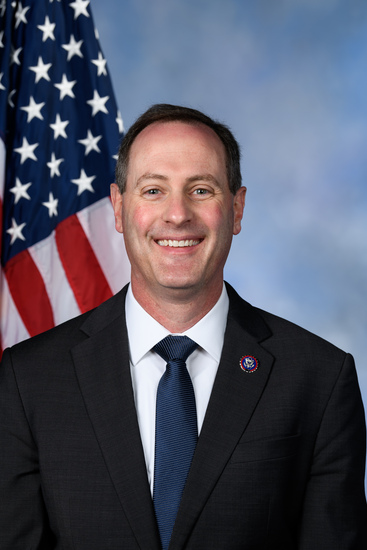
Rep. Tracey Mann
Sponsored bills
No Retaining Every Gun In a System That Restricts Your Rights Act This bill modifies the retention requirements for firearm transaction records of federal firearms licensees (FFLs) that go out of business. Current law generally requires FFLs that go out of business to deliver their firearm transaction records to the Bureau of Alcohol, Tobacco, Firearms and Explosives (ATF). This bill removes the requirement for FFLs that go out of business to deliver their firearm transaction records to the ATF. Further, the bill requires the ATF to destroy all out-of-business records it has collected from FFLs.
Midland Over Moscow Act This bill imposes sanctions related to the Nord Stream 2 pipeline and revises the expedited approval process for natural gas imports and exports in or out of the United States. (Nord Stream 2 is a pipeline constructed to increase the export of natural gas from Russia to Europe.) Within 10 days of this bill's enactment, the President must impose sanctions on any entity responsible for the planning, construction, maintenance, financing, or operation of Nord Stream 2, as well as any corporate officer or principal shareholder with a controlling interest in such an entity. The bill also revokes the President's authority to waive certain sanctions related to Nord Stream 2 and TurkStream, another Russian natural gas pipeline project. The bill also allows any nation, with specified exclusions, to use an expedited process to receive approval to import or export natural gas in or out of the United States (currently only a nation with a free trade agreement with the United States may use the expedited process). Specifically, the bill excludes any nation (1) subject to U.S.-imposed sanctions or trade restrictions, or (2) excluded by the President or Congress for national security reasons.
Sanctioning Tyrannical and Oppressive People within the Chinese Communist Party Act or the STOP CCP Act This bill imposes visa- and property-blocking sanctions on any person who is or was a member of any National Communist Party Congress of China, as well as any adult family member of such a person. The President may waive the sanctions for renewable periods of 30 days by certifying to Congress that China's government and the Chinese Communist Party have ceased (1) any acts of genocide against the Uyghur Muslim population; (2) all threats, military exercises, and aggression toward Taiwan; (3) undermining the autonomy of Hong Kong; and (4) any efforts to steal the intellectual property of U.S. persons. The certification must also be publicly available on a federal government website.
Immigration Transparency and Transit Notification Act of 2022 This bill requires notifications to certain officials before an unaccompanied alien child or a non-U.S. national ( alien under federal law) without lawful immigration status may be placed in or transported to a state or local jurisdiction. The bill also authorizes the office of the governor of the relevant state to prohibit the placement or transportation. At least seven calendar days before taking such an action, the Department of Homeland Security (DHS) or the Department of Health and Human Services (HHS) must notify (1) the relevant state governor's office, (2) the state attorney general's office, (3) the county or municipal government, (4) local law enforcement, and (5) federal and state legislators representing the relevant jurisdiction. The action may not take place if the state governor's office objects no later than three calendar days after receiving the notification. This authority to object shall not apply if the action is to place an unaccompanied child with, or transport the child to, a family member.
Putin Accountability Act This bill imposes sanctions pertaining to Russia and addresses related issues. The President must impose sanctions, with some exceptions, on individuals and entities that knowingly and directly provide specialized financial messaging services to Russia's central bank (or enables access to such services); entities responsible for constructing, financing, or operating Nord Stream 2 (a pipeline constructed to increase Russian natural gas exports) and the corporate officers and controlling shareholders of such entities; individuals and entities in Russia involved in kleptocracy, Russian government activities to subvert U.S. democratic institutions and interests, or Russian government disinformation campaigns against the United States; and entities that are Russian state development corporations, as well as any officials of such an entity. The President must impose property-blocking sanctions on such individuals and entities and also visa-blocking sanctions on the individuals. The President must also (1) issue regulations to prohibit U.S. individuals and entities from dealing in Russian sovereign debt; and (2) issue a determination as to whether certain specified Russian individuals meet the criteria to be subject to sanctions under various authorities, including this bill. The Department of State must (1) designate Russia a state sponsor of terrorism, and (2) report to Congress a determination of whether Russia-affiliated armed entities in the Donbas region of Ukraine meet the criteria to be designated as foreign terrorist organizations. The bill prohibits expending funds to engage with Russia's government on cyber issues or arms control negotiations until certain conditions have been met.
Preventing Auto Recycling Theft Act or the PART Act This bill establishes requirements for motor vehicles related to catalytic converters and other motor vehicle parts that contain precious metals. The National Highway Traffic Safety Administration must revise the motor vehicle theft prevention standard for new motor vehicles to include catalytic converters among the parts that require an inscribed or affixed identifying number. Additionally, the Department of Transportation must establish a grant program through which law enforcement agencies and other entities can stamp vehicle identification numbers onto catalytic converters of existing vehicles. The bill establishes retention requirements for the purchase of motor vehicle parts that contain precious metals. It also sets forth criminal penalties for the theft of catalytic converters or any precious metals removed from a vehicle.
Upholding the Law at Our Border Act This bill requires the Office of Inspector General of the Department of Homeland Security (DHS) to periodically investigate and report on certain issues until there have been fewer than 35,000 apprehensions at the southwest border for three consecutive months. When required, the reports must address certain issues, including (1) the vetting procedures applicable to aliens seeking entry into the United States who were apprehended along the southwest border, (2) the total number of individuals not lawfully present who have been processed and released into the United States, (3) the number of such individuals who have received parole, and (4) an audit of the parole applications. The office must submit such reports (and provide briefings on the reports) to the President, Congress, DHS, and the Department of Justice.
Illegal Immigrant Payoff Prohibition Act This bill prohibits the payment of a settlement to an alien for a civil action brought against the United States in connection with the alien's inadmissibility to, or unlawful presence in, the United States.
Protect Communities from a Porous Border Act of 2021 This bill requires the Department of Homeland Security (DHS) to notify a state before placing an alien in that state and gives the state final authority to prohibit such a placement. At least 10 business days before placing (e.g., detaining or housing) such an individual in a state, DHS must provide certain information to that state, including (1) the individual's biographic and biometric information, including DNA; and (2) a certification that the biometric and biographic information has been checked in various law enforcement and counterterrorism databases. No federal court shall have jurisdiction to review (1) the requirements and procedures established under this bill, or (2) a decision by a state to prohibit the placement of such an individual in the state. The bill also prohibits any federal official from waiving any of the bill's requirements.