

Maddy summaryThe ACRE Act of 2023 amends the tax code to exclude interest income from certain rural and agricultural loans from taxable income for eligible lenders. It directly affects banks, savings associations, and their wholly-owned entities that provide qualified loans secured by rural or agricultural real estate, including single-family homes in designated rural areas (with a $750,000 loan balance cap) or aquaculture facilities. The key provision allows these lenders to exclude interest earned on qualifying loans from their gross income, effectively reducing their tax liability on such lending activity. The bill applies to loans made after its enactment date and aligns with existing definitions of rural property from the Agricultural Credit Act of 1987.
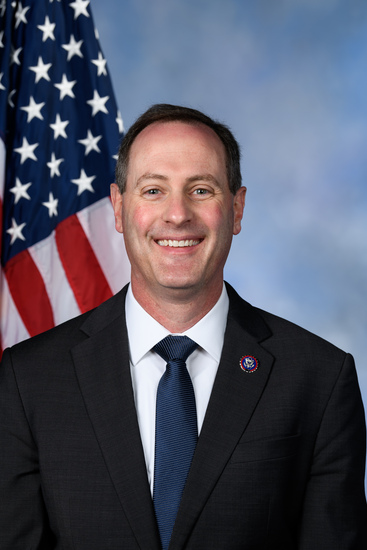
Rep. Tracey Mann
Sponsored bills
This bill prohibits the use of federal funds to seek U.S. membership in the World Health Organization (WHO), or to make contributions to the WHO, until the Department of State makes certain certifications to Congress. Specifically, these prohibitions shall apply until the State Department certifies that the WHO has met certain conditions, including that the WHO (1) has adopted reforms to ensure that humanitarian assistance is not politicized; (2) is not under the control of the Chinese Communist Party (CCP) and is not involved in a cover-up of the CCP's response to the COVID-19 pandemic; (3) has granted observer status to Taiwan; and (4) has ceased engagement on certain issues, such as climate change, access to abortion, and gender identity.
Maddy summaryThis bill resolves a long-standing land dispute involving the Prairie Band Potawatomi Nation's historic reservation in Illinois. It confirms the Tribe's ownership of 129 acres they already purchased (Repurchased Lands) while ending tribal ownership rights to the remaining 1,280-acre reservation area. The bill provides $50 million over five years to the Tribe as full settlement for historical claims, and confirms land ownership for non-Indian occupants (including Illinois, Dekalb County, and private parties) who have held the land since 1849. It also establishes a 1,151-acre "Replacement Area" near Shabbona for future tribal land acquisition using settlement funds.
Maddy summaryHRES 339 is a non-binding House resolution expressing that an "all-of-the-above" energy strategy - including oil, gas, nuclear, coal, hydropower, and renewables - is the most viable approach to U.S. energy policy. It states this strategy would strengthen national security, lower consumer energy prices, and reduce reliance on foreign energy sources. The resolution highlights that domestic energy production supports infrastructure funding, job creation, and energy independence, while noting U.S. energy sources like Gulf of Mexico oil and nuclear power provide clean, reliable electricity. As a statement of congressional opinion, it does not create new laws or policy changes.
Maddy summaryThis bill creates new federal crimes for killing or assaulting law enforcement officers and public safety personnel while they're on duty or because of their status as officers. It establishes mandatory minimum sentences of 10 years for murder of officers, with higher penalties for assaults causing serious injury or using deadly weapons. The bill also creates a new offense for fleeing to avoid prosecution for killing officers and limits federal habeas corpus relief for those convicted of killing officers. Additionally, it expands law enforcement officers' authority to carry firearms in certain locations. The bill directly affects law enforcement officers, public safety personnel, and individuals who commit violent acts against them.
Maddy summaryThe Words Matter Act of 2023 replaces the outdated term "mental retardation" with "intellectual disability" across numerous federal laws and regulations. It amends over 20 provisions in the U.S. Code, Social Security Act, and other statutes - including healthcare, disability programs, and legal definitions - to update terminology used in areas like nursing home care, criminal justice, and federal grants. The bill explicitly states this is a purely linguistic change, not a policy shift, and does not alter eligibility, benefits, or program requirements for individuals with intellectual disabilities. It affects all federal programs and legal references that previously used the terms "mental retardation," "mentally retarded," or "developmentally disabled."
Rebuilding Rural Roads Act This bill modifies the definition of rural area that is used for the Rural Surface Transportation Grant Program. For the purposes of the program, the bill defines rural area as an area outside an urbanized area that has a population of over 20,000. (Current law requires a rural area to be outside of an urbanized area with a population of over 200,000.) The grant program supports projects that improve and expand the surface transportation infrastructure in rural areas to increase connectivity, improve the safety and reliability of the movement of people and freight, generate regional economic growth, and improve quality of life. Eligible applicants for the grant program include states, regional transportation planning organizations, local governments, and tribal governments.
This resolution expresses U.S. support for Israel and its efforts to defend its right to existence. The resolution also declares that the United States and international community must prevent Iran from acquiring or building nuclear weapons.
Maddy summaryThis bill protects living organ donors from insurance discrimination by prohibiting life, disability, and long-term care insurers from denying coverage, raising premiums, or altering policy terms solely because someone donated an organ while alive. It also updates the Family and Medical Leave Act to include recovery from organ donation surgery as a qualifying health condition, allowing donors to take protected leave for this purpose. Additionally, the bill requires the Health and Human Services Secretary to update public educational materials about living donation benefits, risks, and insurance protections within six months of enactment. These changes directly affect living organ donors, insurers, employers, and healthcare systems by ensuring fair access to insurance and workplace leave.
Maddy summaryThe Employee Rights Act (HR 2700) amends key labor laws to strengthen employee rights in collective bargaining and privacy. It requires employers to use secret ballot elections for selecting bargaining representatives and to provide labor organizations with voter lists containing employee names and one form of contact information (chosen by the employee) within two business days of an election. The bill prohibits employers from using employee personal information for non-organizing purposes and mandates written authorization for using union dues on non-bargaining activities, with authorizations expiring after one year. Additionally, it clarifies joint employment standards to prevent misclassification and adds tribal sovereignty protections to labor law definitions.