

Maddy summaryHRES 570 is a House resolution commending Petty Officer 3rd Class Scott Ruskan for rescuing 165 people during catastrophic July 2025 flooding in central Texas. The resolution honors Ruskan, a Coast Guard Aviation Survival Technician from Air Station Corpus Christi, for his role as the sole triage coordinator during the disaster. It recognizes his "exceptional courage" and "selflessness" in saving lives during the Guadalupe River flooding that caused extensive damage and loss of life. As a ceremonial resolution, it does not create new laws or policies but formally expresses the House's gratitude for Ruskan's service.
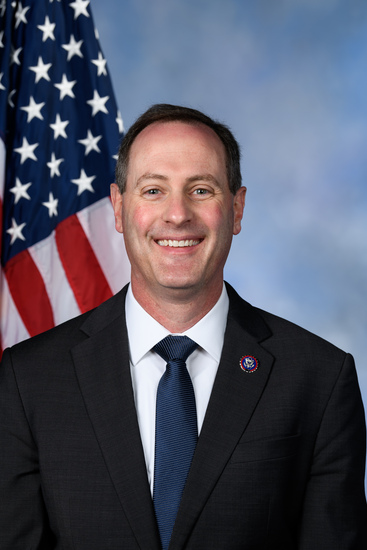
Rep. Tracey Mann
Sponsored bills
Maddy summaryThe PBM Reform Act of 2025 aims to increase transparency and fairness in pharmacy benefit manager (PBM) operations within Medicare Part D and Medicaid programs. The bill requires Medicare Part D plans to allow any pharmacy meeting standard terms to join their networks, establishes "essential retail pharmacies" in underserved areas (with limited pharmacy access), and mandates detailed reporting on drug pricing, rebates, and reimbursement rates. It creates a process for pharmacies to report PBM violations of reasonable contract terms and prohibits "spread pricing" in Medicaid, where PBMs retain the difference between what they pay pharmacies and what they charge plans. These provisions aim to improve pharmacy access for Medicare beneficiaries and ensure fairer reimbursement practices for pharmacies.
Maddy summaryThis bill requires online contact lens sellers to provide a secure electronic method for customers to transmit their contact lens prescriptions, directly affecting online retailers. It mandates that such electronic transmissions comply with HIPAA privacy rules and that any protected health information sent via email must be encrypted. The law updates existing rules to modernize prescription verification for online sales while maintaining privacy protections.
Maddy summaryHR 4272, the Prioritizing Rural Hospitals Act, requires the U.S. Department of Agriculture to prioritize rural health care facilities (including mental health clinics) for direct loans and grants under the Consolidated Farm and Rural Development Act from 2026 to 2031. Eligible entities can use these funds for medical supplies, expanding telehealth services, staffing (capped at 25% of funds), or renovating closed facilities. The bill also prohibits the Secretary of Agriculture from making national reprioritizations within rural health funding programs during this period. It directly affects rural hospitals and clinics seeking federal support for infrastructure, technology, and services.
Maddy summaryThe CONNECT for Health Act of 2025 expands Medicare telehealth coverage by removing geographic restrictions that limited where patients could receive care, expanding the types of health care providers who can offer telehealth services, and eliminating the requirement for an in-person visit before receiving telemental health services. The bill includes specific provisions to support telehealth use for Native American health facilities, rural health clinics, and Federally Qualified Health Centers. It requires the Centers for Medicare & Medicaid Services to collect and publish data on telehealth usage and impacts, and to develop resources to improve accessibility for people with disabilities and limited English proficiency. Program integrity measures are added to monitor telehealth billing practices and prevent fraud while maintaining coverage for telehealth services during public health emergencies.
Maddy summaryHR 4148 disapproves a Department of Labor regulation (88 Fed. Reg. 57526) that would have updated wage requirements under the Davis-Bacon Act for federal construction projects. The bill states this regulation "shall have no force or effect," preventing federal contractors from being subject to the proposed changes. This is a procedural measure targeting a specific regulatory update, directly affecting contractors working on federally funded construction projects.
Maddy summaryHR 1713, the Agricultural Risk Review Act of 2025, requires the Secretary of Agriculture to join the Committee on Foreign Investment in the U.S. (CFIUS) when reviewing transactions involving U.S. agricultural land, biotechnology, or agriculture-related infrastructure (like transportation or processing). It specifically targets acquisitions of agricultural land by foreign entities from China, North Korea, Russia, or Iran, mandating that the Secretary of Agriculture first assesses these transactions before CFIUS decides whether to proceed with a full review. The law includes a sunset provision, ending these requirements for a specific country once it is removed from the federal list of foreign adversaries.
Maddy summaryThe Haskell Indian Nations University Improvement Act would establish Haskell Indian Nations University as a federally chartered corporation with its own independent board of trustees, removing it from direct management by the Bureau of Indian Education. This change would allow the university to accept private donations as a tax-exempt charitable organization, develop its own master plan for facilities, and better manage its operations. The university currently provides tuition-free higher education to over 900 Indian students representing approximately 140 tribes across the United States. The bill aims to address longstanding challenges in educational quality and campus maintenance, which have been cited in congressional inquiries.
Maddy summaryHRES 527 is a symbolic resolution designating June 2025 as "National Dairy Month" to honor dairy's role in nutrition and the agricultural economy. It recognizes dairy as a key source of calcium and vitamin D (per Dietary Guidelines), supports over 3.2 million jobs, and highlights the industry's $793 billion economic impact. The resolution encourages public support for dairy farmers while condemning unfair regulatory burdens on the sector. As a non-binding expression of support, it does not create new laws or funding.
Maddy summaryThis symbolic House resolution (HRES 521) expresses support for Israel’s military actions against Iran’s nuclear facilities, citing Iran’s nuclear enrichment progress (including 60% enriched uranium stockpiles nearing weapons-grade levels) and Iran’s attacks on Israeli civilians. It specifically endorses Israel’s "proportional" strikes on Iranian nuclear sites and military targets following Iran’s rejection of diplomatic efforts, while condemning Iran’s attacks that killed 24 Israelis and wounded 590. The resolution calls on Iran to halt nuclear enrichment and dismantle its program, reaffirms U.S. support for Israel’s security, and urges global condemnation of Iran’s nuclear activities. As a non-binding resolution, it does not enact policy but formally aligns the House with Israel’s actions against Iran’s nuclear program.