

Maddy summaryThis bill amends the Older Americans Act to require that health promotion and disease prevention services for older adults be "evidence-informed" where applicable. It updates specific sections to mandate that programs use practices likely to improve health outcomes, rather than relying solely on evidence-based approaches. The changes directly affect existing services funded under the Older Americans Act, including falls prevention, chronic disease management, and general health promotion programs. The bill does not create new programs but ensures current services are evaluated using the best available evidence.
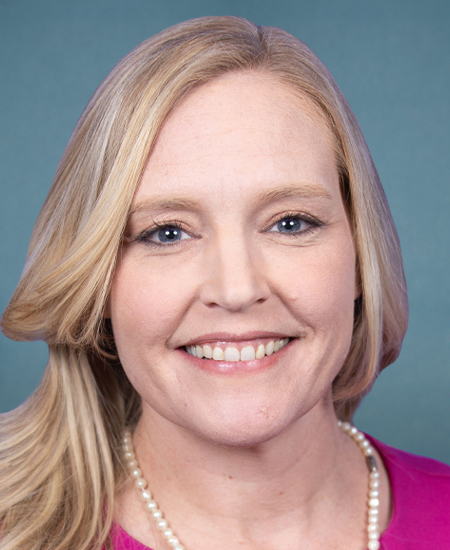
Rep. Erin Houchin
Sponsored bills
Maddy summaryHRES 1548 is a non-binding resolution supporting the designation of October 2024 as "National Learning Disabilities Awareness Month." It highlights that specific learning disabilities affect 34% of students receiving special education services and notes significant academic challenges, with over 95% of affected 4th and 8th graders not proficient in reading or math in 2022. The resolution calls on schools to continue providing appropriate support for students with learning disabilities but does not create new laws or funding. It aims to raise public awareness about learning disabilities, not to change educational policies.
Maddy summaryThis bill establishes a federal task force to address "coerced debt" - a form of financial abuse where abusers force victims to take on debt using their names, often through threats, identity theft, or fraud. The task force, co-led by the Treasury Secretary and Consumer Financial Protection Bureau Director, will study how this issue affects domestic violence survivors, coordinate responses across agencies (including Health, Housing, Justice, and financial regulators), and gather input from advocates and industry representatives. It will define coerced debt, assess its financial and legal impacts on survivors, and develop recommendations for legislative or regulatory changes. The task force must submit its findings and proposals to Congress within one year, but does not directly change existing laws or protections.
Maddy summaryThis non-binding resolution (HRES 1533) expresses the U.S. House of Representatives' continued support for Israel one year after the October 7, 2023, attacks. It condemns Hamas' attacks against Israel and calls on Hamas to immediately cease violence, release all living hostages, and return the bodies of deceased hostages. The resolution does not create new laws or policies but formally reaffirms congressional sentiment toward U.S.-Israel relations and the response to the Hamas attacks. It was introduced by 13 House members on October 4, 2024, and referred to the Foreign Affairs Committee.
Maddy summaryHR 736, the PROTECT Kids Act, requires elementary and middle schools receiving federal funding to obtain parental consent before changing a minor student's gender markers, pronouns, or preferred name on school forms, or allowing changes to sex-based accommodations like bathrooms or locker rooms. The bill directly affects public schools that receive federal education funds, mandating parental involvement in these specific educational decisions. Key provisions establish this consent requirement as a condition for continued federal funding. The legislation aims to ensure parents are informed about their child's educational and care-related accommodations, without specifying outcomes or commenting on the cited school practices.
Maddy summaryThe Think Differently about Education Act of 2023 requires schools and state education agencies to notify parents of children with disabilities at the start of each school year about their right to include experts (such as therapists or specialists) on their child's Individualized Education Program (IEP) team. This amendment to the Individuals with Disabilities Education Act (IDEA) ensures parents are informed about available resources to support their child's educational planning. The bill directly affects parents of children with disabilities and the educational agencies managing IEPs. It adds a mandatory annual notification step without altering the IEP process itself.
Maddy summaryHJRES 136 is a resolution seeking to block an Environmental Protection Agency (EPA) rule that would have set new emissions standards for light and medium-duty vehicles sold in 2027 and later model years. The EPA rule, published in April 2024, aimed to require vehicle manufacturers to meet stricter pollution limits for these vehicles. If passed, this resolution would cancel the rule, preventing the EPA from enforcing the new standards. It uses a congressional process that allows Congress to reject agency rules with a simple majority vote.
Maddy summaryThis bill restricts federal funding for jurisdictions that limit cooperation with federal immigration enforcement. It defines a "sanctuary jurisdiction" as any state or local government that prohibits sharing immigration status information or complying with federal detainer requests (except for crime victims/witnesses). Starting after enactment, such jurisdictions lose eligibility for federal funds intended to provide food, shelter, healthcare, legal services, or transportation to undocumented immigrants. The law directly affects cities and states with specific immigration policies, not the immigrants themselves.
Maddy summaryHR 3724, officially titled the "Accreditation for College Excellence Act of 2023," amends federal accreditation rules to prohibit accrediting agencies from requiring colleges to support or oppose specific political views, social issues, or ideologies. It specifically bans standards that assess institutions based on their commitment to particular beliefs or that restrict religiously affiliated colleges from maintaining their mission or requiring statements of faith. The bill directly affects all colleges seeking or maintaining federal accreditation by setting clear boundaries for accrediting agencies. It aims to ensure accreditation focuses solely on educational quality, not political or ideological alignment.
Maddy summaryHJRES 144 is a congressional disapproval resolution targeting a specific rule issued by the Bureau of Alcohol, Tobacco, Firearms, and Explosives (ATF) on April 19, 2024. The resolution seeks to block the ATF's rule that redefined the term "engaged in the business" for firearm dealers, which would have affected how federal licensing requirements apply to certain sellers. If enacted, this resolution would nullify the rule, preventing it from taking effect under procedures in Title 5 of the U.S. Code. The bill directly impacts firearm dealers operating under the current regulatory framework and the ATF's enforcement authority.