

Global War on Terrorism Memorial Location Act This bill authorizes the establishment of a National Global War on Terrorism Memorial in the area of the National Mall.
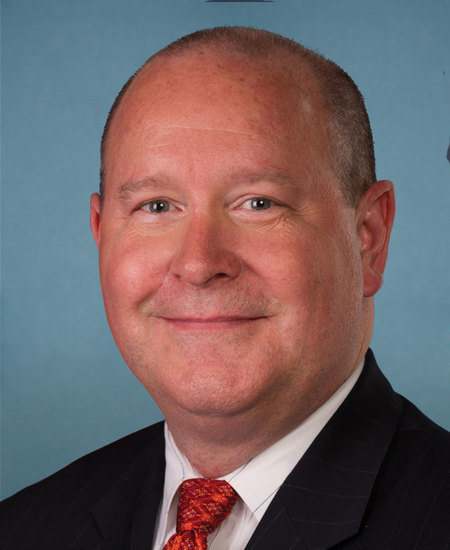
Rep. Larry Bucshon
Sponsored bills
Advancing Education on Biosimilars Act of 2021 This bill requires the Food and Drug Administration (FDA) to advance education and awareness among health care providers about biological products as appropriate, including by developing or improving continuing education programs that address the prescribing of biological products and biosimilars. (A biosimilar is a biological product that is highly similar to an FDA-approved reference biological product and has no clinically meaningful differences from that reference product.) The FDA may also maintain and operate a website to provide educational materials about biological products.
Developing Responsible Individuals for a Vibrant Economy Act or the DRIVE-SAFE Act This bill directs the Department of Transportation to promulgate regulations to implement an apprenticeship program for licensed commercial motor vehicle drivers under the age of 21. Under the program, an apprentice must complete two probationary periods that total 400 hours of on-duty time, of which at least 240 hours must be driving time in a commercial motor vehicle. Additionally, the apprentice must be accompanied in the cab of the commercial motor vehicle by an experienced driver. Further, the bill requires all commercial motor vehicles used in the program for training to be equipped with safety technology such as active braking collision mitigation systems and video event capturing systems. An employer shall not knowingly allow, require, permit, or authorize a driver under the age of 21 to operate a commercial motor vehicle unless the driver is participating in, or has completed, an apprenticeship program that meets the requirements set forth in this bill.
Fair Access to Banking Act This bill restricts certain banks, credit unions, and payment card networks from refusing to do business with a person who is in compliance with the law. Restrictions include prohibiting the use of certain lending programs, initiating the process of terminating an institution's depository insurance, and instituting specified civil penalties.
Nuclear Industrial Base Act This bill requires the Department of Energy (DOE) to establish the Nuclear Industrial Base Analysis and Sustainment Program. A nuclear industrial base means the persons or organizations within the federal government and the private sector that are engaged in designing, producing, maintaining, developing, or integrating nuclear energy systems, components, parts, or other assets. In carrying out the program, DOE must monitor and assess the needs of the nuclear industrial base, support partnerships to develop and deploy new nuclear power assets, and make recommendations to address supply chain vulnerabilities of such base.
Death Tax Repeal Act This bill repeals the estate and generation-skipping transfer taxes. It also makes conforming amendments related to the gift tax.
This bill requires the Federal Communications Commission (FCC) to analyze and report on the demands associated with edge provider data transmitted over rural broadband networks during a specified six-year period. An edge provider is an entity that provides content, applications, or services over the internet (e.g., search engine providers, streaming video or music services, social media platforms, and retailers). Some edge providers generate revenue by selling products or subscriptions to their content, while others offer their content for free and generate revenue by selling advertising to users based on user-provided information. In its analysis, the FCC must retrospectively and prospectively estimate the quantity of edge provider data transmitted over rural broadband networks. It must also calculate costs to rural broadband providers that are not otherwise recovered for transmitting such data. These costs include (1) initial deployment of rural broadband networks, (2) operation and maintenance of those networks, and (3) the delivery of services to users over those networks.
David Dorn Act of 2021 This bill increases criminal penalties for rioting and related offenses (e.g., inciting a riot). Specifically, the bill increases the maximum prison term from 5 to 10 years. Additionally, if a fine is imposed for an offense, the bill sets a minimum fine amount of $1,000.
This joint resolution proposes a constitutional amendment prohibiting total outlays for a fiscal year from exceeding total receipts for that fiscal year unless Congress authorizes the excess by a three-fifths roll call vote of each chamber. The prohibition excludes outlays for repayment of debt principal and receipts derived from borrowing. The amendment requires roll call votes of (1) three-fifths of each chamber of Congress to increase the public debt limit, and (2) a majority of each chamber for legislation increasing revenue. It also requires the President to submit a balanced budget to Congress annually. Congress is authorized to waive these requirements when a declaration of war is in effect or if the United States is engaged in a military conflict which causes an imminent and serious military threat to national security.
This joint resolution proposes an amendment to the Constitution to require that the Supreme Court consist of nine Justices.