

This resolution expresses that it is the sense of the House of Representatives that the energy independence of the United States is critical to national security and should include the production and use of all available energy sources, including coal, natural gas, oil, nuclear energy, and renewables, as well as strategic minerals critical to electric vehicles and other clean energy sources; and President Biden should take immediate action to restore the energy security of the United States and provide U.S. allies with an affordable and secure supply of energy.
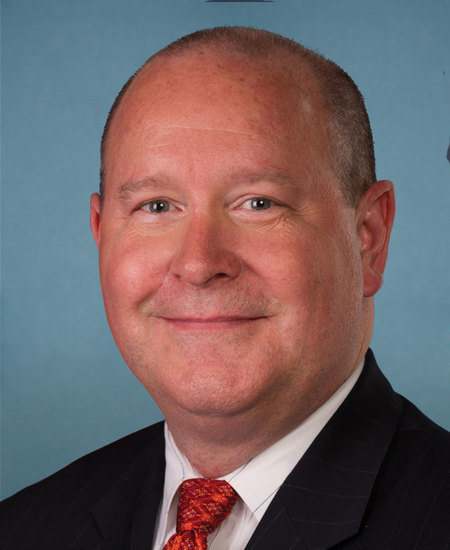
Rep. Larry Bucshon
Sponsored bills
This concurrent resolution celebrates the first anniversary of the signing of the Geneva Consensus Declaration on Promoting Women's Health and Strengthening the Family.
Retirement Tax Credit Parity for Cooperatives and Charities Act This bill allows an individual taxpayer who is eligible to participate in in a CSEC defined contribution pension plan a new tax credit for 10% of employer retirement savings contributions not exceeding $1,000 in a taxable year.
Safeguarding Women's and Children's Health Act of 2022 This bill imposes reporting requirements relating to abortion drugs. The Food and Drug Administration (FDA) must require health care practitioners to report (1) any death or adverse event associated with the use of an abortion drug, whether or not the adverse event is considered drug-related; and (2) each time the practitioner prescribes, dispenses, or administers such a drug. The FDA must establish online portals for health care practitioners to report such information and for patients to self-report adverse events. The Centers for Disease Control and Prevention must aggregate the collected information and annually publish data about such drugs, including the number of prescriptions and adverse events occurring within 120 days of use.
Protecting Family and Small Business Tax Cuts Act of 2022 This bill makes permanent provisions affecting individual and business taxpayers that were enacted in 2017 by the Tax Cuts and Jobs Act and are scheduled to expire at the end of 2025. The bill makes permanent provisions that reduce individual and capital gain tax rates. The bill increases the standard tax deduction for individual taxpayers. It also increases and modifies the child tax credit and raises the contribution base for the tax deduction of charitable contributions. The bill allows additional contributions to ABLE accounts (tax-exempt accounts designed to enable individuals with disabilities to save and pay for disability-related expenses). It exempts from taxation combat zone benefits of members of the Armed Forces serving in the Sinai Peninsula of Egypt and the moving expenses of servicemembers. Additionally, the bill lowers to $750,000 the amount of mortgage debt eligible for an interest expense tax deduction; excludes from the gross income of student borrowers income attributable to the discharge after 2025 of loan debt due to death or disability; makes permanent the limitation on the tax deduction for state and local taxes and denies a deduction for foreign real property taxes; makes permanent the tax deduction of the income of certain pass-through business entities; repeals the tax deduction for personal tax exemptions and the exclusion of employer-provided bicycle commuter fringe benefits; terminates certain miscellaneous itemized tax deductions; doubles the estate and gift tax exemption amount; and makes permanent the increase of the alternative minimum tax exemption amount for individual taxpayers.
DMEPOS Relief Act of 2022 or the DRA of 2022 This bill increases payment adjustments for certain items that were included in Round 2021 of the Medicare Durable Medical Equipment, Prosthetics, Orthotics, and Supplies (DMEPOS) Competitive Bidding Program but for which contracts were not executed. The bill applies to items that are furnished between January 1, 2022, and December 31, 2023, and that were not subject to the unadjusted fee schedule amount as of January 1, 2021. Under the DMEPOS Competitive Bidding Program, the Centers for Medicare & Medicaid Services (CMS) sets payment for certain durable medical equipment under Medicare based on a competitive bidding process with suppliers, rather than the fee schedule amount. The CMS included 16 product categories in Round 2021 of the program but ultimately did not award contracts for 13 of these categories (that were also in previous rounds) as the resulting payment amounts did not achieve expected savings.
Maddy summaryThis non-binding resolution (HRES 874) calls for designating a National Year of Humiliation, Fasting, and Prayer. It expresses support for a symbolic observance where Americans would collectively pray, fast, and reflect on their "dependence upon the overruling power of God" and "repent of pride and selfishness." The resolution does not create legal requirements or policy changes; it is purely a symbolic gesture based on religious framing of American history and founding principles. It was introduced by Rep. Linda S. Rodgers (R-WA) in the 117th Congress (2021-2022).
Genetic Sequencing Accountability Act This bill requires the Government Accountability Office to report on national security and related risks of human genomic sequencing services or genetic services that are funded by the Department of Health and Human Services and carried out by certain foreign entities. In particular, the report must focus on entities that receive such funding and are organized under the laws of a country or countries of concern, as determined by the Office of the Director of National Intelligence or other federal departments.
This bill posthumously provides for the award of a Congressional Gold Medal in commemoration of the 13 service members who died on August 26, 2021, while stationed at Hamid Karzai International Airport in Afghanistan.
Maddy summaryHRES 855 is a symbolic resolution passed by the U.S. House of Representatives to support designating the first week of December 2022 as "National United States Miners Week." It does not create new laws or policies but formally recognizes miners' contributions to the economy and supply chains. The resolution highlights miners' role in providing critical minerals and coal, supporting over 500,000 jobs, and securing domestic resources for everyday products. It directly affects miners and their communities by offering a formal, non-binding acknowledgment of their work. This is a procedural resolution with no concrete policy changes or funding implications.